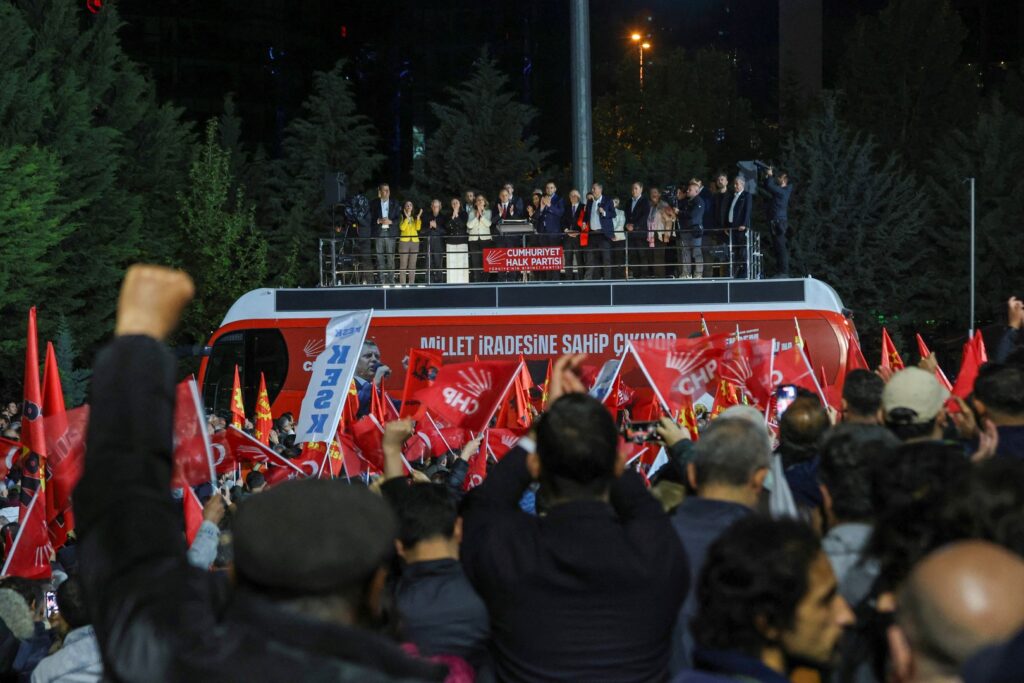
Turkey's main opposition Republican People's Party (CHP) leader Ozgur Ozel addresses his supporters in Ankara, Turkey, May 22, 2026. REUTERS/Efekan Akyuz
In a dramatic development in Turkish politics, Turkiye’s main opposition leader, Ozgur Ozel, has firmly vowed not to leave the party headquarters despite a recent court ruling that ousted him from his position. This confrontation marks a significant moment in the nation’s political landscape, highlighting the tensions between the judiciary and opposition forces.
Ozgur Ozel, known for his steadfast opposition to the ruling party, has been a prominent figure advocating for democratic reforms and increased political freedoms in Turkey. His recent ousting by the court has sparked widespread debate and concern among his supporters and political analysts alike.
The court’s decision, which removes Ozel from leadership, has been met with significant resistance from the opposition ranks. Ozel’s statement refusing to vacate the party headquarters signals a determination to challenge what he and his supporters view as an unjust and politically motivated ruling.
Political observers note that this standoff could lead to escalating tensions within Turkiye’s already polarized political environment. Ozel’s refusal to comply with the court’s directive underlines a broader struggle for power and influence between the opposition and the establishment.
Supporters of Ozel have rallied around him, organizing protests and calls for public support to defend their leader’s position. This grassroots mobilization reflects deep dissatisfaction with the current state of political affairs and a desire for change.
Meanwhile, the government has maintained that the court’s ruling was made in accordance with legal protocols, emphasizing the importance of upholding the rule of law. However, critics argue that the judiciary has been increasingly influenced by political interests, undermining its independence.
The situation remains fluid as all parties involved weigh their next steps. International observers have expressed concern over the potential implications for democracy and political stability in Turkiye, urging dialogue and restraint.
Ozgur Ozel’s vow to stay at the party headquarters despite his ousting is a bold move that highlights the ongoing challenges faced by opposition leaders in Turkiye. His stance symbolizes resistance against perceived authoritarian practices and a commitment to continuing the fight for democratic representation.
This episode is likely to resonate beyond Turkiye’s borders, drawing attention to issues of judicial independence, political freedom, and the struggle for power in emerging democracies. As events unfold, the international community will be closely monitoring the impact on Turkiye’s political future and regional stability.
In summary, the ousting of Ozgur Ozel and his subsequent pledge to remain at the heart of the opposition movement underscore the complex and contentious nature of contemporary Turkish politics. This conflict serves as a crucial test for the resilience of the country’s democratic institutions and the resolve of its opposition figures.