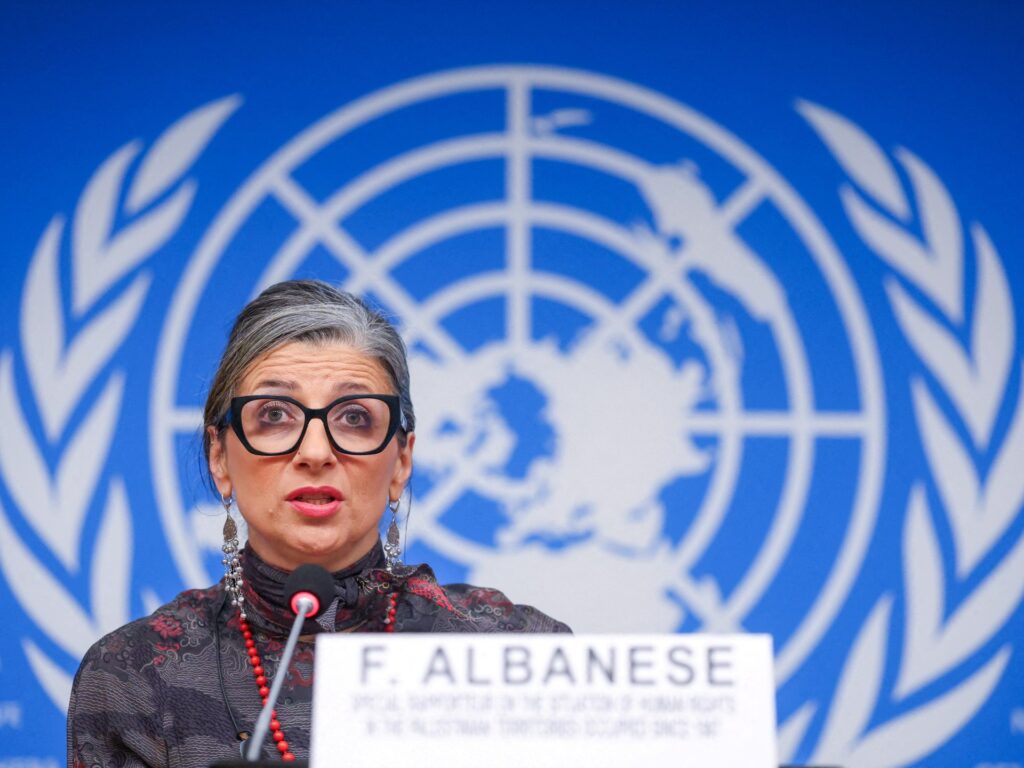
The United States government has reiterated that it has not altered its position regarding the sanctioning of Francesca Albanese, a United Nations expert known for her outspoken criticism of Israel’s policies towards Palestinians. This stance echoes actions taken during the Trump administration, which initially imposed sanctions on Albanese for her remarks and activities perceived as unfavorable towards Israel.
Francesca Albanese, a prominent figure within the UN, has been vocal about the human rights situation in Palestinian territories, often highlighting what she describes as discriminatory and oppressive measures enacted by Israeli authorities. Her critical reports and statements have drawn significant attention, eliciting strong reactions from various governments and international organizations.
The Trump administration, which took a firm pro-Israel approach, sanctioned Albanese as part of a broader effort to counter narratives that it saw as undermining Israel’s position in the ongoing Israeli-Palestinian conflict. These sanctions were intended to signal the US government’s disapproval of Albanese’s activities and to pressure the United Nations to reconsider its stance on the issue.
Despite changes in US leadership since then, the current administration has stated that it has not changed its official stance regarding Albanese. Officials have clarified that while the approach to Middle Eastern policy may have evolved, the US government’s position on sanctioning Albanese remains consistent with previous measures.
This announcement comes amid ongoing discussions about the role of UN experts and the international community’s response to the Israeli-Palestinian conflict. Albanese’s situation exemplifies the broader tensions and divides in global diplomacy surrounding the region.
Supporters of Albanese argue that her criticism is grounded in legitimate concerns over human rights abuses and that sanctioning her undermines the credibility and independence of UN human rights mechanisms. Critics, however, contend that her statements are biased and that her actions contribute to inflaming an already volatile situation.
The US government’s firm stance reflects its strategic alliances and geopolitical interests in the Middle East, particularly its long-standing support for Israel. This support is often manifested through diplomatic backing, military aid, and efforts to influence international opinion and policy.
The continuing sanctions against Francesca Albanese have sparked debates about freedom of expression and the protection of human rights advocates operating in conflict zones. International law experts emphasize the importance of safeguarding UN experts to ensure impartial and effective monitoring of human rights issues.
As the situation develops, attention remains on how this diplomatic tension will affect the United Nations’ ability to conduct its work in the region and the broader international community’s efforts toward conflict resolution and peacebuilding.
In summary, the United States has confirmed it has not revised its policy on sanctions against UN expert Francesca Albanese, maintaining a consistent position since the Trump administration. The issue remains a focal point in the complex interplay of human rights, international diplomacy, and Middle Eastern geopolitics.