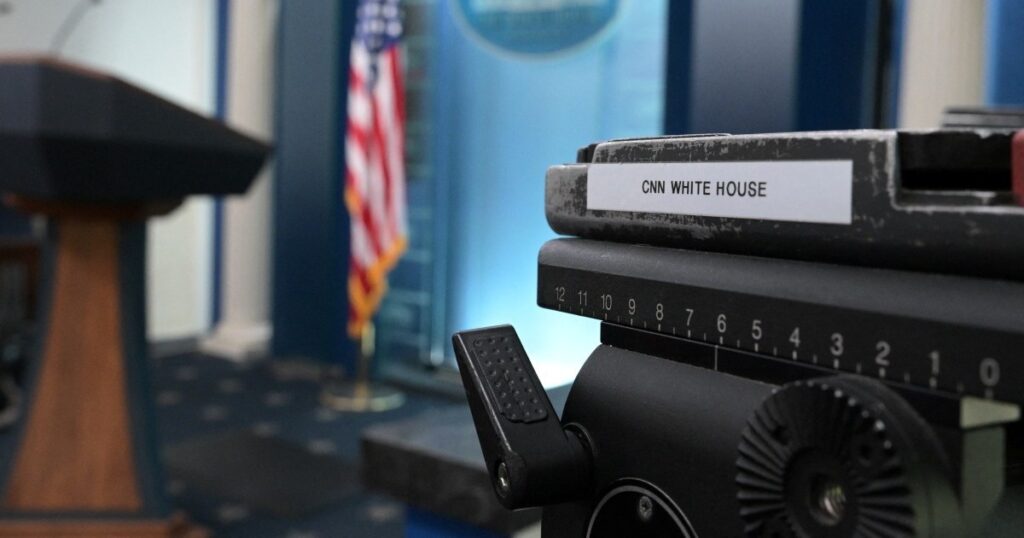
A significant legal development has emerged involving former President Donald Trump’s administration and major media outlets. A US judge, nominated by Trump, has issued a ruling blocking the White House’s ban on three prominent news organizations: CNN, MSNBC, and Politico.
The judge’s decision comes after these media outlets challenged the ban, arguing that they were denied due process—a fundamental legal principle ensuring fair treatment through the normal judicial system. The court found that the outlets were likely to succeed in their claim, prompting the blocking of the ban until further proceedings.
This ban had prevented reporters from these organizations from accessing certain White House events and briefings, significantly limiting their ability to report on governmental activities firsthand. The lifting of the ban is seen as a reaffirmation of the press’s role in holding the government accountable and upholding freedom of the press.
The ruling underscores the judiciary’s role in checking executive actions, especially those perceived to inhibit constitutional rights such as the First Amendment protections regarding free speech and free press. Critics of the ban viewed it as an attempt to suppress unfavorable coverage and limit transparency, while supporters cited concerns about perceived bias and misinformation from these outlets.
The judge’s Trump nomination adds an intriguing dimension to the case, demonstrating an impartial judicial review irrespective of political affiliations. Legal experts suggest this decision reinforces the principle that government actions must adhere strictly to procedural fairness and constitutional guarantees.
Following the ruling, representatives from CNN, MSNBC, and Politico expressed cautious optimism, emphasizing the importance of equal access to information sources and the role of the press in democracy. The White House has yet to comment on whether it will appeal the decision or alter its media policies moving forward.
This court ruling will likely have broader implications for media-government relations, highlighting ongoing tensions over press freedoms in the United States. It serves as a precedent that media organizations can use in future disputes over access and due process rights when dealing with government institutions.
The case emphasizes the vital balance between government authority and the freedom of the press, a foundational element of American democracy. It also reflects the continuing challenges faced by journalists in an era of increasing political polarization and media scrutiny.
Observers and stakeholders await further developments as the case progresses through the courts. Meanwhile, the immediate impact is a restored access for CNN, MSNBC, and Politico to White House events, ensuring their audiences receive comprehensive coverage of national governance.
In conclusion, the US judge’s ruling to block the Trump-era ban on these media outlets not only rectifies an alleged due process violation but also strengthens the legal protections that uphold press freedoms against executive overreach. This decision is a noteworthy reaffirmation of democratic values in the United States.”