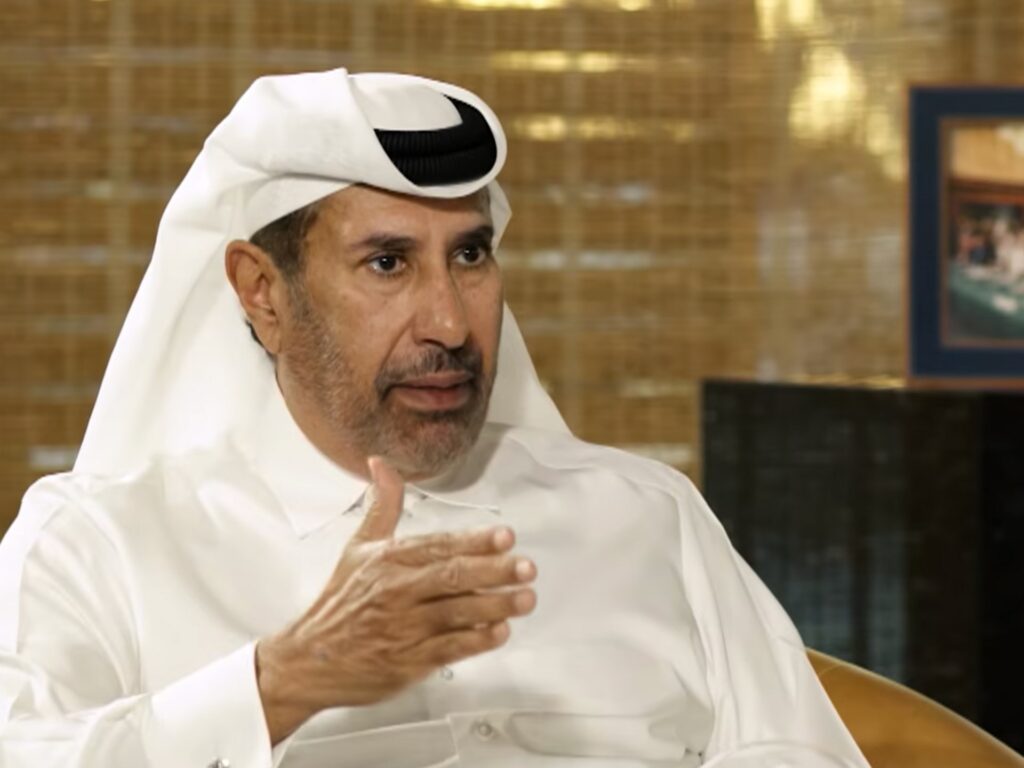
In a recent statement, Sheikh Hamad bin Jassim, the former Prime Minister of Qatar, voiced serious concerns regarding the ongoing conflict involving Iran, emphasizing the broader geopolitical consequences in the Middle East. He accused Israeli Prime Minister Benjamin Netanyahu of using the war with Iran as a strategic lever to reshape the region’s political landscape.
Sheikh Hamad highlighted that the conflict’s most perilous consequence has been the escalating crisis surrounding the Strait of Hormuz. This critical maritime passage, through which a significant portion of the world’s oil supply flows, has become a focal point of tensions, raising alarms about global energy security and regional stability.
According to Sheikh Hamad, the instability in the Strait of Hormuz represents not only a localized threat but also a potential flashpoint for an expanded conflict that could draw multiple world powers into a wider confrontation. He stressed that the economic and security implications of such a crisis would reverberate far beyond the Middle East, disrupting global markets and fueling further instability.
In light of these developments, Sheikh Hamad has called for the formation of a joint security alliance among the Gulf Cooperation Council (GCC) countries, which he described as a “Gulf NATO.” This proposed alliance aims to bolster collective security efforts, enhance regional cooperation, and present a unified front to deter external threats and ensure peace in the Gulf region.
The suggestion for a Gulf NATO underscores the urgency felt by regional leaders to address rising security threats. It indicates a shift towards greater military collaboration, which could alter the strategic balance in the Middle East. Such an alliance may also serve as a countermeasure to influence from outside powers impacting regional affairs.
Sheikh Hamad’s remarks reflect a growing concern among Gulf states about the repercussions of ongoing tensions between Israel and Iran. The former Qatar PM warns that Netanyahu’s approach may be catalyzing a wave of realignment among Middle Eastern countries, potentially destabilizing long-standing alliances and creating new fault lines.
Historically, the Middle East has been a region marked by complex rivalries and shifting alliances. The current conflict involving Iran and Israeli interests adds another layer of complexity that could redefine these interactions. Sheikh Hamad’s appeal for regional unity through a Gulf NATO suggests that Gulf states are increasingly aware of the need for common defense mechanisms amidst external pressures.
Moreover, the escalation in the Strait of Hormuz has economic implications that could affect global oil prices and energy security worldwide. Disruptions in this vital corridor could lead to substantial economic fallout, impacting not only the Gulf countries but also their trading partners and the broader international community.
The call for a Gulf NATO also implies a strategic pivot that may affect the diplomatic landscape of the Middle East. It calls for Gulf countries to take greater responsibility for their own security, potentially reducing reliance on traditional powers such as the United States and prompting a new era of regional diplomacy.
In summary, Sheikh Hamad bin Jassim’s statements underscore the dangerous potential of the Iran war to reshape the Middle East’s geopolitical reality. With the Strait of Hormuz at the center of escalating tension, his call for a Gulf NATO aims to preempt further conflict and foster stability through regional cooperation. This development could mark a significant turning point in how security and alliances are managed in one of the world’s most volatile regions.