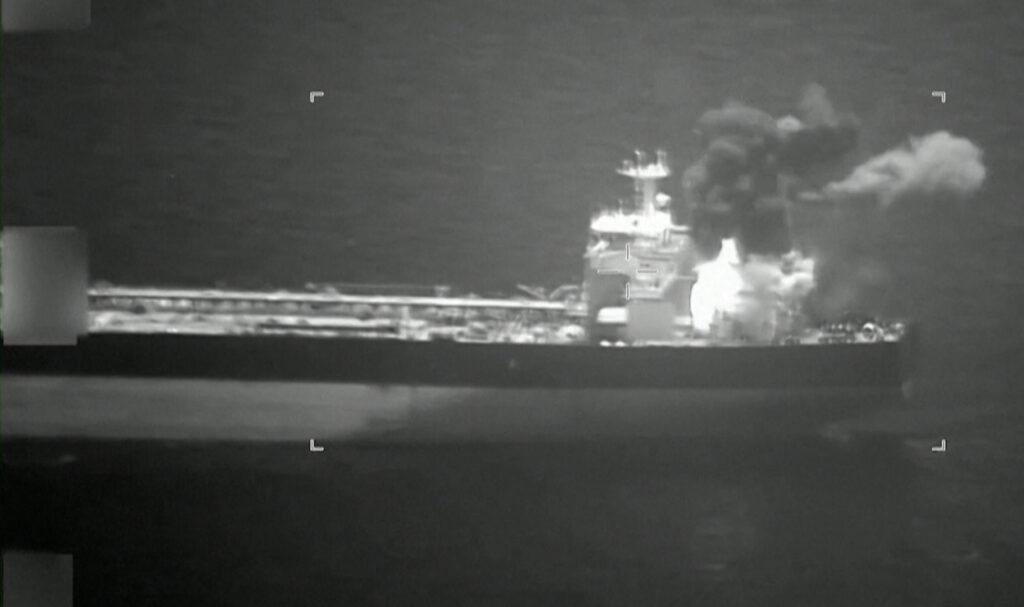
The Pentagon has released new footage showing US military strikes on two Iranian oil tankers in the strategically crucial Strait of Hormuz. The video provides visual confirmation of the operations carried out by the United States in this vital maritime corridor, which is a key artery for global oil shipments.
The Strait of Hormuz, a narrow passage connecting the Persian Gulf with the Gulf of Oman and the Arabian Sea, is indispensable for international oil trade. Approximately one-fifth of the world’s petroleum passes through this chokepoint. Any military activity in this region has significant implications for global energy markets and geopolitics.
The video released by the Pentagon shows targeted strikes on two Iranian oil tankers suspected of activities that prompted United States intervention. While specific details regarding the justification for the strikes have not been fully disclosed, the Pentagon’s release aims to provide transparency and to underline the seriousness of the threat posed by the tankers’ actions.
This military action highlights the ongoing tensions between the United States and Iran, which have periodically escalated in the Strait of Hormuz region. The US often cites threats to maritime security and the free flow of commerce as reasons for its interventions. Meanwhile, Iran contends with economic sanctions and asserts its sovereignty over the Gulf waters.
Experts emphasize that the release of the video is as much a strategic communication move as it is an operational update. By publicizing the footage, the Pentagon seeks to justify its actions to both domestic and international audiences, reinforcing the narrative of protecting global trade routes and regional security.
The strikes on the Iranian tankers come amid a backdrop of strained diplomatic relations and ongoing disputes over Iran’s nuclear program, regional influence, and compliance with international norms. The incident adds a layer of complexity and heightens the risk of further confrontations in the sensitive maritime domain.
International reactions to the video and strikes vary, with some countries calling for restraint and diplomatic dialogue to prevent further escalation. Global markets remain watchful, as any disruption in oil flow through the Strait of Hormuz can lead to price volatility and economic uncertainty.
The Pentagon’s release underscores the persistent volatility in the Gulf region, where geopolitical rivalries intersect with critical economic interests. Stakeholders across the board are urged to engage in dialogue to safeguard peace and stability in this vital corridor of international commerce.
As developments continue to unfold, attention will focus on the responses from Iran, allied nations, and global organizations concerned with maritime security and energy stability. The incident serves as a stark reminder of the fragile nature of peace in the Strait of Hormuz and the broader Middle East.