USA-PROTESTER/BRIDGE
In a dramatic conclusion to a five-day protest, police have arrested an anti-war protester who had staged a sit-in atop Washington’s Frederick Douglass Bridge. The demonstration, which drew significant attention, saw the individual occupy the bridge’s upper span as a form of peaceful protest against ongoing military conflicts.
The protester, whose identity has not been disclosed, began the sit-in on the bridge following a peaceful march through the city’s streets. The location was chosen for its symbolic significance and high visibility to commuters and policymakers alike. Over the course of five days, the protester remained on the structure, enduring varying weather conditions and maintaining communication with supporters on the ground.
Authorities monitored the situation closely, balancing public safety concerns with respecting the right to peaceful assembly. Traffic on the bridge was disrupted during the protest, leading to delays but also raising awareness about the cause.
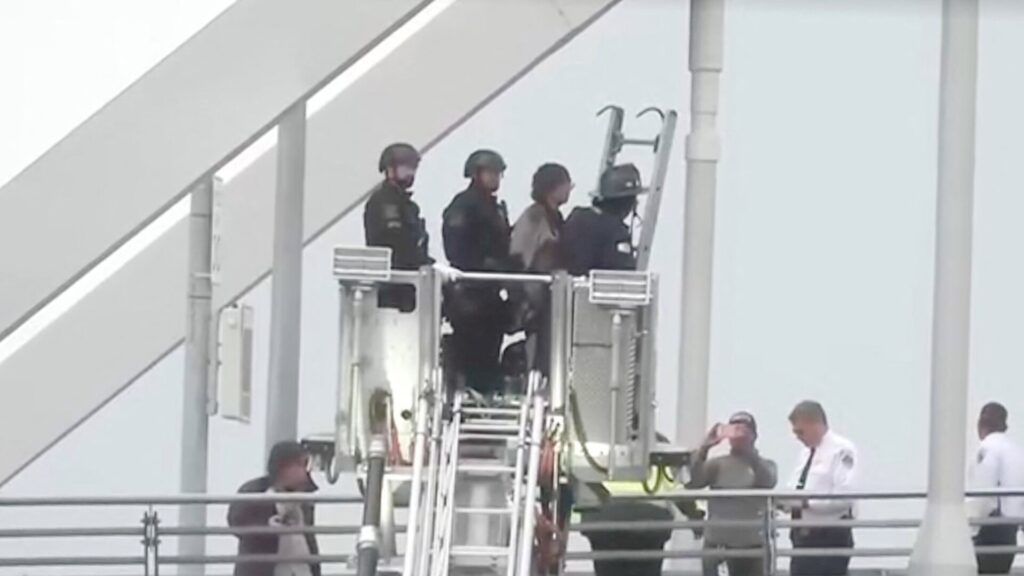
On the fifth day, law enforcement moved in to end the demonstration safely. Officers carefully climbed the bridge and escorted the protester down, subsequently placing them under arrest. The charges reportedly relate to unlawful occupation of public infrastructure.
The protester’s supporters have criticized the arrest as heavy-handed and have called for their immediate release, emphasizing the importance of civil disobedience in drawing attention to critical social and political issues. Meanwhile, city officials have expressed a commitment to upholding both public order and the right to protest.
This incident highlights ongoing tensions between activists advocating for peace and authorities charged with maintaining public safety. It also raises questions about the effectiveness of direct action protests and the response strategies employed by law enforcement agencies.
As the situation develops, it will be important to monitor both legal proceedings against the protester and any further activism inspired by this five-day occupation. The event underscores the enduring power of individual acts of conscience in shaping public discourse and policy debates.