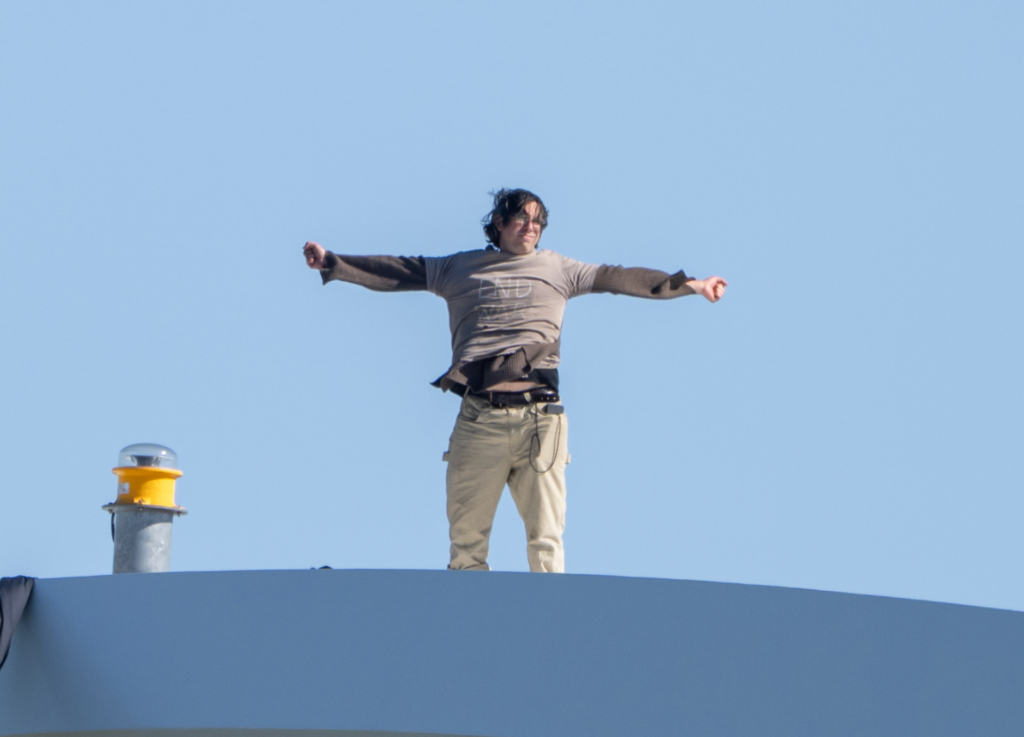
In a dramatic act of protest against the ongoing war on Iran, a 45-year-old man has taken a stand—literally—by occupying the top of Washington’s Frederick Douglass Memorial Bridge. This unique and highly visible demonstration aims to draw attention to the conflict and advocate for peace.
The protester began his occupation early in the day, climbing to the highest point of the bridge, a strategic location that ensures maximum visibility to commuters and city dwellers alike. From this vantage point, he spoke directly to the media, including an exclusive interview with Al Jazeera.
In his statement, the man expressed deep concerns over the human cost and geopolitical ramifications of the war on Iran. He emphasized the importance of peaceful resolution and called on governments worldwide to reconsider their stances and policies regarding the conflict.
The protest has sparked a range of reactions from the public and officials. Many passersby stopped to watch and support the peaceful demonstration, some expressing solidarity with the anti-war message. However, local authorities have been monitoring the situation closely due to safety concerns, considering the risks involved in such a high and precarious position.
Safety teams are present on-site to ensure the protester’s well-being and to evaluate how to safely facilitate his descent once the demonstration concludes. Meanwhile, traffic on the Frederick Douglass Memorial Bridge has been slowed but remains largely uninterrupted.
This protest marks one of the most striking anti-war demonstrations in recent months, combining powerful symbolism with real physical risk to highlight the urgent need for a political solution.
The man’s act of courage and his words have resonated with many who call for an end to hostilities and a recommitment to diplomacy. As the situation unfolds, it continues to draw media attention and public discourse around the war on Iran and the broader implications of conflict in the region.
By choosing such a prominent and symbolic location, the protester has ensured that his message reaches a broad audience, challenging observers to think critically about the consequences of war and the value of peace.