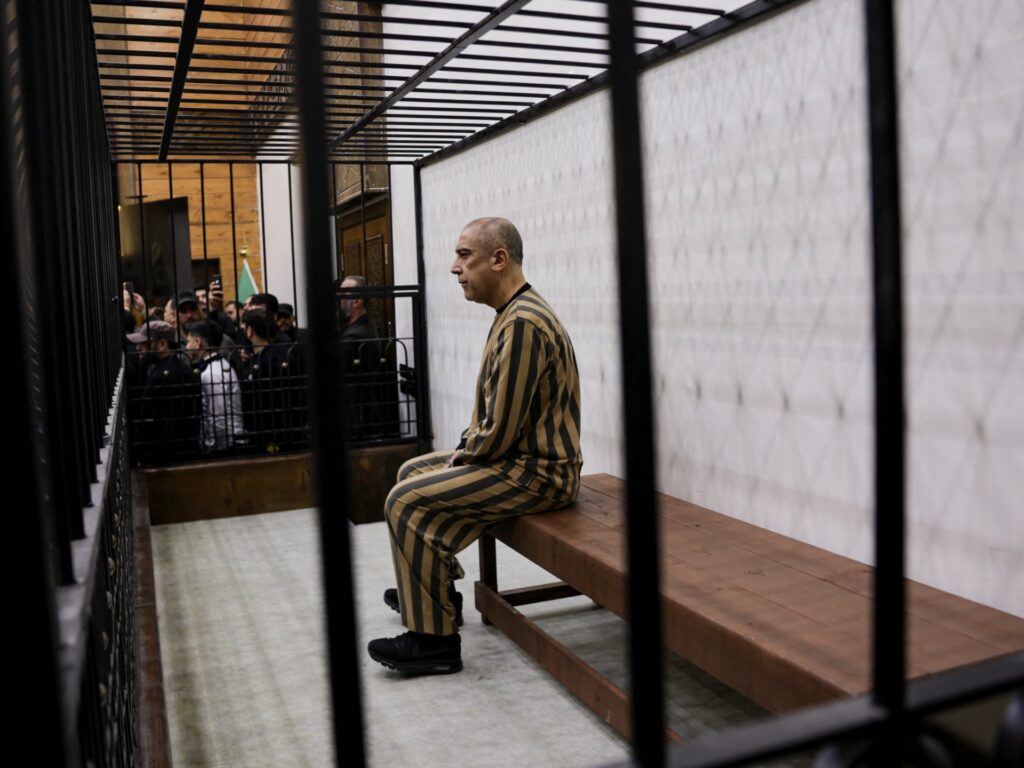
In a significant development within Syria, Atef Najib, the former head of political security in Deraa province, has become the first official from the Assad era to be put on trial in Damascus. Najib faces charges related to ‘crimes against the Syrian people,’ marking a notable moment in the country’s ongoing political and judicial landscape.
Atef Najib’s trial is rooted in allegations concerning his role during the time of unrest and conflict in Syria, particularly spotlighting his actions in Deraa, a key province that witnessed some of the earliest protests and violence in the Syrian conflict. His position as the head of political security put him at the center of maintaining governmental control and responding to dissent.
The charges against Najib indicate an effort to hold individuals accountable for abuses of power and potential human rights violations committed during the Assad regime’s crackdown on opposition groups. The phrase ‘crimes against the Syrian people’ encompasses accusations that could range from unlawful detention, torture, repression of peaceful protests, to other violations linked to state security operations.
The trial is being conducted in Damascus, Syria’s capital, underscoring the government’s intent to address past grievances within its judicial system. It also signals a rare instance of a high-profile figure from Assad’s security apparatus being subjected to legal scrutiny, which until now, has been uncommon given the regime’s strong grip on power.
Observers see this trial as potentially opening a precedent within Syria’s legal framework, which has historically been dominated by the ruling establishment’s protection of its officials. The process may also reflect internal political dynamics, where the regime could be attempting to demonstrate responsiveness to popular demands for justice or to recalibrate its internal narrative.
However, the trial’s implications and fairness remain uncertain to many, given the complex environment of Syrian politics and ongoing conflict. Human rights groups and international observers will likely closely watch the proceedings to assess whether the trial adheres to transparent legal standards and if it genuinely addresses the needs of justice for the Syrian people.
Atef Najib’s case sheds light on the broader challenges of accountability in post-conflict or conflict-resolution scenarios, where balancing justice, reconciliation, and stability often proves difficult. As Syria continues to navigate its path forward, trials such as this one play a crucial role in shaping the nation’s future governance and reconciliation efforts.
In conclusion, the trial of Atef Najib marks a notable point in Syria’s troubled history, reflecting both an attempt at legal accountability and the complexities of transitional justice within a regime marked by prolonged conflict and authoritarian rule. The outcome of this trial could influence Syria’s political landscape and the international community’s perception of the Assad government’s commitment to human rights and the rule of law.