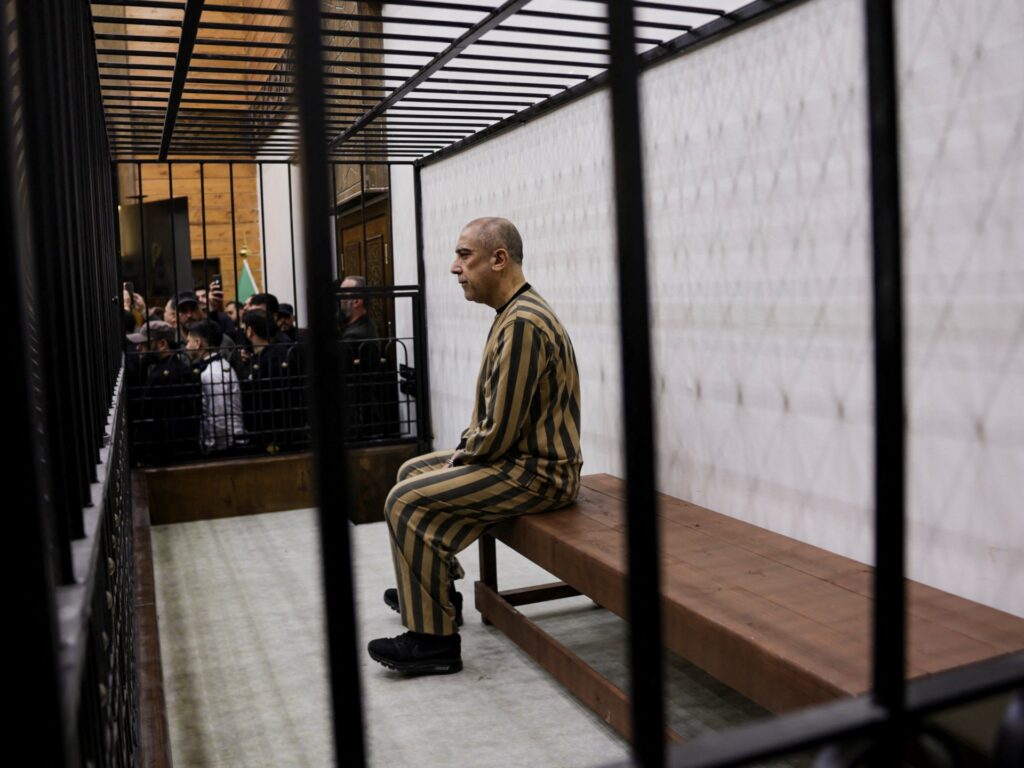
In a landmark move, the Syrian government has put on trial Atef Najib, the former head of political security in Deraa province during the Assad era. Najib stands accused of committing “crimes against the Syrian people,” marking one of the first times a high-ranking official from the Assad regime has faced legal proceedings in Damascus.
Atef Najib, a key figure in Syria’s security apparatus during the initial years of the civil conflict, is charged with overseeing operations that allegedly involved human rights abuses and political repression. His trial signals an unprecedented step in Syria’s judicial handling of former regime officials who were deeply implicated in the country’s violent unrest and crackdown on dissent.
The charges allege that Najib played a central role in detaining and torturing protesters and political opponents in Deraa, the southern province that is often referred to as the cradle of the 2011 uprising. These crimes reportedly included arbitrary arrests, forced disappearances, and other violations targeting civilians who opposed the government’s rule.
Deraa holds significant symbolic importance as the spark that ignited the prolonged conflict in Syria. Najib’s prominent position in the region made him a key enforcer of the Assad government’s policies during those tumultuous years.
While details of the evidence presented in court remain undisclosed, international observers and human rights organizations are closely monitoring the trial for its potential impact on Syria’s path to accountability and transitional justice.
This proceeding is seen by some as a test case in the broader effort to address systemic abuses committed by state security forces throughout the conflict that has devastated Syria for over a decade.
The Assad regime has long been criticized for its heavy-handed suppression of dissent and allegations of widespread torture and extrajudicial killings. Bringing a senior security official to trial may reflect growing pressure from domestic factions and international actors demanding accountability for war crimes.
However, skepticism remains regarding the fairness and transparency of the trial, given the government’s tight control over the judiciary and ongoing conflicts within the country.
The trial of Atef Najib could set a precedent for additional prosecutions, encouraging other victims to come forward and strengthening the rule of law in Syria. It also raises questions about potential reforms and reconciliation efforts that could help heal the deep divides in Syrian society.
As the case continues, attention will focus on how Syrian courts navigate the delicate balance between political allegiance and justice, and whether this moment in Damascus will herald a new chapter in Syria’s painful post-war recovery.