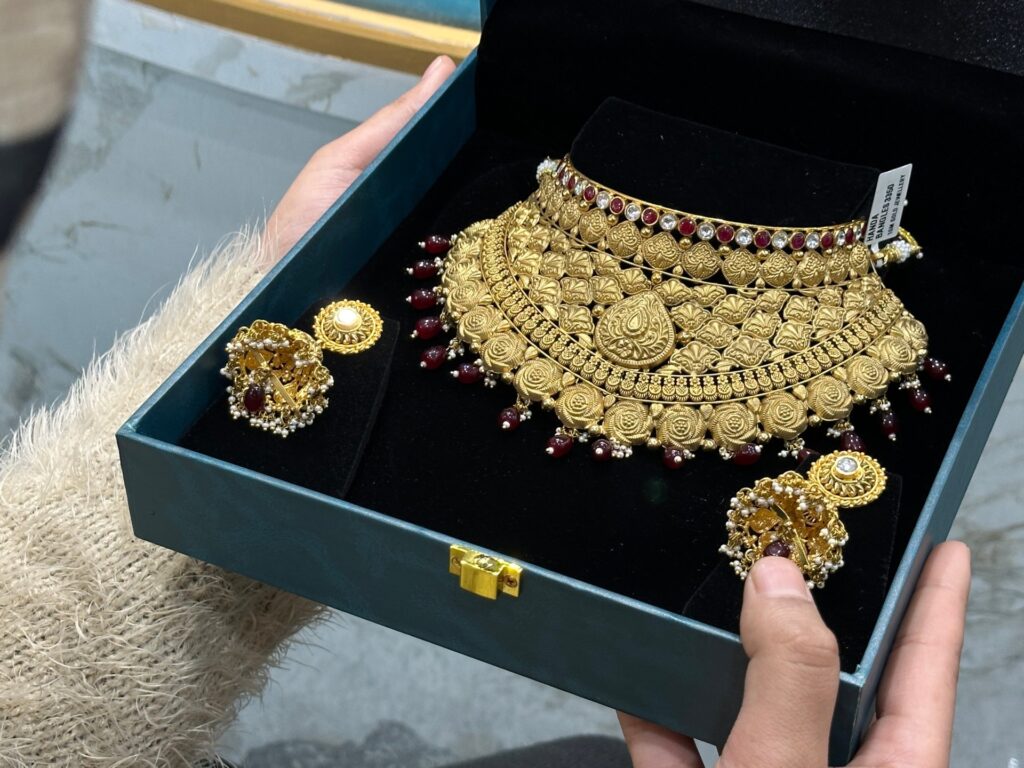
In South Asia, a traditional hallmark of bridal jewelry has long been pure gold. However, soaring gold prices have made it increasingly unaffordable for many families, pushing brides and their families to seek alternative options. The rising cost of gold, which has reached record highs, has caused a significant shift in purchasing habits, with many opting for one gram gold substitutes and imitation jewelry.
Historically, gold has been more than just a precious metal in South Asia—it is a cultural symbol of prosperity, security, and tradition, especially during weddings. Brides often receive gold ornaments as part of wedding gifts and dowries, representing a form of wealth and economic security. However, with prices climbing steadily, the financial burden on families has become substantial.
In response to this challenge, many families are turning to affordable alternatives such as gold-plated ornaments and imitation jewelry that mimic the appearance of real gold but come at a fraction of the cost. One gram gold substitutes have become increasingly popular, as they offer a more manageable investment that can still provide the traditional aesthetic.
Jewelry designers and retailers have noticed this trend and are now catering to the rising demand for these substitutes. These pieces often feature intricate designs similar to pure gold ornaments but are crafted using less expensive metals with a gold plating, alongside high-quality craftsmanship to maintain the grandeur and elegance expected in bridal jewelry.
The shift is also impacting jewelers who traditionally specialized in pure gold products. Many have diversified their offerings to include more imitation and plated jewelry to retain their clientele and adapt to changing market demands.
Culturally, while pure gold remains the preferred choice for many, the practicality of purchasing substitutes resonates with younger generations and financially conscious families. This trend reflects a broader socio-economic change, where value is increasingly balanced against tradition.
Moreover, financial advisors point out that such a shift could have ancillary benefits, such as reducing the overall cost burden on families, allowing them to allocate funds toward other wedding expenses or savings. It also opens opportunities for innovation within the jewelry industry to create more sustainable, affordable, and aesthetically pleasing products.
In conclusion, the record high prices of pure gold are reshaping bridal jewelry choices in South Asia. While the cultural importance of gold remains intact, economic realities have led to an embrace of one gram substitutes and imitation ornaments. This balancing act between tradition and affordability is not only redefining wedding customs but is also influencing the future trajectory of the regional jewelry market.