Iraq is witnessing a critical juncture in its political landscape as the ruling Shia bloc urgently races to select a new prime minister. This decision comes at a time of heightened internal divisions within the Shia parliamentary bloc, casting uncertainty over the future direction of Iraq’s government.
The significance of this political maneuver is underscored by the active involvement of regional and international powers, notably the United States and Iran, both of whom are closely monitoring the developments. Iraq, strategically located and rich in oil resources, remains a focal point in Middle Eastern politics, with both the US and Iran seeking to exert influence over its political trajectory.
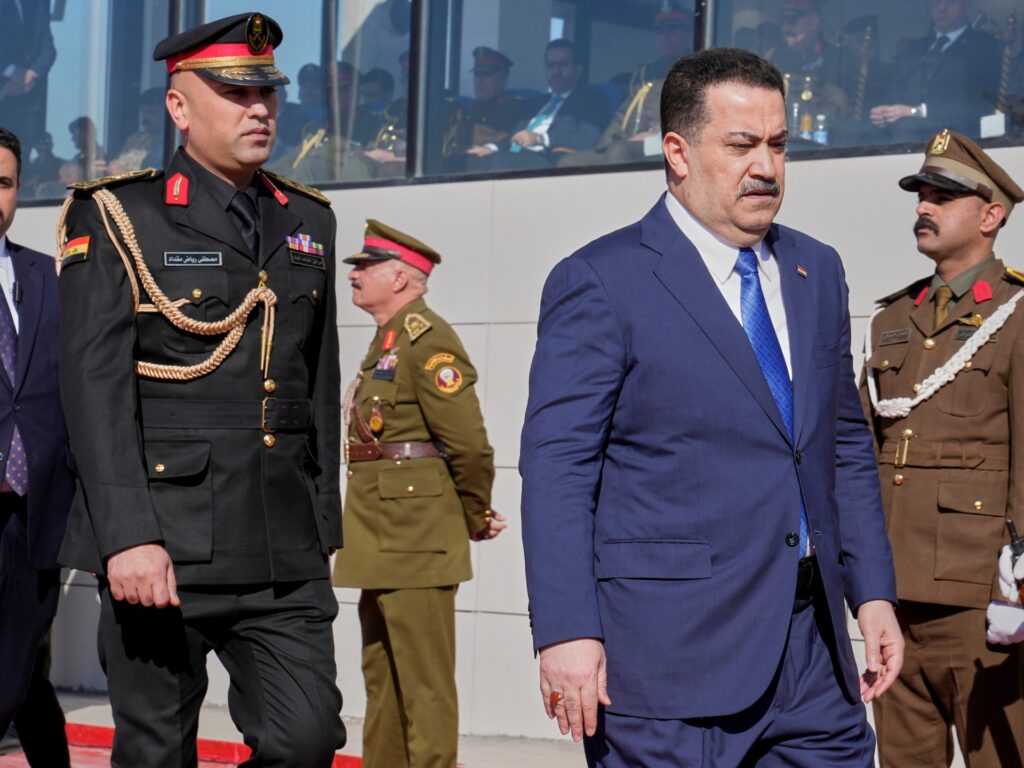
Central to the current events is the visit of Ismail Qaani, a notable figure whose involvement highlights the intricate interplay of regional interests and local politics. Qaani’s visit was reportedly made at the request of the incumbent Prime Minister Mohammed Shia al-Sudani, pointing to the urgency and delicate nature of the situation.
The Shia parliamentary bloc, which holds considerable power in Iraq’s political system, is currently facing challenges in reaching a consensus on the leadership. This division within the bloc is a reflection of broader political tensions and a struggle for influence among various factions.
Al-Sudani’s administration has encountered significant hurdles, and the request for Qaani’s involvement suggests an attempt to consolidate support and navigate the factional disputes. The capacity of the ruling bloc to effectively choose a prime minister will have profound implications for governance, stability, and Iraq’s relationship with external powers.
US officials have been monitoring the situation closely, aware that instability in Iraq could affect broader regional security and their strategic interests. Similarly, Iran, with its historical ties and influence over many Shia factions in Iraq, is equally attentive to the outcome.
The choice of prime minister is not merely an internal matter for Iraq but a critical event with regional repercussions. The political future of Iraq remains uncertain as the Shia bloc weighs its options amid external pressures and internal disagreements.
As the situation evolves, Iraq’s citizens and the international community await a resolution that can bring stability and direction to the country’s governance. The race to select a new prime minister is emblematic of the complex dynamics that define Iraq’s political scene and the continuing influence of powerful external actors in shaping its path.