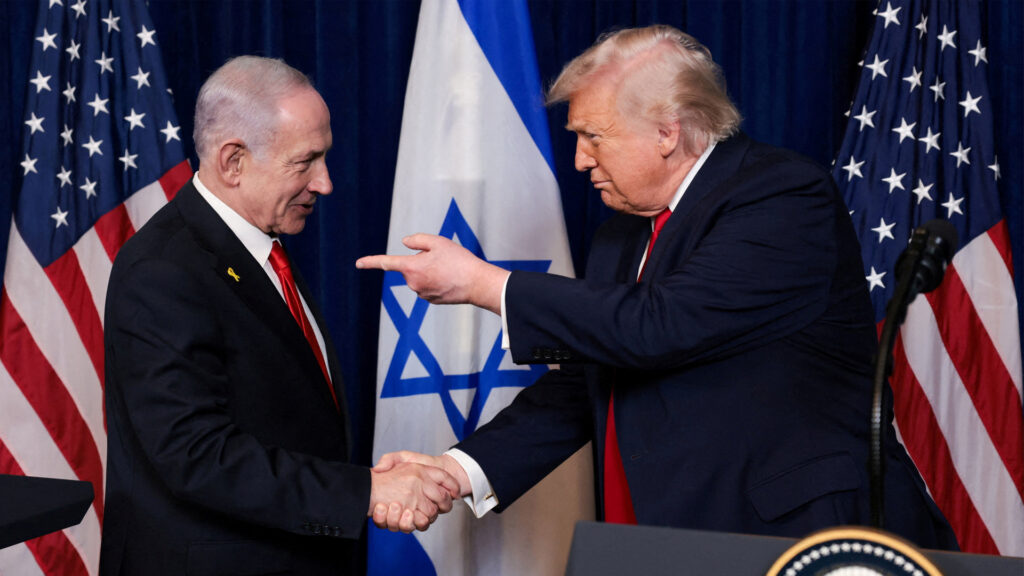
The recent ceasefire agreement between Israel and Lebanon has sparked a myriad of reactions from political analysts and commentators. Among these voices is Abed Abou Shhadeh, a political commentator based in Israel, who has described the ceasefire as “problematic.” He contends that the move was not entirely a result of mutual agreement but rather a situation where former U.S. President Donald Trump exerted significant pressure on Israel to accept the ceasefire terms with Lebanon.
According to Abou Shhadeh, Trump’s involvement fundamentally altered the dynamics of the conflict negotiation, steering Israel towards a ceasefire that it might not have willingly embraced under different circumstances. This intervention, some argue, reflects the intricate influence of U.S. foreign policy in Middle Eastern affairs, particularly in conflict resolution strategies.
The background of the recent conflict involves heightened tensions between Israel and Hezbollah, the Lebanese militant group, which escalated into hostilities. The conflict saw exchanges of fire across the Israel-Lebanon border, raising international concerns about the potential for a broader escalation.
The ceasefire agreement was welcomed by global powers eager to restore stability in the volatile region. However, the condition and sustainability of this ceasefire remain subjects of debate among experts.
Abou Shhadeh warns that while the ceasefire may bring temporary relief, it does not address the underlying issues that fuel the hostility between Israel and Lebanon. He highlights that without a comprehensive peace dialogue and resolution strategies involving all key stakeholders, the ceasefire is merely a pause rather than a lasting solution.
The commentator’s assessment raises questions about the role external powers play in shaping regional outcomes. Trump’s approach, characterized by assertive diplomacy, might have compelled Israel into accepting terms expediently, possibly at the expense of Israel’s long-term security interests.
Critics of the ceasefire argue that it may embolden Hezbollah by appearing to legitimize their tactics and presence near the border. Meanwhile, supporters contend that any ceasefire is a positive step to prevent further loss of life and create space for diplomatic efforts.
As the ceasefire holds, the international community watches closely to see if this truce will lead to renewed peace negotiations or if hostilities might reignite once political pressures subside.
This situation underscores the complex nature of Middle Eastern conflicts where local, regional, and international actors intersect, often leading to fragile agreements that require sustained commitment and strategic patience from all involved parties.