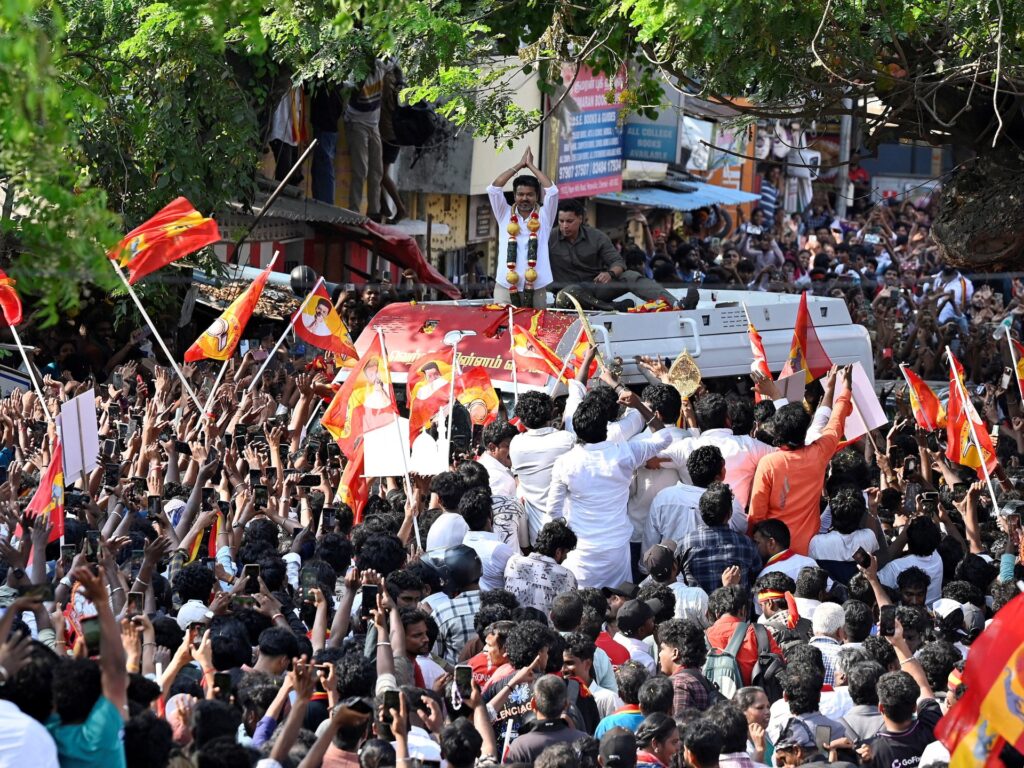
India’s Tamil Nadu election has witnessed a fascinating trend where film stars transition into influential political figures. Among the contenders stirring debate is C Joseph Vijay, a renowned film star whose entry into the political fray has captured significant attention. However, political analysts suggest his role might be more of a disruptor rather than a decisive leader capable of swaying the entire election outcome.
Tamil Nadu’s political landscape is unique, deeply influenced by charismatic film personalities who have historically leveraged their mass appeal to gain political power. Legends like M.G. Ramachandran and J. Jayalalithaa set the precedent for actors turning into influential politicians. Their success has encouraged other film stars, including Vijay, to consider a political role.
Vijay’s popularity stems primarily from his extensive film career, amassing a large fan base across Tamil Nadu and beyond. This fan base translates into political capital, which often manifests through enthusiastic grassroots support. Yet, the challenge lies in converting this popularity into effective political strategy and governance capability.
Critics argue that while Vijay’s star power can disrupt traditional voting patterns, his political inexperience might limit his influence to that of a spoiler in a split electoral scenario. Tamil Nadu’s election this year is characterized as a three-cornered contest, with established parties and alliances competing vigorously for the electorate’s favor.
Vijay’s entry introduces an additional dynamic, potentially fragmenting votes that could otherwise go to mainstream parties. This vote-splitting effect can alter electoral calculations but may not necessarily translate into broad political victory for him or his supporters.
Moreover, Tamil Nadu’s electorate is politically savvy and often prioritizes welfare and governance issues over celebrity appeal alone. This means that while celebrity candidates enjoy an initial surge of popularity, sustaining that support through effective policy presentation and implementation remains crucial.
The political commentary suggests that Vijay’s role in the election might be akin to a disruptor, shaking up established voter loyalties and compelling traditional parties to recalibrate their strategies. Such disruption could influence alliances, campaign intensity, and voter turnout.
In summary, while C Joseph Vijay’s film star status ensures media attention and a loyal fan base, the complexities of Tamil Nadu’s politics may restrict his impact to disrupting the election dynamics rather than decisively swaying the outcome. The final results will depend on how effectively the electorate balances celebrity allure against proven political leadership and governance promises.