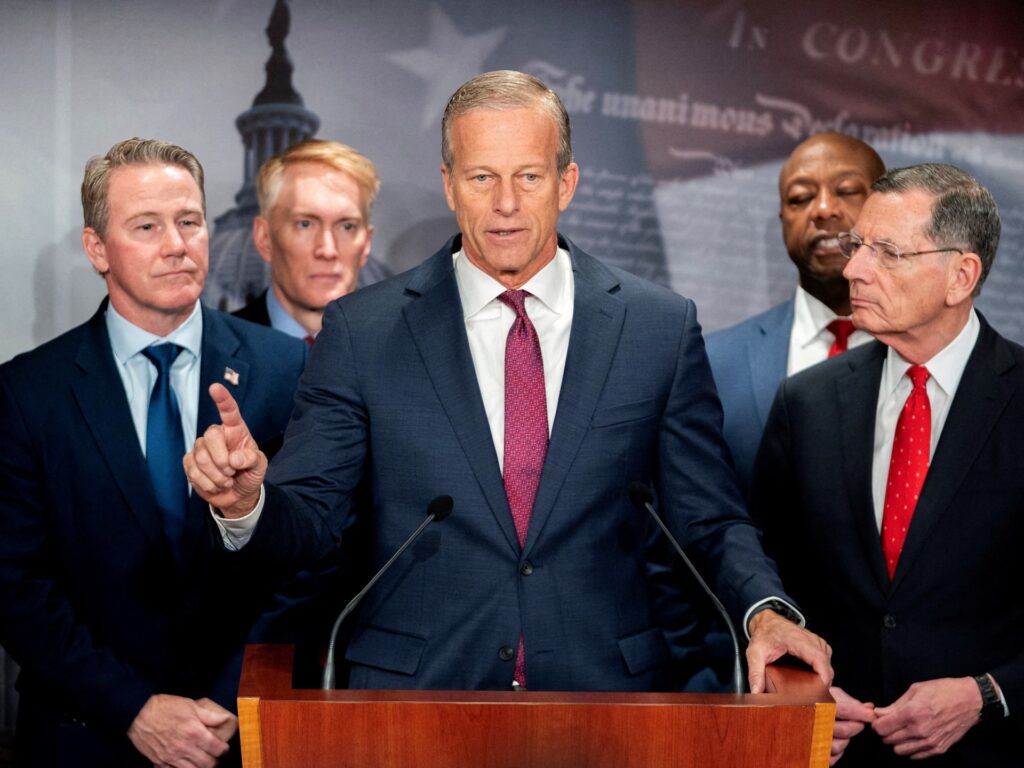
The Trump-backed SAVE America Act has emerged as a significant legislative proposal that is currently stirring debate in the US Senate. This bill is centered on enhancing the requirements for voter eligibility by mandating stricter proof of citizenship. Former President Donald Trump has identified this legislation as a top priority, underscoring its importance in the broader context of election security and voting integrity.
At its core, the SAVE America Act aims to address concerns about voter fraud and ensure that only eligible US citizens are able to participate in elections. The bill proposes that individuals must provide more substantial documentation to prove citizenship before they can register to vote or cast their ballot. This move is intended to tighten voter registration processes and reduce the chances of illegal voting.
The bill has sparked controversy and polarized opinions among lawmakers and the public. Supporters argue that these measures are necessary to preserve the integrity of elections and protect American democracy. They believe that stricter citizenship verification will enhance trust in the electoral system and prevent exploitation.
Opponents, however, contend that the act could restrict voter access, particularly affecting minority groups, the elderly, and low-income voters who may find it more difficult to acquire or provide the required documentation. Critics also express concerns about the potential for increased disenfranchisement and argue that voter fraud is not widespread enough to justify such stringent measures.
The debate in the Senate reflects these clashing views. Proponents of the bill emphasize national security and fairness, while detractors highlight civil rights and the fundamental right to vote.
If enacted, the SAVE America Act could significantly reshape voter registration practices across the United States. It may lead to changes in the types of documents accepted for voter verification and could prompt states to revise their election policies accordingly.
Furthermore, this legislation will likely influence future voter turnout and engagement, with possible implications for electoral outcomes in key states. The requirement for additional proof of citizenship may discourage or prevent some eligible voters from participating, which in turn could sway election results.
The renewed focus on voter verification aligns with broader efforts by the Trump administration and its allies to assert greater control over electoral processes nationwide. By making election integrity a legislative priority, Trump aims to solidify support among his political base concerned about election security.
As the Senate deliberates this bill, attention is also being paid to similar initiatives in various states, indicating a potential trend toward stricter voting regulations on a larger scale.
In summary, the Trump-backed SAVE America Act represents a pivotal moment in American electoral politics, highlighting the ongoing tension between securing elections and ensuring broad voter access. Its future will have lasting consequences for the way Americans vote and how elections are conducted in the coming years.