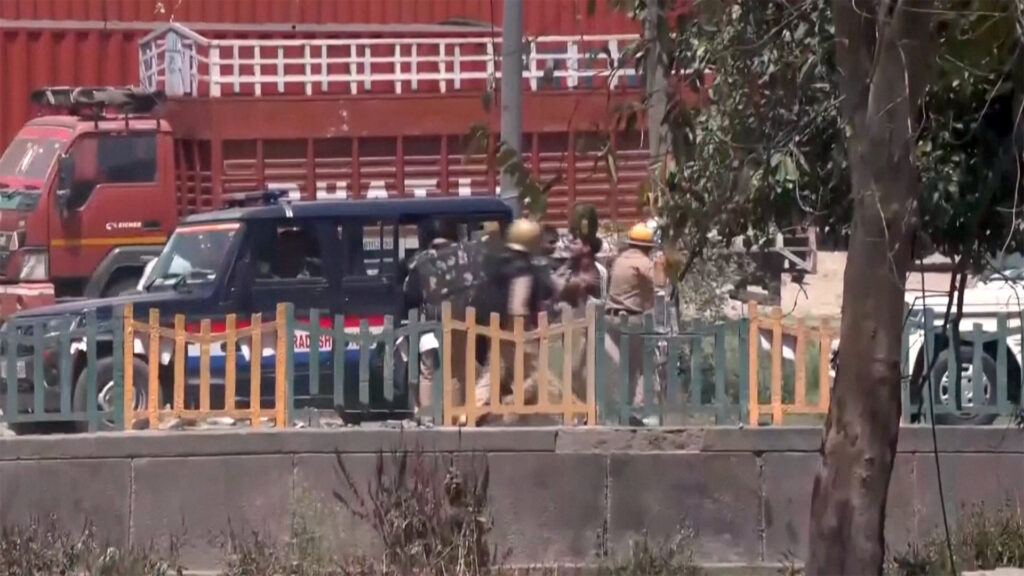
In the industrial city of Noida, India, a protest by factory workers over escalating living costs has taken a violent turn, prompting increased police enforcement and raising concerns about labor unrest and economic pressures. The workers, primarily employed in various manufacturing units, gathered to voice their grievances concerning the sharp rise in everyday expenses, including food, housing, and transportation. This protest reflects wider economic challenges faced by the working class amid inflationary trends impacting India and many other parts of the world.
The demonstration began peacefully, with workers demanding wage hikes and better working conditions in light of the increasing cost of living. However, tensions escalated when negotiations between the workers’ representatives and factory management failed to produce a satisfactory outcome. The protest then grew more intense, leading to clashes between the protesters and law enforcement authorities.
Police forces stepped up their presence and enforcement measures in an attempt to restore order, employing crowd control tactics to disperse unruly groups and maintain public safety. Reports indicated incidents of property damage and disruptions to local traffic, further exacerbating the situation.
The unrest in Noida highlights the broader issue of economic strain on India’s labor force. Despite a steady economic growth trajectory in recent years, inflation has significantly eroded the purchasing power of workers, prompting demands for increased wages and employment benefits.
Labor unions in the region have condemned the rising cost of living, urging the government and industrial leaders to take immediate action to address wage stagnation and cost inflation. They advocate for policies that would ensure fair compensation aligning with the inflation rate and improved social welfare measures for the working class.
Economic analysts note that the situation in Noida could be indicative of potential labor unrest in other industrial hubs across India if inflationary pressures persist without adequate policy responses. The government faces the complex task of balancing economic growth, inflation control, and social stability.
In response to the protest, local authorities have called for dialogue and negotiation, emphasizing the importance of peaceful resolution and mutual understanding between workers and factory owners. Efforts are underway to set up mediation channels to address workers’ concerns constructively.
The events in Noida serve as a critical reminder of the challenges faced by workers amid rising living expenses and the imperative for coordinated action among stakeholders to mitigate such conflicts. The resolution of this protest could set a precedent for managing similar situations in India’s dynamic industrial landscape.