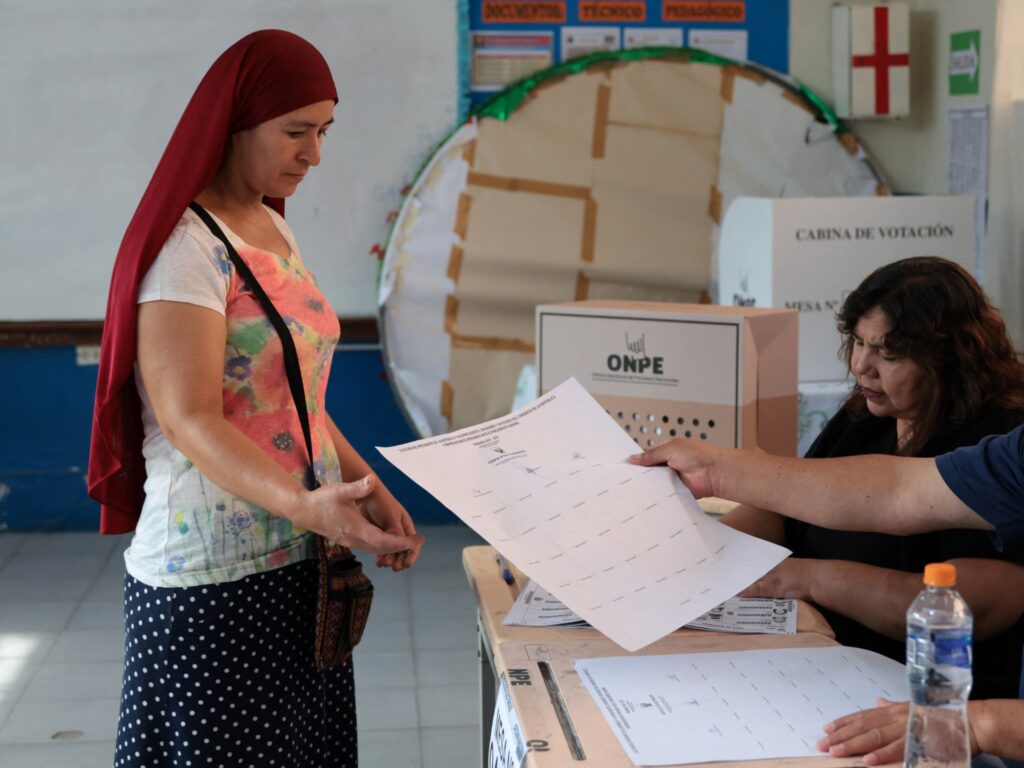
Peru is once again going to the polls to elect its president, marking the nation’s ninth presidential election in under ten years. This frequent change in leadership underscores a period of significant political instability and challenges within the South American country.
This election is notable for its unusually large and eclectic field of candidates. Voters will choose from 35 presidential hopefuls who come from a broad spectrum of backgrounds, reflecting the diverse and complex political landscape of Peru. Among the candidates is a comedian, adding an element of entertainment and unconventional politics to the race.
Another prominent figure in the running is a media baron, whose significant influence in Peru’s media sphere raises questions about the interplay between media power and political ambition. This candidate’s campaign is being closely watched to see how media ownership might tilt electoral dynamics.
Also among the candidates is an heiress to a political dynasty, which adds a traditional dimension to the race. Her candidacy highlights the enduring presence of family-based political power in Peru, despite growing public calls for renewal and change.
The political environment in Peru has been turbulent over recent years, with successive presidents facing corruption scandals, economic difficulties, and social unrest. This pattern has led to a high turnover rate in leadership, with each administration struggling to maintain stability and address the country’s pressing issues.
The upcoming election is being viewed by many as a critical moment for Peru to break the cycle of volatility and chart a new course toward political stability and economic recovery. Voter sentiment appears to be deeply divided, reflecting widespread dissatisfaction with the political establishment and a search for new leadership.
Election experts emphasize the importance of this vote as representative of broader democratic processes in Latin America, where political fragmentation and populism are increasingly prevalent. The Peruvian electoral contest serves as a microcosm of regional trends where electorates are increasingly skeptical of traditional politicians.
This election’s outcome will not only shape Peru’s immediate future but also set precedents for governance in times of political crisis. The new president will face the daunting task of uniting a polarized society and implementing reforms vital for sustainable development.
As Peruvians head to the polls, the eyes of the international community remain fixed on the country. The world waits to see whether Peru can navigate its political maze and emerge stronger, or if it will continue to grapple with the instability that has characterized its recent political history.