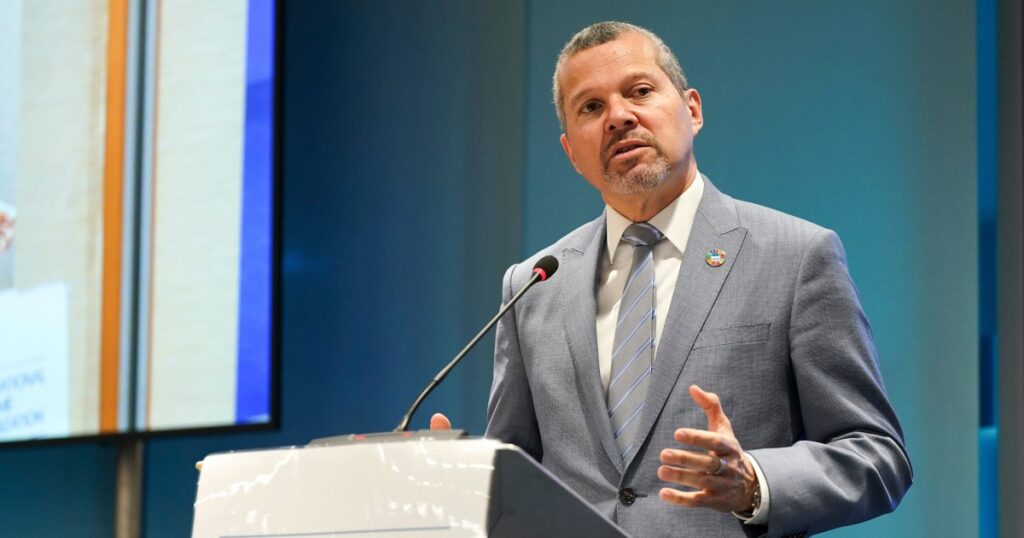
In a recent interview with Al Jazeera, the chief of the International Maritime Organization (IMO) voiced strong opposition to Iran’s intention to impose tolls on vessels passing through the Strait of Hormuz. The IMO chief emphasized that the global community should reject any attempts to levy tolls in this critical waterway, which serves as a vital artery for international maritime trade. The Strait of Hormuz is a narrow passage that connects the Persian Gulf to the Gulf of Oman and the Arabian Sea, through which a significant percentage of the world’s petroleum passes. Given its strategic importance, the introduction of tolls could have widespread economic and geopolitical ramifications.
The IMO chief highlighted that charging tolls in such an international waterway could undermine the principles of freedom of navigation and pose risks to global maritime security and trade stability. The international community, according to the official, must uphold the existing maritime laws and conventions that guarantee free passage for all vessels, regardless of their origin or cargo.
Iran’s move to impose tolls has raised concerns among several nations that rely heavily on this passage for their energy supplies and trade routes. Some experts warn that tolls could escalate tensions in the region, potentially leading to conflicts or disruptions in shipping traffic.
The United Nations Maritime agency continues to monitor the situation closely and remains committed to facilitating dialogue among all stakeholders to ensure that the Strait of Hormuz remains open and accessible without unnecessary barriers. The IMO chief’s remarks serve as a call to action for countries around the world to collectively resist any unilateral action that could jeopardize international maritime norms.
In conclusion, the position taken by the International Maritime Organization underscores the importance of maintaining free navigation through one of the world’s most strategically significant maritime corridors. Ensuring unimpeded passage in the Strait of Hormuz not only supports global economic stability but is also essential for international peace and security.