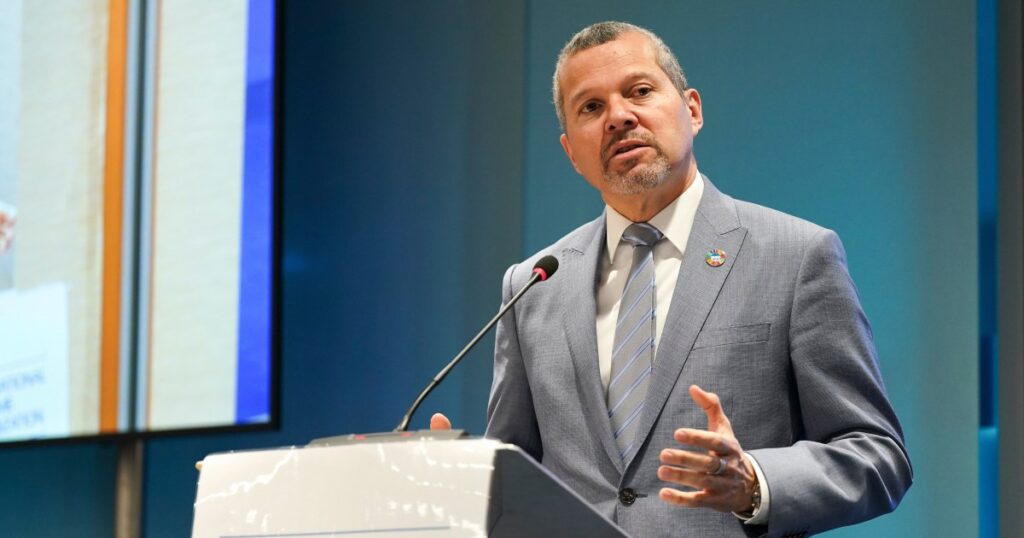
The International Maritime Organization (IMO), a United Nations agency responsible for regulating shipping, has firmly stated that Iran should not be permitted to levy toll charges on vessels passing through the Strait of Hormuz. In an exclusive interview with Al Jazeera, the IMO chief emphasized that the global community must stand united to reject any toll impositions in this critical waterway.
The Strait of Hormuz is a strategic chokepoint located between the Persian Gulf and the Gulf of Oman, through which a significant portion of the world’s petroleum shipments transit. Given its importance to global energy security and international trade, the governance and neutrality of the strait have been long-standing issues of international concern.
The IMO chief underlined that the principle of free navigation in international waters is fundamental and must be upheld to ensure safe and uninterrupted maritime traffic. “Charging tolls in such an internationally utilized waterway threatens not only economic stability but also diplomatic relations,” the official remarked.
Iran’s recent attempts to announce toll charges on ships passing through the Strait of Hormuz have sparked tensions among the international community. Several countries reliant on oil imports from the region have expressed deep apprehension about the move, fearing it could disrupt supply chains and increase shipping costs.
Experts warn that permitting tolls could set a dangerous precedent, encouraging other nations to impose similar fees in other key maritime routes, potentially complicating international maritime law.
The IMO, through its regulatory framework and international conventions, advocates for the free passage of vessels and works with member states to resolve disputes in maritime zones peacefully. The organization’s stance is clear: maintaining the strait’s open and toll-free status is essential for global trade security.
Maritime analysts also highlight that effective surveillance and cooperation among littoral states are critical to ensuring the security of the strait, especially in light of rising geopolitical tensions in the region.
The call from the IMO chief is seen as a plea for diplomacy and international cooperation to address sovereignty issues without resorting to unilateral actions that could destabilize an already fragile balance.
This statement comes at a time when geopolitical dynamics in the Persian Gulf region remain volatile, and the international community closely monitors any developments that could impact global energy markets or maritime security.
In conclusion, the United Nations, through its maritime agency, has taken a definitive stance against Iran’s proposed toll charges, advocating for the preservation of free and open navigation in the Strait of Hormuz. This position reflects broader concerns about maintaining stability, security, and the unimpeded flow of trade through one of the world’s most important maritime corridors.