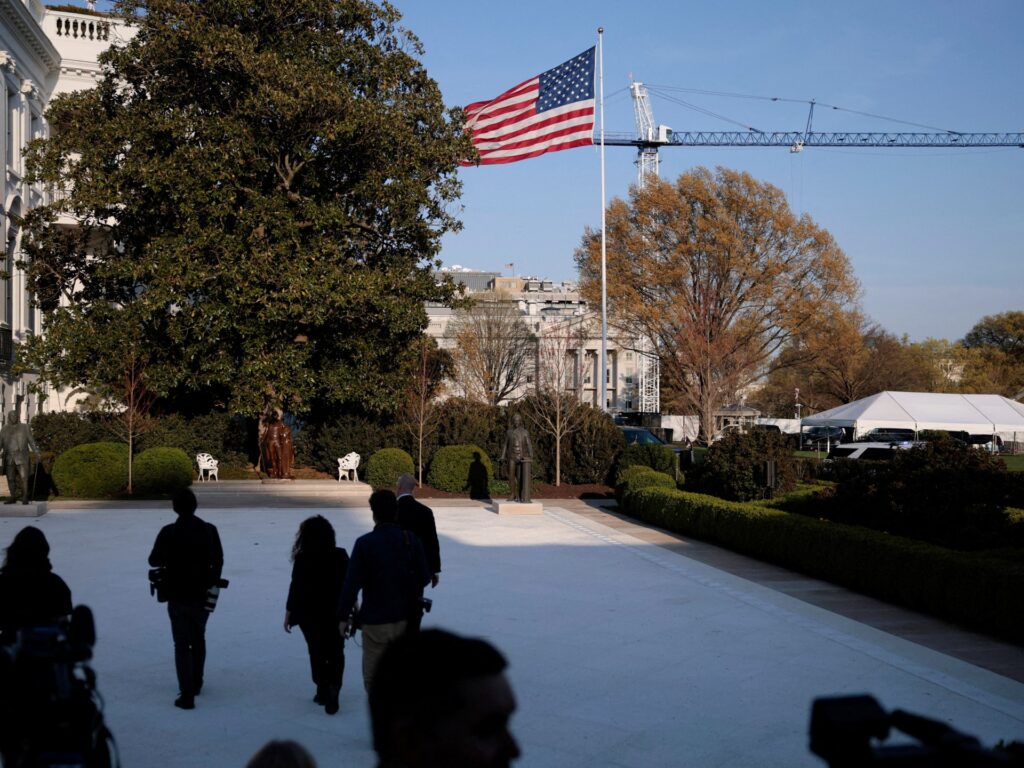
In a recent ruling, a US appeals court has extended the deadline to halt the construction of a ballroom at the White House, allowing work to continue for the time being. This decision comes as the court weighs the arguments presented by former President Donald Trump’s legal team, who claim that completing the ballroom is essential for national security purposes.
The construction project, initially paused due to legal challenges, involves the addition of a grand ballroom at the historical White House residence. Opponents of the project have raised concerns about potential environmental and procedural violations, prompting judicial intervention to reconsider the ongoing work.
During the court proceedings, the judges expressed skepticism regarding the national security justification put forth by Trump’s representatives. They questioned the evidence supporting the claim that the ballroom’s completion is critical to safeguarding the nation’s interests.
Despite the court’s extension of the deadline, no final decision has been made on the legality or merits of the construction itself. The case remains under review, with both sides expected to provide further documentation and arguments in the coming weeks.
Legal experts note that the extended deadline allows for a more thorough examination of the complex issues surrounding the project, including its impact on historic preservation, environmental regulations, and national security considerations.
The White House ballroom project has drawn significant public attention, highlighting the delicate balance between preserving national heritage and addressing contemporary operational needs.
Trump’s legal team has maintained that the ballroom is not merely an aesthetic upgrade but serves practical functions that support presidential activities and security protocols.
However, opponents argue that such enhancements could be achieved through less intrusive means that do not pose potential risks to the White House grounds or violate legal statutes.
The appeals court’s extension signals a cautious approach to intervening in matters involving the executive branch, especially when claims touch upon national security—a domain typically afforded considerable deference.
As the process unfolds, the final ruling will likely have broader implications for future renovations and expansions within federal properties, setting precedents on how courts weigh security arguments against regulatory compliance.
Government officials have stated their commitment to ensuring that all construction activities adhere strictly to applicable laws and preserve the sanctity of the White House estate.
Advocacy groups have also called for increased transparency and thorough environmental impact assessments related to the ballroom project.
In summary, the appeals court’s decision to extend the deadline demonstrates the judiciary’s role in carefully balancing competing interests. While allowing construction to proceed temporarily, the court remains vigilant in scrutinizing the validity of national security claims and the legal framework governing such projects.
The ongoing debate underscores the complexities inherent in maintaining national landmarks while addressing evolving security and functional needs of the nation’s executive leadership.
Further updates are anticipated as the legal process continues, with stakeholders closely monitoring the implications of this high-profile case for governance, heritage preservation, and national security policy.