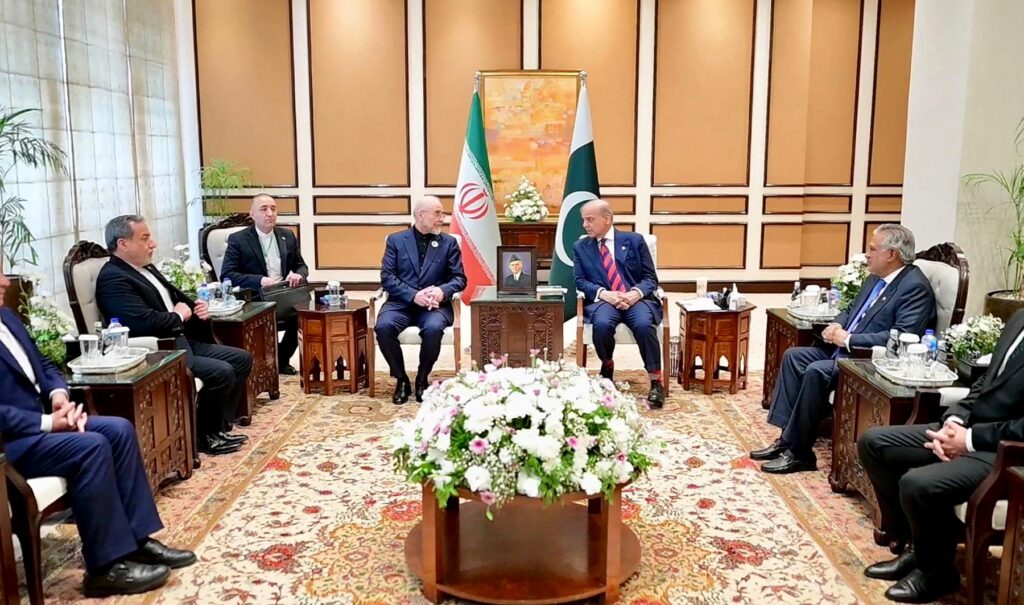
In a historic development, the United States and Iran have resumed direct talks for the first time since 1979, with the discussions taking place in Islamabad. This diplomatic engagement marks a significant moment in the tense relationship between the two nations, which have long been at loggerheads over various geopolitical and nuclear issues.
Central to these talks is the strategic Strait of Hormuz, a narrow waterway that holds immense global economic and military significance. The Strait, located between the Persian Gulf and the Gulf of Oman, serves as a critical chokepoint through which a substantial proportion of the world’s oil supply is transported. Control or disruption of this vital passageway can have far-reaching impacts on global energy markets and international security.
The significance of the Strait of Hormuz in US-Iran relations cannot be overstated. Iran has, in the past, threatened to close the Strait in response to sanctions and international pressures, raising concerns over the free flow of oil and the stability of global markets. This threat has made the Strait a key leverage point in Iran’s geopolitical strategy.
During the Islamabad talks, both sides have reportedly focused on addressing security concerns in the region, with particular attention to freedom of navigation and de-escalation of military tensions around the Strait. The US aims to ensure that the passage remains open to international shipping and to prevent any hostile actions that could disrupt maritime traffic.
For Iran, easing sanctions and gaining international legitimacy are key objectives, and the Strait of Hormuz remains a bargaining chip in these negotiations. The talks are seen as an opportunity to explore potential compromises that could lead to a reduction in hostilities and pave the way for more extensive diplomatic engagement.
Experts suggest that progress in these talks could signal a shift in the dynamics of Middle Eastern geopolitics and affect global energy security. The US and its allies are closely monitoring these discussions, hoping for a de-escalation that benefits the broader international community.
However, significant challenges remain, including mutual distrust, the complex regional rivalries, and differing priorities that could hinder swift progress. The outcome of the talks in Islamabad will likely influence not only US-Iran relations but also the security environment in the Persian Gulf and beyond.
As the world watches these unprecedented talks, the Strait of Hormuz continues to loom large as a potent symbol and strategic leverage point. The success or failure of these discussions could well determine the contours of peace and conflict in one of the world’s most volatile regions.