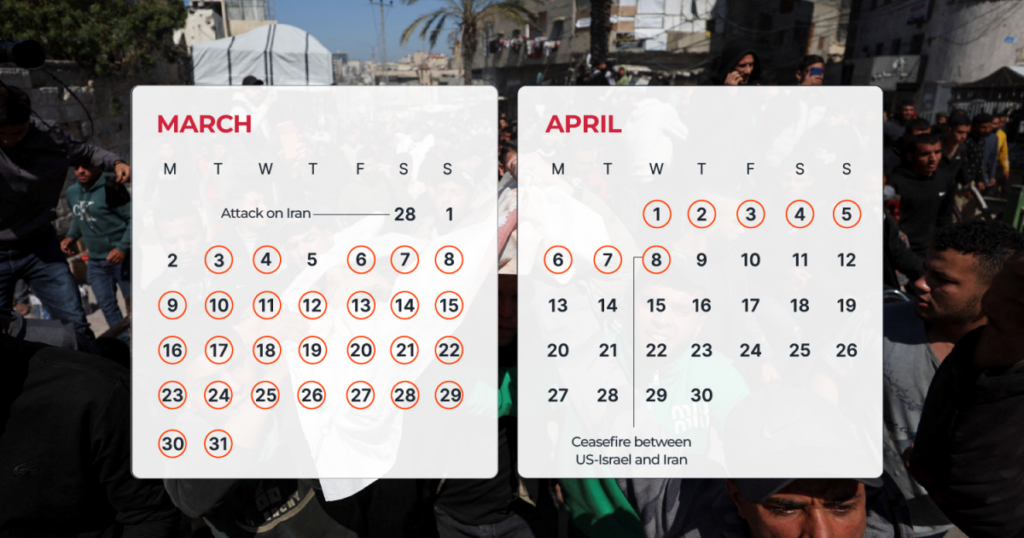
Over the recent 40-day period, Israel has conducted airstrikes on Gaza for 36 days, significantly escalating the conflict in the region. This intense military activity coincided with ongoing warfare involving Iran, further complicating the geopolitical landscape. According to reports, Israel’s operations in Gaza have resulted in the deaths of 107 individuals, highlighting the severe humanitarian impact of the strike campaign.
In addition to the direct casualties, Israel has imposed strict limitations on medical evacuations and the flow of essential supplies. Only 8 percent of requested medical evacuations have been permitted, raising concerns about the accessibility of urgent medical care for the injured and ill in Gaza. Similarly, the entry of trucks carrying vital goods and humanitarian aid has been severely restricted, with only 20 percent of such vehicles allowed to enter the territory.
These restrictions have intensified the humanitarian crisis in Gaza, hampering efforts to provide relief and medical treatment. The combination of relentless bombings and limited access to aid has exacerbated the suffering of the civilian population, drawing international attention and condemnation.
The ongoing conflict between Israel and Iranian interests adds another layer of complexity, threatening regional stability and peace efforts. The situation underscores the urgent need for diplomatic interventions and humanitarian assistance to address the dire consequences faced by civilians in Gaza.
The international community continues to call for immediate ceasefires and the facilitation of humanitarian corridors to ensure safe passage for medical evacuations and the delivery of essential supplies. The persistent violence and restricted aid access highlight the profound challenges in resolving the conflict and protecting human lives in one of the most volatile regions of the world.