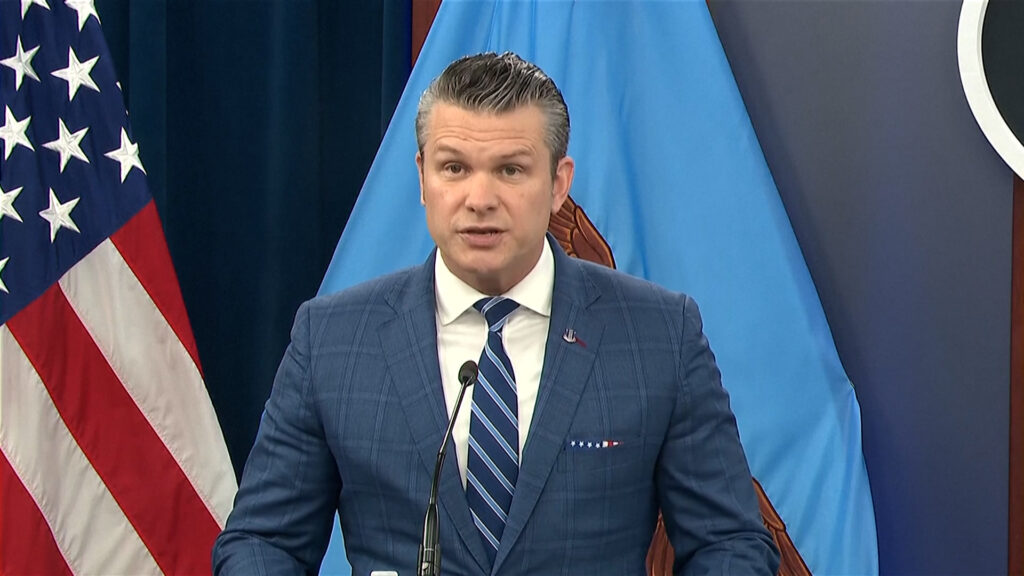
U.S. Defense Secretary Pete Hegseth recently made a striking statement asserting that Iran has begged for a ceasefire, framing it as a sign of a “historic victory” for the United States. This declaration marks a significant moment in the ongoing tensions between the U.S. and Iran, reflecting heightened rhetoric and the perception of a turning point by American defense leadership.
Hegseth’s comment came amidst a backdrop of escalating conflicts and diplomatic strain in the Middle East. The U.S. defense chief highlighted what he portrayed as a decisive victory over Iran, suggesting that recent strategic maneuvers and pressure applied by the United States have resulted in Iran’s overtures for peace negotiations.
The claim that Iran begged for a ceasefire is indicative of the shifting dynamics in the region, where longstanding hostilities have frequently flared into open confrontations. Hegseth emphasized that this moment is unprecedented, framing it as a watershed event that underscores the effectiveness of U.S. policies and military readiness.
While details of the alleged ceasefire request remain sparse, the U.S. administration has been vocal about its commitment to countering Iranian influence and supporting stability in allied nations. This assertion from Hegseth could signify a potential pivot in regional geopolitics if it translates into genuine dialogue and de-escalation.
Analysts observe that such statements serve multiple purposes, including domestic political signaling and international posturing. By declaring a “historic victory,” Hegseth reinforces a narrative of American strength and resilience in the face of complex challenges posed by Iran’s activities.
Iran’s response to Hegseth’s claim has not been detailed publicly, leaving questions about the authenticity and scope of the purported ceasefire request. The situation remains fluid, with international observers keenly watching for developments that might impact security and diplomatic relations across the Middle East.
This episode forms part of the broader context of U.S.-Iran relations, which have been fraught with tension over issues ranging from nuclear development to regional proxy conflicts. The assertion of an Iranian plea for ceasefire introduces a new dimension to these interactions, potentially opening space for negotiations or, conversely, escalating rhetoric.
Defense and foreign policy experts stress the importance of verifying such claims through multiple channels to assess their veracity and implications accurately. The narrative of victory, while impactful, must be weighed against on-the-ground realities and diplomatic signals that could shape the future trajectory of U.S.-Iran engagement.
In conclusion, Secretary Pete Hegseth’s declaration of a “historic victory” and his statement that Iran begged for a ceasefire highlight a dramatic and optimistic view from the U.S. defense perspective. Whether this translates into lasting peace or shifts in policy remains to be seen, but it undoubtedly marks a noteworthy moment in the ongoing saga of Middle Eastern geopolitics.