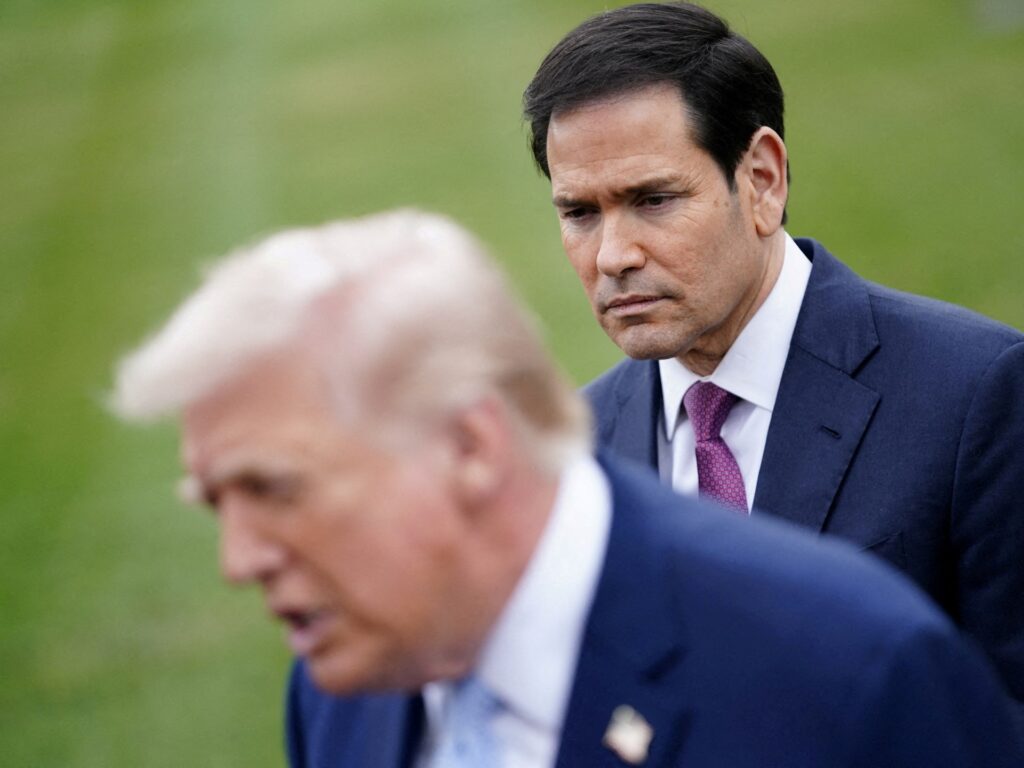
Senator Marco Rubio announced that he has successfully advocated for the revocation of US residency status from Hamideh Soleimani Afshar, the niece of the late Iranian military commander Qassem Soleimani. The move has been confirmed by a statement from the US State Department, which labeled Afshar an “outspoken supporter” of the Iranian regime.
Qassem Soleimani, former commander of the Quds Force of Iran’s Islamic Revolutionary Guard Corps, was killed in a US drone strike in January 2020. Since his death, the US government has maintained a firm stance against individuals linked to Soleimani and the Iranian regime’s activities.
Hamideh Soleimani Afshar reportedly had residency status in the United States, but her association with Iran and vocal support for controversial political stances prompted scrutiny. Senator Rubio’s intervention led to a reevaluation of her status, culminating in the decision to strip her of her US residency rights.
The US State Department’s statement condemned Afshar for her persistent support of Iranian policies perceived as adversarial to US interests. Authorities stress that individuals who provide support to entities opposing US foreign policy objectives will face consequences, including loss of immigration privileges.
Senator Rubio, a vocal critic of the Iranian government, emphasized the importance of maintaining a tough posture against Iran’s influence in the region. He praised the State Department for following through on his recommendation and reaffirmed his commitment to combating Iranian influence within and beyond US borders.
This action aligns with broader US efforts to limit the impact of Iranian operatives and affiliates who might use American soil as a base for their activities. It sends a clear message that support for militant or controversial figures like Qassem Soleimani will not be tolerated.
The move has garnered mixed reactions, with some praising it as a necessary step in protecting US national security, while others raise concerns over potential civil liberties and due process issues in such cases.
Overall, this development underscores the ongoing tensions between the US and Iran, particularly post the killing of Soleimani and the heightened rhetoric surrounding Iran’s regional ambitions.
The case of Hamideh Soleimani Afshar is likely to set a precedent for how the US handles residency and immigration status of individuals connected to politically sensitive figures. It also highlights the increasing role of US lawmakers in influencing immigration decisions based on national security considerations.
As the situation evolves, it remains to be seen how Iran will respond to this latest diplomatic and legal maneuver by the United States. Analysts suggest this could further strain already tense US-Iran relations and may trigger additional sanctions or countermeasures.
In conclusion, Senator Rubio’s announcement and the State Department’s subsequent action represent a firm commitment from the US government to counter perceived threats from Iran-linked individuals domestically. This case vividly illustrates the intersection of immigration policy and international security concerns in the contemporary geopolitical landscape.