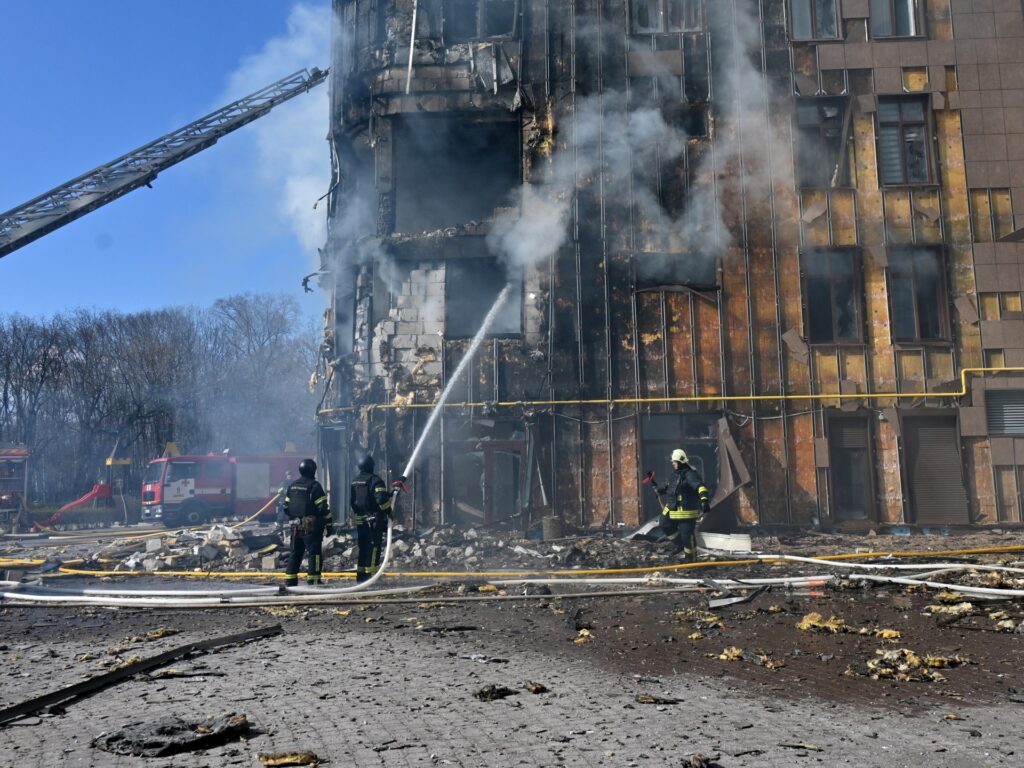
The ongoing conflict between Russia and Ukraine saw a significant escalation with at least 15 people killed in Russian attacks on Ukrainian territory. The violent exchange occurred amid high-level diplomatic activities, as Ukrainian President Volodymyr Zelenskyy met with Turkish President Recep Tayyip Erdogan to discuss the tense situation and potential avenues for peace.
The Russian offensive targeted multiple locations in Ukraine, resulting in considerable casualties and destruction. This surge in violence underscores the fragile and volatile state of relations between the two nations, which have been engaged in a protracted conflict since 2014.
In retaliation, Ukrainian forces launched an attack on Russia’s southern Rostov region, where at least one person was reportedly killed. This marked a notable escalation, as Ukrainian military actions striking Russian soil have been relatively rare in the conflict.
The meeting between Zelenskyy and Erdogan was seen as a critical diplomatic effort amid the intensifying conflict. Both leaders discussed various measures to de-escalate tensions and seek a resolution to the ongoing hostilities. Turkey, maintaining a strategic position, has been involved in diplomatic efforts to mediate between Russia and Ukraine, emphasizing the importance of regional stability.
The international community continues to watch the developments closely, with many nations urging restraint and the resumption of diplomatic dialogues. The recent exchange of attacks and casualties highlights the urgency of finding peaceful solutions to prevent further loss of life and destruction.
As the conflict enters a new phase of heightened violence, the humanitarian situation in affected areas is worsening, with civilians bearing the brunt of the hostilities. Aid organizations are calling for increased support and safe corridors to help those caught in the crossfire.
The tragic loss of life on both sides amplifies the need for comprehensive peace talks. While military confrontations continue, diplomatic engagements like the Zelenskyy-Erdogan meeting provide a glimmer of hope for negotiations that could eventually lead to a ceasefire and peaceful resolution.
The situation remains fluid, with both Ukraine and Russia showing signs of increased military activities. Observers warn that without diplomatic breakthroughs, the conflict risks further escalation, potentially drawing in neighboring countries and complicating the geopolitical landscape.
Turkey’s role as a mediator is crucial, given its unique position bordering both conflict parties and its influence in the region. Erdogan’s engagement with Zelenskyy signals Ankara’s commitment to fostering dialogue and preventing the conflict from spiraling out of control.
The death toll from recent attacks serves as a somber reminder of the high stakes involved. Civilians in frontline areas face daily dangers, and the international community’s response will be pivotal in shaping the conflict’s trajectory.
Efforts to revive peace talks are ongoing, with the hope that continued diplomatic pressure and negotiations can halt the violence. The Zelenskyy-Erdogan meeting represents a significant step in this direction but highlights the challenges ahead.
As the conflict endures, all parties must consider the devastating human cost and the imperative need for durable peace. The world watches anxiously as leaders seek avenues to resolve their differences without further bloodshed.
In summary, the recent escalation in violence, coupled with critical diplomatic engagements, paints a complex picture of the Russia-Ukraine conflict. The coming weeks will be decisive in determining whether military actions escalate further or whether a path to peace can be forged through sustained dialogue and international cooperation.