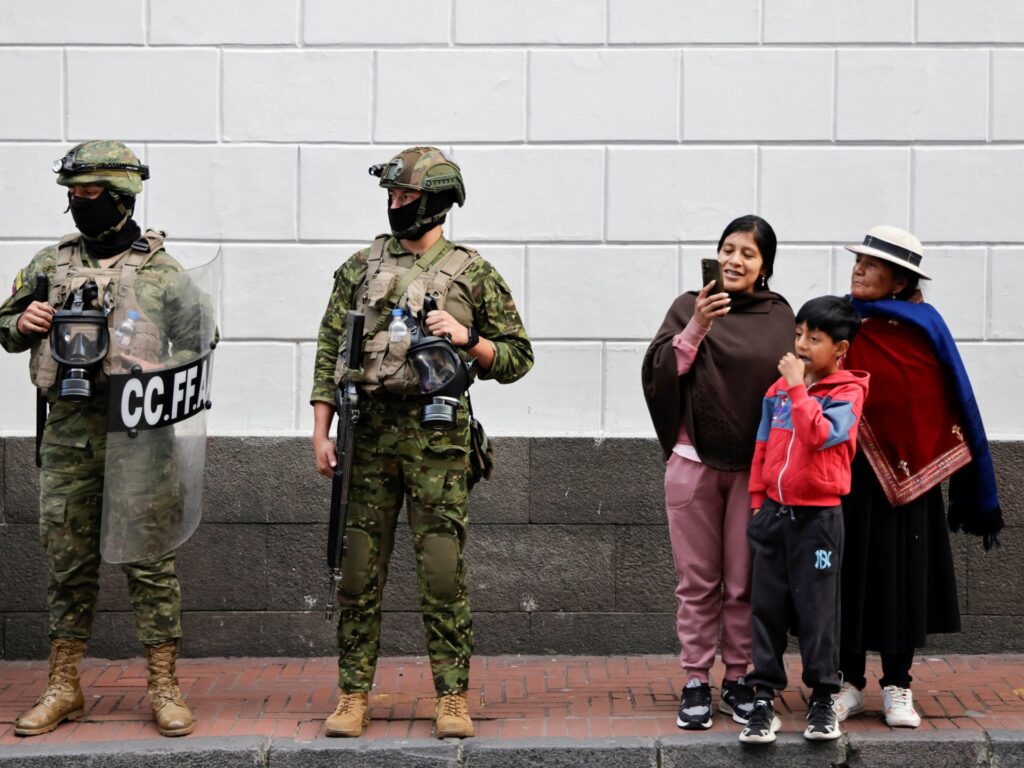
Ecuador has reported a significant 28% drop in homicides, a development hailed by President Daniel Noboa as a sign of progress in the country’s ongoing battle against crime. This decline comes amid widespread concerns and debates over the government’s hardline approach to combating local criminal networks.
President Noboa, who took office with a strong mandate to address the country’s escalating violence and crime rates, has implemented stringent measures to dismantle criminal organizations. These measures include deploying military operations that often involve coordination and support from the United States, aimed at curbing drug trafficking, organized crime, and gang violence.
The anti-crime campaign is characterized by increased security presence in crime-prone areas, strategic operations targeting key criminal figures, and the strengthening of law enforcement agencies. The government claims that such efforts have directly contributed to the reduction in violent crime, with homicides being a key indicator.
However, the campaign has not been without controversy. Human rights organizations and some civic groups have raised concerns over the militarization of crime-fighting efforts, pointing to potential abuses and the impact on civilian populations. Critics argue that while the drop in homicides is positive, the approach might undermine civil liberties and does not address the underlying social issues contributing to crime.
Despite the critiques, President Noboa remains steadfast in his commitment, emphasizing the urgency to restore safety and order. He argues that the collaboration with the US military provides vital resources and intelligence needed to effectively counter sophisticated criminal networks.
Public reactions in Ecuador are mixed. Many citizens welcome the decline in homicides, hopeful for a safer environment and economic stability. Others remain cautious, questioning the long-term implications of relying on military force to handle public security.
The Ecuadorian government is also working on complementary social programs aimed at crime prevention, including youth education, employment opportunities, and community development projects to tackle the root causes of criminal behavior.
Experts note that successful crime reduction requires a balanced approach, combining effective law enforcement with social investment and judicial reforms. The current results in Ecuador may serve as a case study for other countries grappling with similar security challenges.
In summary, Ecuador’s reported 28% drop in homicides under President Noboa’s anti-crime campaign marks a notable achievement, yet it also highlights the complex trade-offs between security and human rights. The coming months will be critical in assessing the sustainability and broader impact of the government’s strategy.