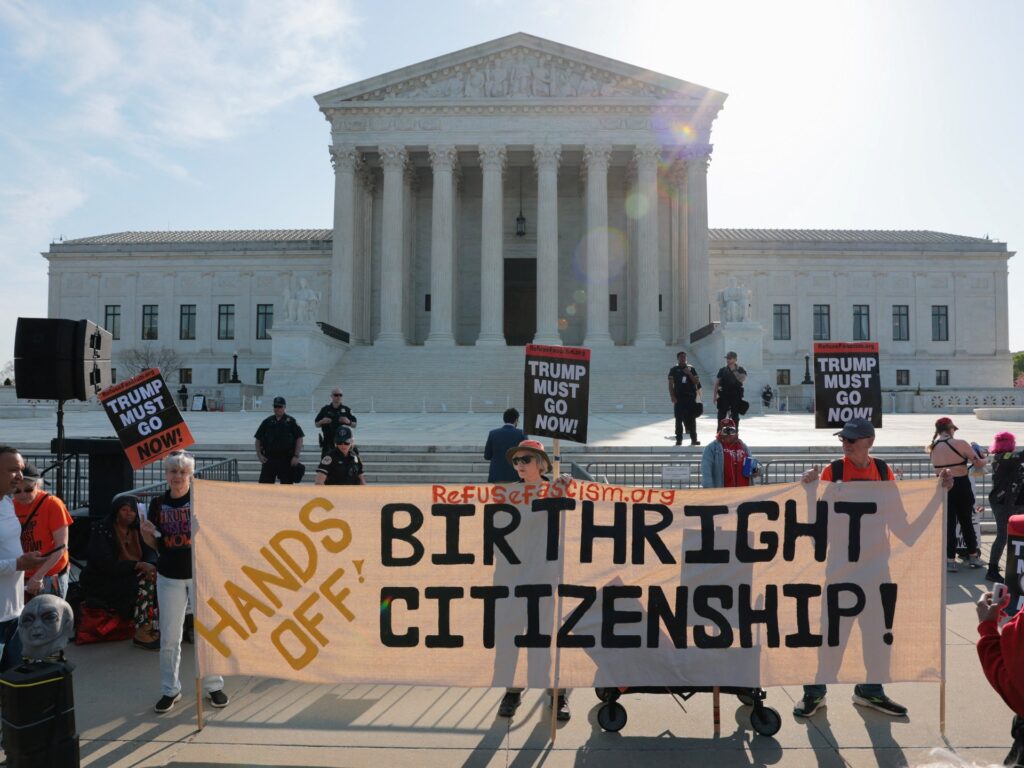
The United States Supreme Court has recently taken on a highly significant case concerning birthright citizenship, a principle that has been a cornerstone of American identity for over a century. This case directly challenges the century-old provision where infants born on US soil are automatically granted American citizenship.
Birthright citizenship, enshrined in the 14th Amendment of the US Constitution, has been a fundamental policy allowing anyone born in the country to claim citizenship regardless of their parents’ immigration status. However, this practice is now under scrutiny as the Supreme Court considers arguments that could potentially reshape the future of this policy.
The case stems from a legal challenge questioning whether the current interpretation of birthright citizenship is appropriate in today’s immigration and social climate. Proponents of change argue that the automatic grant of citizenship encourages illegal immigration and puts strain on public resources, while opponents maintain that the policy upholds the nation’s longstanding commitment to equality and inclusivity.
Legal experts describe the case as touching ‘close to home’ for many Americans, as the implications extend far beyond the individual circumstances involved. If the Court were to narrow or overturn the rule, it could lead to significant effects on immigration laws, citizenship rights, and the demographic landscape of the nation.
Supporters of maintaining birthright citizenship emphasize that it is a clear and straightforward rule that protects the rights of children born in the US and prevents statelessness. They argue that altering this principle could cause confusion and hardship for many families.
On the other hand, those advocating for change suggest that the policy is outdated in an era of complex immigration issues and argue that citizenship should be granted through parental legal status rather than mere birthplace.
The Supreme Court’s decision will be closely watched across the country and internationally, as it may set a precedent influencing immigration policies worldwide. The case also reignites broader debates about American identity, inclusiveness, and the values enshrined in the Constitution.
As arguments conclude and the Court deliberates, citizens, lawmakers, and immigration advocates await what could be one of the most pivotal legal decisions in recent history. The outcome could redefine who is considered American and reshape the legal landscape for generations to come.