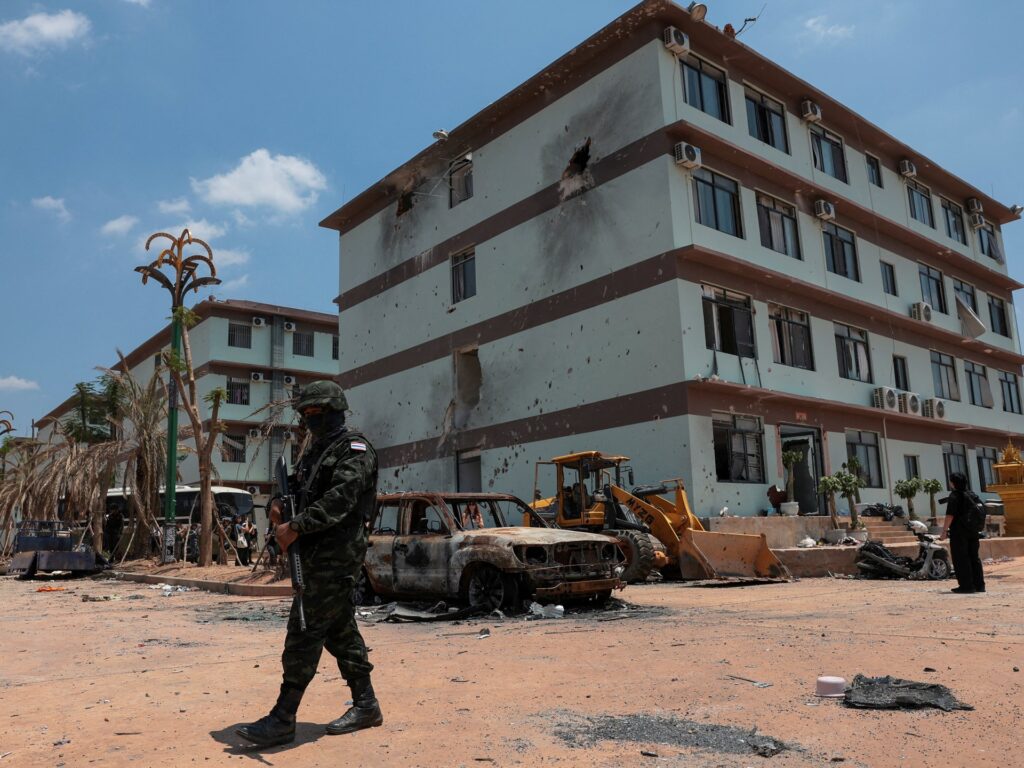
The United States Treasury Department has imposed sanctions on Cambodian Senator Kok An, accusing him and his associates of leveraging political influence to shield an extensive network of fraudulent operations. According to the US authorities, Kok An is involved in protecting and facilitating multiple scam centers that deceive individuals and businesses, exploiting political clout to evade legal consequences.
These sanctions mark a significant move by the US government to crack down on transnational corruption and fraud activities linked to prominent figures in Cambodia. The Treasury Department’s Office of Foreign Assets Control (OFAC) cited evidence suggesting that Kok An has used his position in the Cambodian Senate to obstruct investigations and safeguard these illicit centers.
Kok An is a well-known figure in Cambodian politics and business, and these allegations have raised concerns about systemic corruption within the country’s governing institutions. The purported scam network reportedly engages in activities such as online fraud schemes, money laundering, and other deceptive practices targeting victims both domestically and internationally.
The sanctions include freezing of assets held by Kok An and his associates under US jurisdiction, along with prohibiting American individuals and companies from conducting any business transactions with those named. This move aims to curtail the financial and operational capabilities of the fraudulent network and pressure Cambodia to address corruption issues more transparently.
Experts view the US measures as part of a broader international effort to combat corruption and illicit activities that undermine governance and economic development in Southeast Asia. The Cambodian government has yet to issue a formal response to the sanctions or the allegations laid out by the US Treasury.
This development also raises questions about the integrity of Cambodia’s political landscape and the effectiveness of its institutions in upholding the rule of law. Observers suggest that sustained international pressure could potentially lead to reforms, but caution that entrenched interests may resist meaningful change.
The US sanctions against Senator Kok An underscore the global community’s growing intolerance of corruption and fraudulent activities that transcend borders. With the expansion of digital technologies and criminal networks, tackling such issues requires coordinated actions between nations and rigorous enforcement of sanctions.
In conclusion, the designation of Kok An and his associates by the US Treasury represents a critical attempt to disrupt a major fraud network allegedly protected by political influence in Cambodia. As investigations continue, the international community will be watching closely to see if this move prompts further accountability and reform within Cambodia’s political and legal systems.