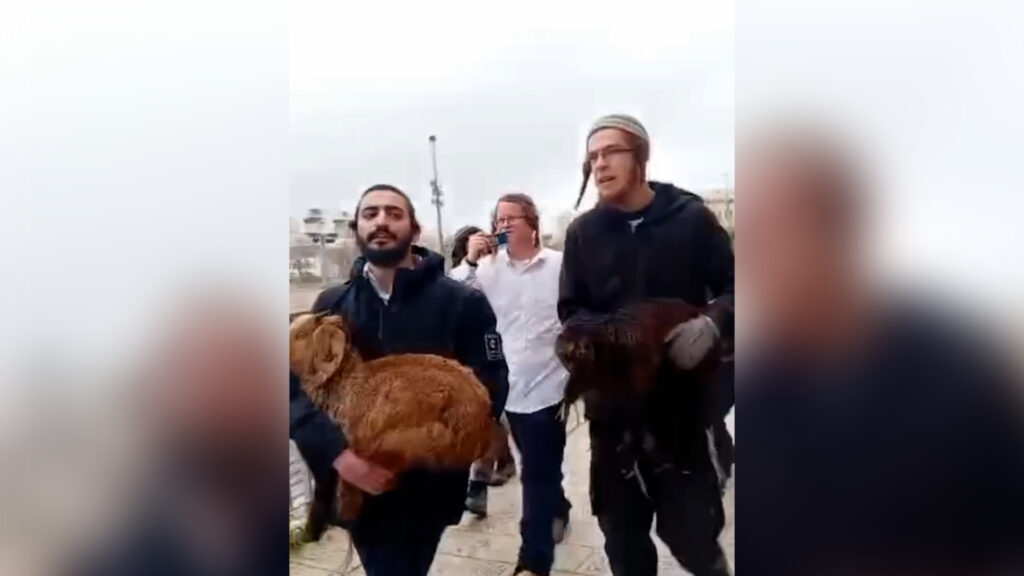
In a recent and highly sensitive incident, a group of Israelis were filmed attempting to bring goats into the Al-Aqsa Mosque compound with the intention of performing a traditional Passover sacrifice. The act, deeply rooted in Jewish religious customs during Passover, has ignited significant tension due to the sacred and contested nature of the site.
The Al-Aqsa Mosque compound, located in Jerusalem, is one of the holiest places in Islam and a focal point of Israeli-Palestinian tensions. It is also known as Haram al-Sharif to Muslims and the Temple Mount to Jews, who revere it as the site of the ancient Jewish temples. The compound is under the control of the Islamic Waqf, and any religious activities, especially non-Muslim rituals, are strictly regulated and often prohibited.
The Israeli group’s attempt to conduct a Passover sacrifice involving goats inside the compound is viewed by many Palestinians and Muslim communities as a provocative act that challenges the longstanding status quo and religious sensitivities of the area. The ritual sacrifice of goats is a significant element in the observance of Passover, commemorating the story of the Exodus from Egypt, but its performance in the Al-Aqsa compound is unprecedented and inflammatory.
This incident was captured on video and quickly disseminated across social media platforms, leading to widespread condemnation from Palestinian leaders and the broader Muslim world. Critics argue that such actions could escalate tensions and lead to further clashes, as the site has historically been a flashpoint for violence and political conflict.
On the Israeli side, opinions are divided. Some nationalistic groups see the act as a reaffirmation of Jewish historical claims to the area and religious freedom. Others warn that this type of provocative action could endanger peace efforts and increase hostilities in the region.
The authorities responsible for the management of the Al-Aqsa compound have condemned the attempt, emphasizing the need to maintain the peace and order within this religiously volatile site. Security forces were reportedly involved in handling the situation, although specific details of their response remain limited.
This event underscores the fragile balance of religious and political interests intertwined at the Al-Aqsa Mosque compound. The site’s sanctity to multiple faiths makes it a unique yet sensitive symbol of coexistence and conflict alike.
Experts and observers are calling for restraint and dialogue to prevent similar episodes in the future. They stress the importance of respecting religious practices and sensitivities to avoid igniting further unrest in an already volatile region.
In summary, the attempt by some Israelis to perform a Passover sacrifice at the Al-Aqsa Mosque compound has drawn sharp criticism and highlighted the ongoing complexities and tensions surrounding this sacred site. It serves as a reminder of the delicate nature of Jerusalem’s religious landscape and the need for careful management to preserve peace and mutual respect among diverse communities.