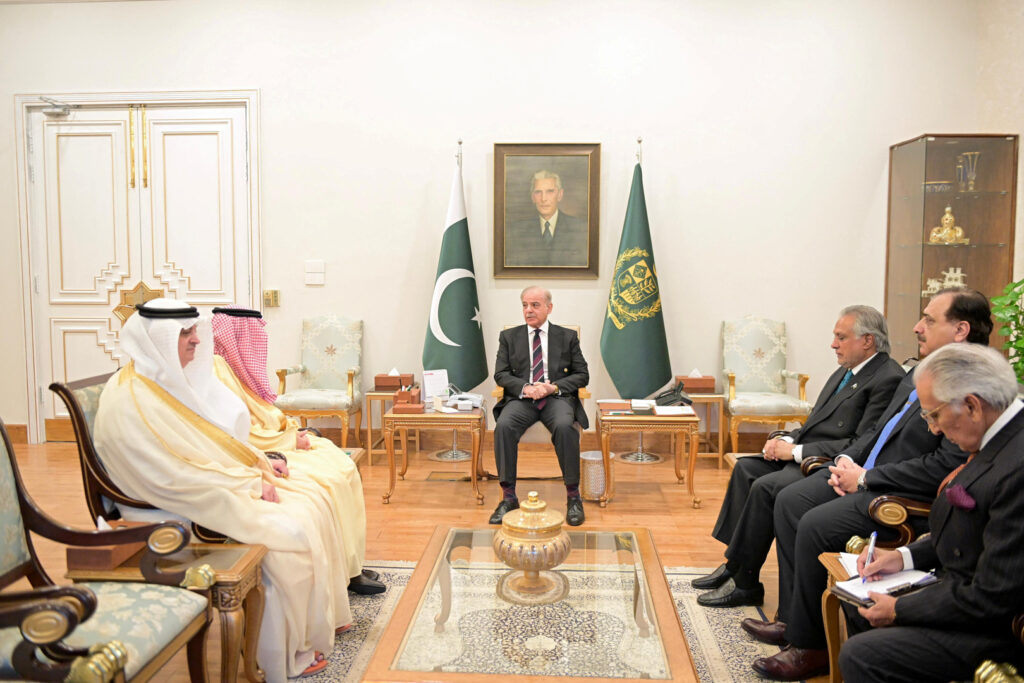
Saudi Arabia's Foreign Minister Prince Faisal bin Farhan Al-Saud and Pakistan's Prime Minister Muhammad Shehbaz Sharif meet at the Prime Minister's House to discuss regional de-escalation, amid the U.S.-Israel conflict with Iran, in Islamabad, Pakistan, March 29, 2026. Pakistan's Ministry of Foreign Affairs/Handout via REUTERS THIS IMAGE HAS BEEN SUPPLIED BY A THIRD PARTY. NO RESALES. NO ARCHIVES.
In the complex geopolitical landscape of the 21st century, Pakistan has established itself as a pivotal player in global crisis management, especially during the escalating tensions between the United States and Iran. As the US wage a contentious war on Iran, Pakistan’s strategic positioning and diplomatic efforts have enabled it to emerge as a key mediator and facilitator in the pursuit of peace and stability.
Pakistan’s geographical proximity to Iran, coupled with its diplomatic relations with major global powers, including the United States, China, and Russia, positions it uniquely to influence the course of this conflict. The country’s foreign policy has increasingly reflected a pragmatic approach towards conflict resolution, emphasizing dialogue and peaceful negotiations over military interventions.
During the peak of the US-Iran crisis, Pakistan played a crucial role in back-channel communications, providing a confidential conduit for dialogue between the two adversaries. By leveraging its trust-based relationships with both Washington and Tehran, Pakistan enabled more flexible negotiations that would otherwise have been difficult due to the overt hostility between the US and Iran.
Moreover, Pakistan has hosted several high-level talks and diplomatic exchanges aimed at de-escalating tensions in the region. These initiatives not only underscored Pakistan’s commitment to peace but also enhanced its international standing as a responsible and proactive member of the global community.
Economically, Pakistan’s role as a mediator has helped stabilize regional markets that are sensitive to conflicts in the Middle East, particularly in the energy sector. By promoting diplomatic solutions, Pakistan indirectly contributed to preventing further disruptions in oil supplies and the global economy.
International organizations and global powers have recognized Pakistan’s efforts in crisis management, often commending its balanced approach and willingness to engage with all parties involved. This recognition has translated into greater diplomatic leverage and new opportunities for Pakistan on the world stage.
However, Pakistan’s positioning is not without challenges. Balancing its relations with conflicting parties requires delicate diplomacy, and missteps could lead to geopolitical repercussions. Nonetheless, the country’s ongoing commitment to peace demonstrates a forward-looking strategy that prioritizes regional stability and global cooperation.
In conclusion, Pakistan’s emergence as a global mediator in the US war on Iran marks a significant development in international relations. Through strategic diplomacy, geographic advantage, and a commitment to peace, Pakistan has positioned itself at the center of global crisis management, contributing meaningfully to the reduction of conflict and promotion of dialogue in one of the world’s most volatile regions.