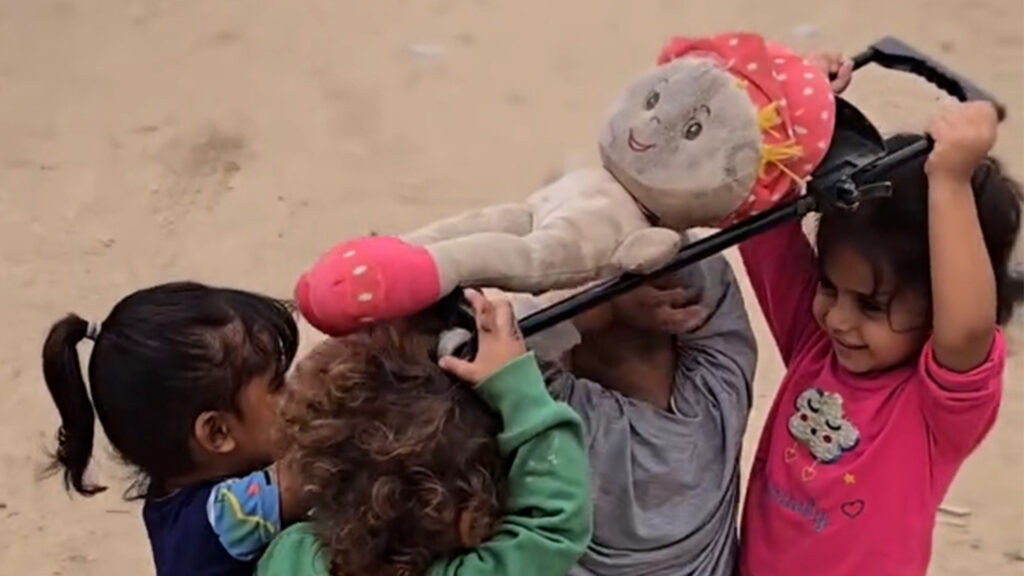
In a poignant and somber scene unfolding within a displacement camp in Gaza, a group of children engaged in a play activity that starkly mirrored their harsh realities. These young children reenacted a funeral procession, carrying a doll as if it were a deceased loved one through their makeshift camp. This act of play, while innocent in intent, underscores the profound impact of ongoing conflict and displacement on their daily lives.
The children, many of whom have experienced loss and trauma firsthand, used their imagination to process the grief and instability surrounding them. This reenactment is not just a simple game but a reflection of their environment where death and mourning have unfortunately become common experiences.
Within the cramped and precarious conditions of the camp, these children find ways to express their understanding of death and community mourning. The funeral procession play mirrors traditional rites they may have witnessed, showcasing how cultural practices persist even in the most trying circumstances.
The displacement camp, home to many families uprooted by conflict and violence, exposes children to the harsh realities of war at an age when they should be shielded from such experiences. The playtime procession with the doll is a subtle yet powerful testament to the psychological and emotional toll conflict exacts on the youngest and most vulnerable.
Aid organizations and child psychologists often note that play is a critical coping mechanism for children in war zones, helping them to make sense of trauma and loss. However, the content of their play also signals the depth of the crisis around them.
This heart-rending scene in Gaza serves as a reminder to the global community about the urgent need to protect children’s rights and ensure their environments nurture safety, peace, and healing, rather than fear and sorrow.
The reenactment also calls attention to the broader context of the ongoing humanitarian challenges faced by Gaza’s population, including limited access to healthcare, education, and psychosocial support.
It is essential that international efforts continue to focus on providing comprehensive aid and long-term solutions to alleviate the suffering of displaced families and their children.
This moment of children’s play in Gaza is a small but powerful illustration of resilience amid adversity, highlighting both the innocence of childhood and the grave necessity for peace and stability in the region.