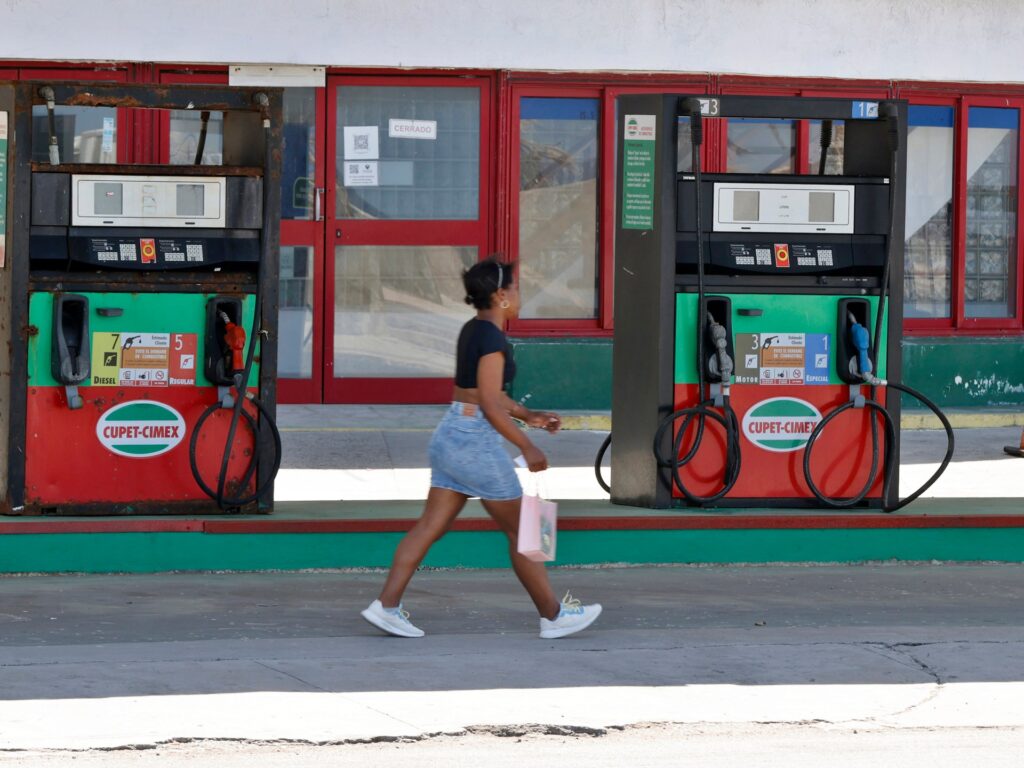
In a recent exclusive interview with Al Jazeera, US Secretary of State Senator Marco Rubio addressed the ongoing economic crisis in Cuba, particularly the fuel shortage that has gripped the island nation. Rubio firmly denied that punitive actions by the United States have contributed to the hardships faced by the Cuban people, shifting the responsibility squarely onto the Cuban government itself.
Rubio’s comments come amid intense scrutiny and debate over the impact of US sanctions on Cuba. Critics argue that these measures have exacerbated the economic difficulties faced by ordinary Cubans, particularly in essential sectors such as fuel and food supply. The US sanctions, intended to pressure the Cuban government to embrace political and economic reforms, have been a significant point of contention between the two countries for decades.
However, Rubio dismissed claims that the United States bears responsibility for Cuba’s fuel crisis, insisting that the Cuban government’s policies and mismanagement are the root causes of the nation’s economic failures. According to him, the Cuban leadership has prioritized repression and resistance to reform over meeting the basic needs of its citizens.
During the interview, Rubio highlighted the Cuban government’s failure to diversify its economy and its reliance on outdated infrastructure as key factors undermining the country’s ability to meet its energy needs. He argued that lifting US sanctions would not resolve these structural problems, which require comprehensive policy changes from Havana.
Rubio also emphasized the United States’ readiness to support the Cuban people, underscoring initiatives aimed at providing humanitarian aid and promoting democratic change. He portrayed the US stance as one focused on fostering a transition to a free market economy and political openness, which he believes is essential for sustainable development in Cuba.
The interview shed light on the long-standing tensions between the US and Cuba, revealing the complex interplay of international policy, economic conditions, and governance challenges that shape life on the island. Rubio’s assertions underscore the US government’s position that Cuba’s plight is primarily due to its own leadership rather than external pressures.
This perspective contrasts sharply with that of Cuban officials and many international observers, who view US sanctions as a significant barrier to the country’s economic recovery. They argue that punitive measures have hindered Cuba’s access to global markets and financial systems, compounding the effects of internal inefficiencies and resource shortages.
As the fuel crisis continues to impact everyday life in Cuba, debates over responsibility and solutions remain highly polarized. Rubio’s statements are likely to influence ongoing discussions about US foreign policy towards Cuba, as well as broader conversations about the efficacy and humanitarian consequences of sanctions.
Ultimately, this dialogue highlights the urgent need for nuanced approaches that address both the political and economic dimensions of Cuba’s challenges. Whether through dialogue, reform, or continued pressure, the pathway to resolving Cuba’s crisis will require cooperation and understanding from multiple stakeholders.
The interview serves as a reminder of how geopolitical narratives shape the perception of economic realities in countries facing multifaceted crises. As Cuba navigates its difficult path forward, the world watches closely, with hopes for a resolution that improves the lives of its people and stabilizes the region.