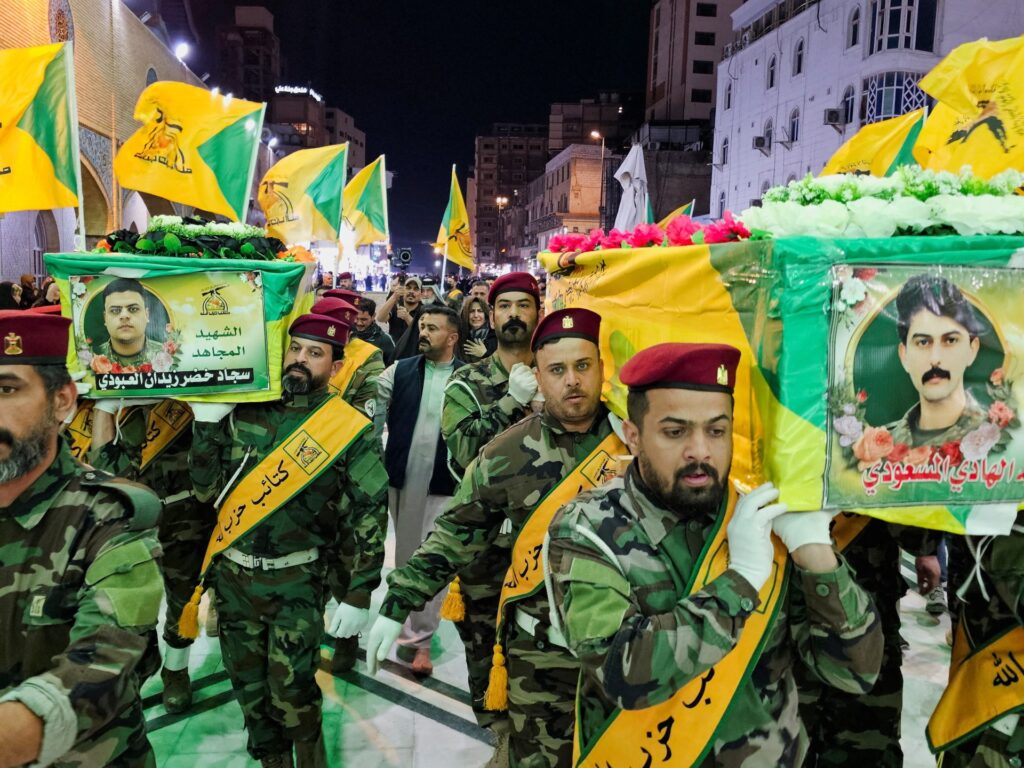
In a significant development amidst escalating tensions in the Middle East, fighters from a prominent Iraqi pro-Iran armed group have reportedly crossed into Iran. This move carries dual implications: the delivery of critical aid and a potent symbol of allegiance to Iranian-backed factions amid rising concerns over potential US ground operations.
The group, known for its close ties to Tehran, has been active in Iraq’s complex security landscape, often serving as a paramilitary force aligned with Iranian interests. Their presence in Iran is part of what has been described as a ‘loyalty campaign,’ highlighting strong interconnections between Iranian and Iraqi Shiite militias in the face of growing American military rhetoric.
Recent discussions within US defense and intelligence circles have focused on the potential for a ground war in the Middle East. This scenario has heightened sensitivities among regional actors and intensified the strategic maneuvering of militias on the ground. The entry of Iraqi militants into Iran is perceived by analysts as a preparatory step, whether for reinforcement, reorganization, or to receive logistical support, aimed at strengthening their influence and operational capacity.
The infiltration also serves as a political statement, signaling steadfast loyalty to Iran’s regional policies and its proxy network. It underscores the intertwining of Iraqi and Iranian military objectives in resisting Western intervention, especially from the US-led coalition.
This development complicates the already volatile geopolitical fabric of Iraq and the wider Middle East. It suggests an arms and personnel flow across borders that could escalate proxy battles and intensify confrontations involving American forces stationed in the region.
Observers caution that Iran’s utilization of Iraqi groups as extensions of its military strategy could broaden the conflict’s scope. Such movements are likely to attract heightened military responses from the US, potentially triggering a cycle of retaliation and further destabilization.
The situation demands careful monitoring, as the operational dynamics between Iraqi pro-Iran groups and Iranian authorities become increasingly explicit. The ‘loyalty campaign’ may evolve into coordinated military actions that could redefine the security architecture in the Middle East.
In conclusion, the entry of Iraqi armed fighters into Iran amid talks of a US ground war reflects a broader pattern of proxy engagement and influence assertion in the region. It exemplifies the intertwined fates of Iraq’s militias and Iran’s strategic ambitions, signaling a complex and dangerous phase in Middle Eastern geopolitics.