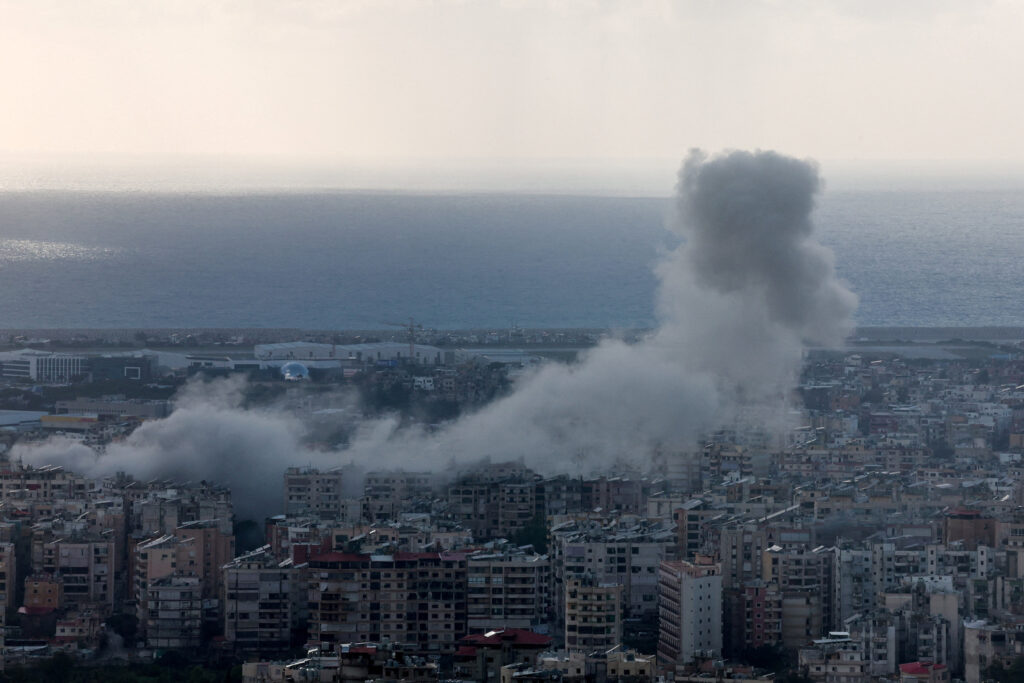
Smoke rises from Beirut’s southern suburbs following an Israeli strike, amid escalating hostilities between Israel and Hezbollah, as the U.S.-Israel conflict with Iran continues, Lebanon, March 27, 2026. REUTERS/Mahmoud Hassano TPX IMAGES OF THE DAY
Smoke billowed over the skyline of Beirut after a series of massive Israeli airstrikes targeted the suburbs, marking a sharp escalation in the ongoing conflict between Israel and Hezbollah. These airstrikes come amid escalating tensions in the region as Israeli forces intensify their military campaign against Hezbollah, the Lebanese militant group.
Witnesses in Beirut reported thick plumes of smoke rising high above residential neighborhoods as the strikes hit key locations suspected of harboring Hezbollah assets. The sudden surge in military activity has raised fears of a broader escalation of violence in the region.
Israeli officials have stated that the airstrikes aimed to dismantle Hezbollah’s military infrastructure, which they claim poses an increasing threat to Israel’s security. In response, Hezbollah has vowed to retaliate, signaling the potential for further confrontations in the near future.
The international community has expressed deep concern over the developments, urging restraint from both sides to avoid a full-scale conflict. Humanitarian groups warn that the civilian population in Beirut and surrounding areas could suffer significant casualties and disruption due to the intensifying strikes.
The conflict between Israel and Hezbollah has a long and complex history, with periodic flare-ups that have destabilized the region. The current escalation is one of the most severe in recent years, highlighting the fragile state of peace efforts in the Middle East.
Residents of Beirut have reported damage to infrastructure, power outages, and interruptions to daily life as a result of the strikes. Emergency services are on high alert, working to assist those affected and assess the extent of the damage.
As the situation develops, international mediators are calling for dialogue to de-escalate tensions and prevent the conflict from spiraling out of control. The coming days are critical in determining whether a broader war can be averted or if further violence will engulf the region.
This latest chapter in the Israeli-Hezbollah conflict underscores the volatile nature of Middle Eastern geopolitics and the urgent need for diplomatic efforts to resolve longstanding grievances peacefully.