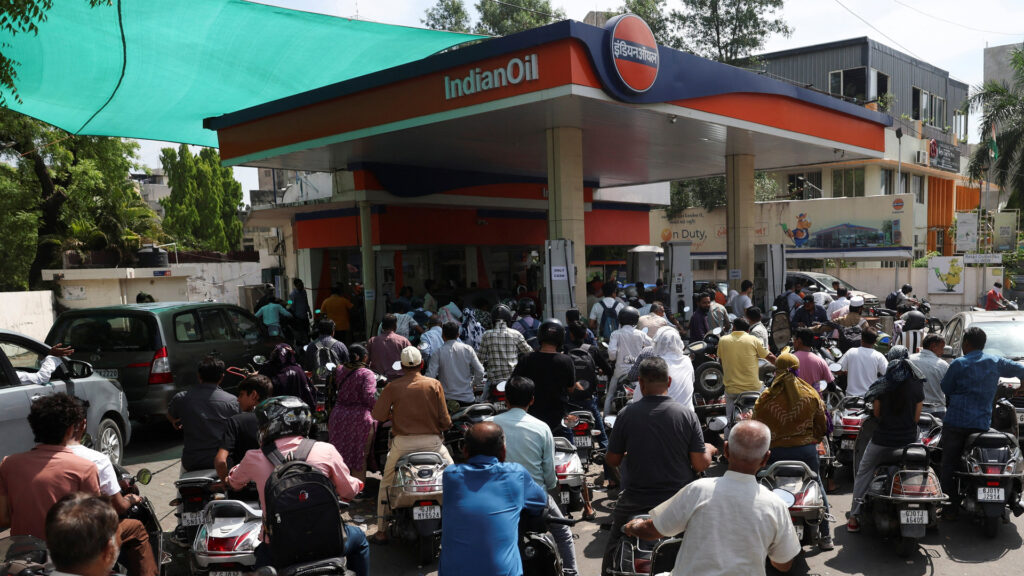
In the Indian state of Gujarat, police forces have been deployed at petrol pumps to manage increasingly long queues as panic grows over potential fuel shortages. The situation has caused widespread concern among residents, leading to frantic rushes to fill up fuel tanks.
The fear of imminent fuel scarcity has led to overcrowding at petrol stations, resulting in long lines that often stretch for hours. Police presence aims to maintain order, ensure safety, and facilitate an organized flow at these critical points.
Authorities are working to address the supply issues fueling the panic, but despite reassurances, many citizens continue to rush to petrol pumps.
Experts suggest that the perception of shortage often leads to real logistical challenges, as increased demand outpaces supply and distribution capabilities.
In response to the situation, local law enforcement has increased patrols around fuel stations, regulated entry, and sometimes rationed fuel sales to prevent hoarding and ensure fair distribution among consumers.
This development follows a series of disruptions caused by regional transport strikes, geopolitical tensions affecting supply chains, and fluctuations in crude oil prices impacting fuel availability.
Citizens have expressed frustration, noting the difficulty of daily commutes and the increased costs of travel amid this uncertainty.
The government has urged calm, stating measures are underway to stabilize fuel supplies and mitigate the risk of shortages in the coming days.
Economic analysts warn that prolonged fuel scarcity could have ripple effects on industries dependent on transportation, affecting everything from manufacturing to agriculture.
Despite these challenges, community leaders and officials emphasize the importance of patience and avoiding panic buying, which only exacerbates the situation.
In summary, Gujarat is currently experiencing a tense situation at petrol stations due to fears of fuel shortage, with police actively managing queues to maintain order amidst growing public anxiety and logistical challenges.