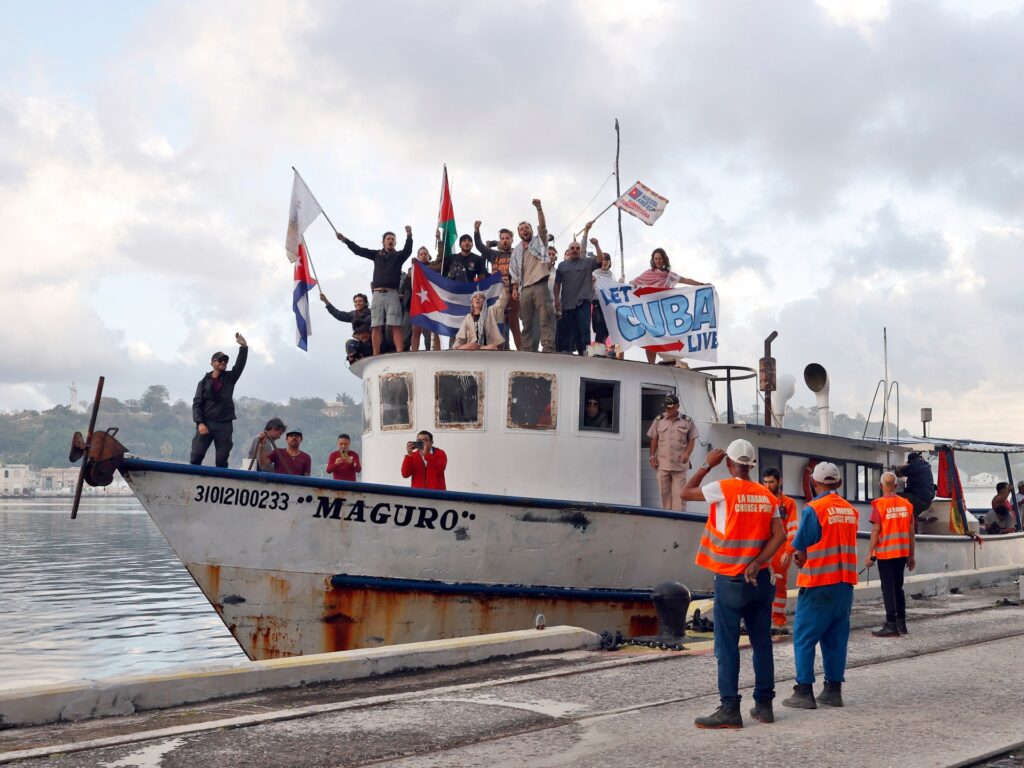
In a significant display of solidarity, an aid flotilla vessel has arrived in Cuba, aiming to bring relief to the island nation amid a severe energy crisis attributed to a US-driven blockade. Activists involved in the flotilla describe this delivery as a “small gesture of solidarity” but emphasize its importance in drawing global attention to the challenges faced by Cuba.
Cuba has been grappling with persistent energy shortages, exacerbated by intensified sanctions and restrictions imposed by the United States. These measures have targeted the country’s access to fuel and critical energy resources, contributing to widespread power outages and economic disruptions.
The aid flotilla, composed of international activists and humanitarian organizations, set sail with essential supplies aimed at mitigating the immediate energy scarcity. While the quantity of aid delivered is modest, the symbolic weight of the gesture underscores the ongoing struggles faced by Cubans in securing reliable energy.
Organizers have highlighted the blockade imposed by the US as a key factor deepening Cuba’s energy crisis. They argue that these sanctions have curtailed Havana’s ability to import necessary fuel, thus hampering the island’s infrastructure and affecting everyday life for millions.
The arrival of the flotilla in Cuban waters marks a rare moment of international cooperation directed towards alleviating the humanitarian impact of the energy blockade. Activists hope that such efforts will inspire increased global advocacy and prompt a reassessment of policies that have prolonged the crisis.
Local Cuban communities have received the aid with cautious optimism, acknowledging the assistance while remaining acutely aware of the persistent obstacles ahead. The energy crisis has reverberated through critical sectors including healthcare, transportation, and food production, heightening the urgency for sustainable solutions.
International observers note that while the aid delivered is limited in scale, the flotilla’s mission has successfully spotlighted the broader geopolitical tension influencing Cuba’s energy access. Calls for dialogue and policy change are expected to grow louder as the global community becomes more aware of the situation.
This development arrives at a time when energy security is a major global concern, placing Cuba’s predicament within a wider context of energy politics and humanitarian needs. The flotilla’s arrival serves as a reminder of the human cost of political stand-offs and the potential for collective action to foster relief.
Looking forward, activists and humanitarian groups plan to continue supporting Cuba through advocacy and targeted aid, seeking to break the cycle of hardship imposed by external pressures. The hope remains that such initiatives will eventually contribute to easing the energy crisis and improving quality of life for the Cuban population.