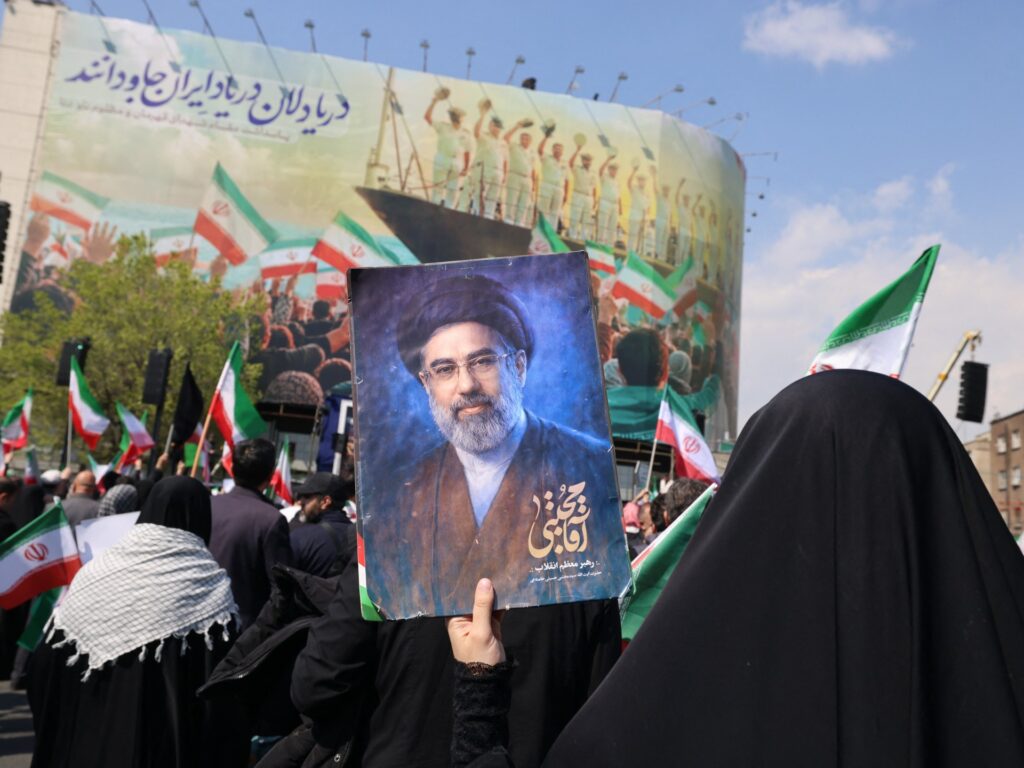
Recent assassinations of prominent Iranian figures have thrown the nation’s leadership into question, sparking intense speculation about the future power dynamics in Tehran. The killings of Supreme Leader Ali Khamenei and influential political figure Ali Larijani have left a vacuum at the top echelons of Iranian power.
Analysts observing the situation emphasize the historically complex nature of Iran’s leadership structure, where ultimate authority rests with the Supreme Leader, who oversees the military, judiciary, and state media, amongst other key institutions. With Khamenei’s death, questions arise about who will assume this pivotal role.
Ali Larijani, a former speaker of the parliament and a significant hardline figure, had also been a key player in shaping Iran’s domestic and foreign policy. His assassination alongside Khamenei indicates a potential strategic move to disrupt the established order.
Some experts suggest that the removal of these senior leaders may lead to an inflection point where younger hardliners could ascend, potentially reshaping Iran’s internal and external policies. These emerging figures, often more radical, might push Iran towards more aggressive stances on global issues and stricter domestic controls.
However, the transition process could be fraught with factional struggles within the Islamic Revolutionary Guard Corps (IRGC) and other political institutions. The IRGC has traditionally been a kingmaker in Iranian politics, so its role will be critical in determining the next Supreme Leader.
The uncertainty following these high-profile assassinations has triggered widespread discussions in diplomatic circles about the stability of Iran’s regime. Countries around the world are closely monitoring how Tehran will navigate this turbulent period, as it could have significant implications for regional security and international relations.
Furthermore, some analysts caution that the power vacuum could invite external interference or embolden opposition groups, potentially leading to increased internal instability.
Despite speculation, the clerical establishment that underpins Iran’s political system might seek to maintain continuity by appointing a leader aligned with Khamenei’s ideological vision to preserve regime stability.
Public sentiment inside Iran remains difficult to gauge due to state-controlled media, but there are reports of unrest in response to the assassinations, indicating potential domestic challenges for the regime’s successors.
International observers stress the importance of closely watching the unfolding events, as the new leadership’s approach could redefine Iran’s trajectory for years to come.
In conclusion, the assassinations of Ali Khamenei and Ali Larijani have plunged Iran into a period of uncertainty and potential upheaval, with the rise of younger hardliners a distinct possibility. How Tehran manages this transition will be pivotal not only for Iran’s future but for the broader geopolitical landscape in the Middle East and beyond.