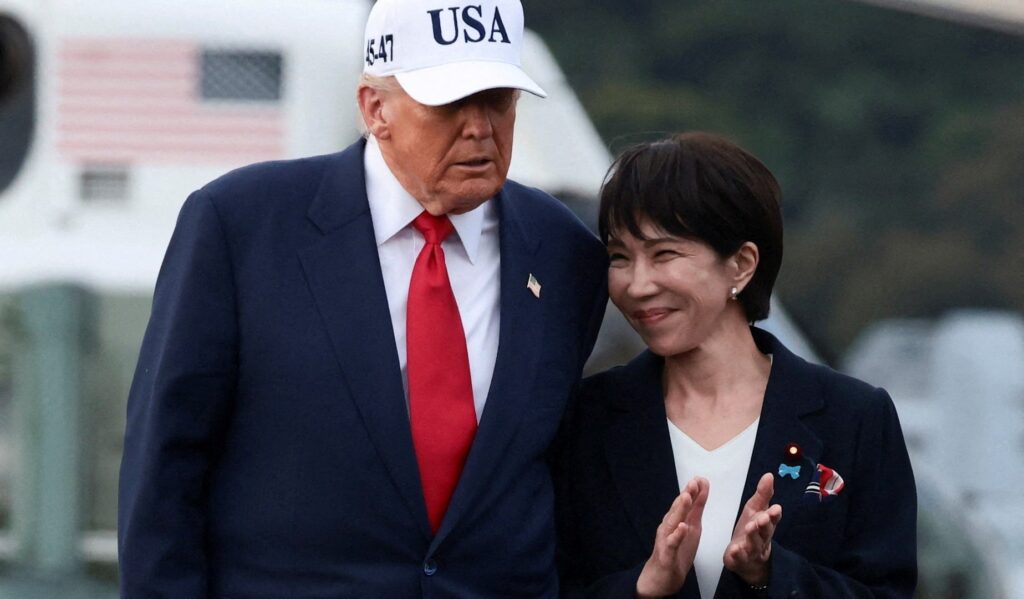
The recent developments surrounding US President Donald Trump’s involvement in Middle Eastern security have placed East Asian allies, particularly Japan, in a complex diplomatic and legal situation. As Trump prepares to discuss the strategic Strait of Hormuz with Japanese Prime Minister Sanae Takaichi, the implications for regional security and international law are drawing significant attention.
The Strait of Hormuz, a vital chokepoint for global oil shipments, has long been a flashpoint in Middle Eastern geopolitics. Any disruption here can send shockwaves through the world’s energy markets and has broad implications for international trade and security. President Trump’s intention to involve Japan, a key US ally in East Asia, signals Washington’s broader strategy to coordinate with regional partners to ensure maritime security.
Japan’s position is particularly delicate. As a nation heavily dependent on Middle Eastern oil imports and committed to pacifist principles enshrined in its post-World War II constitution, direct involvement in military or security operations in the Middle East could raise serious legal questions at home. The Japanese government must carefully navigate its alliance with the US, its strategic interests, and its domestic legal frameworks.
Prime Minister Takaichi’s upcoming discussions with Trump are expected to explore how Japan can contribute to protecting the strait without breaching its constitutional constraints or international law. This might include logistical support, intelligence sharing, or a non-combatant maritime presence in coordination with the US.
The legal quandary also extends to broader Southeast Asian allies, who face similar dilemmas balancing their security ties with Washington against regional diplomacy and legal restrictions. Countries like South Korea and Australia watch closely, as the US seeks to build a coalition to ensure freedom of navigation and deter potential aggressions in the critical maritime corridor.
Experts note that the situation underscores the complexities of modern alliances where military, legal, and diplomatic considerations intersect. The US is keen to project strength and unity, but East Asian allies must weigh their commitments against national laws and public opinion.
This developing issue also highlights the increasing interdependence of global security, where actions in the Middle East inevitably impact East Asian strategic calculations. How these nations resolve their quandaries will shape the future architecture of US alliances and regional security.
In summary, the dialogue between President Trump and Prime Minister Takaichi is more than a bilateral discussion; it is a crucial moment reflecting the evolving challenges US-East Asian alliances face amid geopolitical tensions in the Middle East. The outcome will have lasting implications for international law, military cooperation, and the geopolitical balance in both regions.