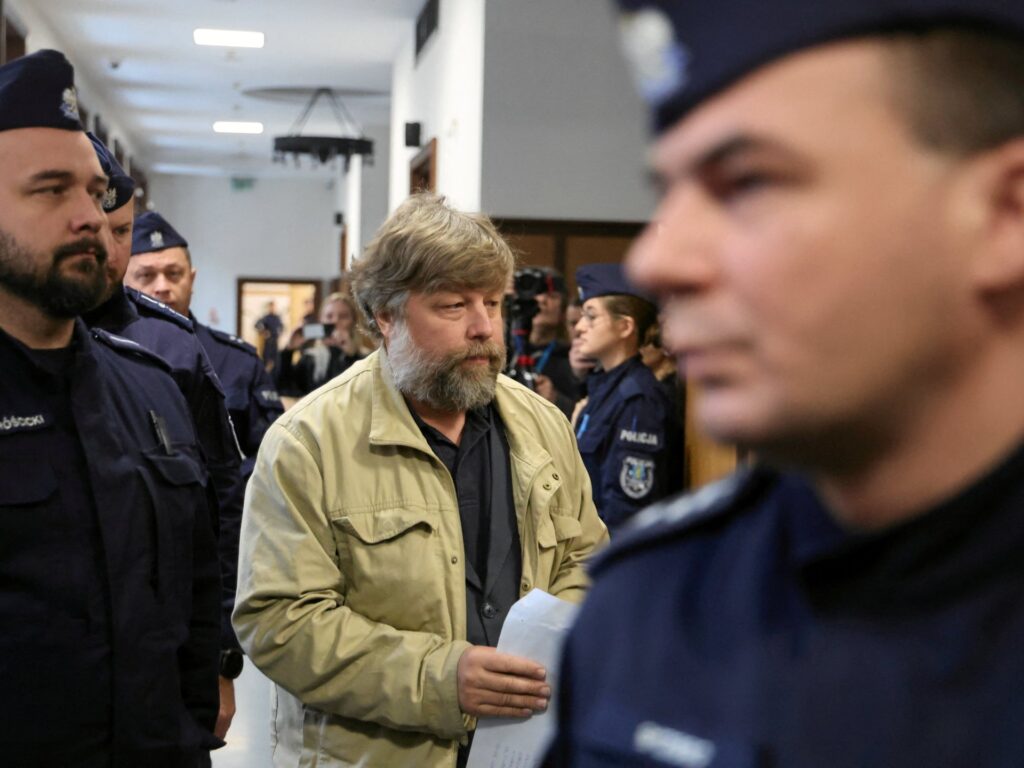
A Polish court has approved the extradition of Alexander Butyagin, a Russian archaeologist affiliated with Russia’s renowned Hermitage Museum, to Ukraine. Butyagin faces accusations related to illegal excavations carried out in the territory of Crimea, which is internationally recognized as part of Ukraine but has been under Russian occupation since 2014.
The legal proceedings in Poland have culminated with the court deciding in favor of Ukraine’s request for extradition, marking a significant development in the ongoing judicial actions tied to the politically sensitive status of Crimea. The case underscores the complex legal and geopolitical battles surrounding the peninsula, where issues of sovereignty, occupation, and heritage preservation converge.
Alexander Butyagin, known for his academic work at the Hermitage Museum, is accused specifically of conducting unauthorized archaeological activities in Crimea. These actions are viewed by Ukraine as a violation of their laws protecting cultural heritage sites, especially in the context of Crimea’s disputed status. Ukrainian authorities have been actively pursuing cases against individuals involved in such excavations since the annexation of Crimea by Russia.
This extradition approval reflects Poland’s adherence to international legal cooperation agreements and its support for Ukraine’s sovereignty claims. The case also amplifies international scrutiny on cultural heritage protection and the enforcement of legal norms in occupied territories.
The Hermitage Museum has historically been a prestigious institution representing Russian cultural heritage, and Butyagin’s involvement in alleged illicit activities poses significant concerns. Experts in archaeology and cultural heritage stress the importance of regulating excavation activities to prevent damage and loss of invaluable historical assets.
Ukraine’s government has welcomed the court’s decision, highlighting the importance of judicial accountability for those who infringe on its territorial integrity. The ruling may set a precedent for similar extradition cases involving individuals accused of unlawfully exploiting Crimea’s natural and cultural resources under the occupation.
As the extradition process proceeds, observers anticipate heightened diplomatic tensions between Russia and Ukraine, with Poland playing a critical role in enforcing international law standards. The development might also influence the behavior of professionals working in conflict zones where heritage preservation and territorial disputes intersect.
The case raises broader questions about the safeguarding of archaeological sites in contested regions and the responsibilities of foreign academics and institutions collaborating or working within these zones. It calls for stronger international frameworks to protect cultural and historical sites from exploitation or damage resulting from political conflicts.
Overall, the Polish court’s decision to extradite Alexander Butyagin to Ukraine signals a firm stance on protecting cultural heritage and supporting legal actions against illicit operations in occupied regions. It highlights the ongoing challenges faced by Ukraine in defending its sovereignty and cultural assets amidst continued geopolitical pressures.