Members of the Iranian diaspora recently gathered on a beach in Barcelona to celebrate Chaharshanbe Suri, a traditional Persian festival marking the arrival of spring. This festival, which involves jumping over fire to symbolize purification and renewal, attracted a diverse crowd united by cultural pride and a spirit of festivity.
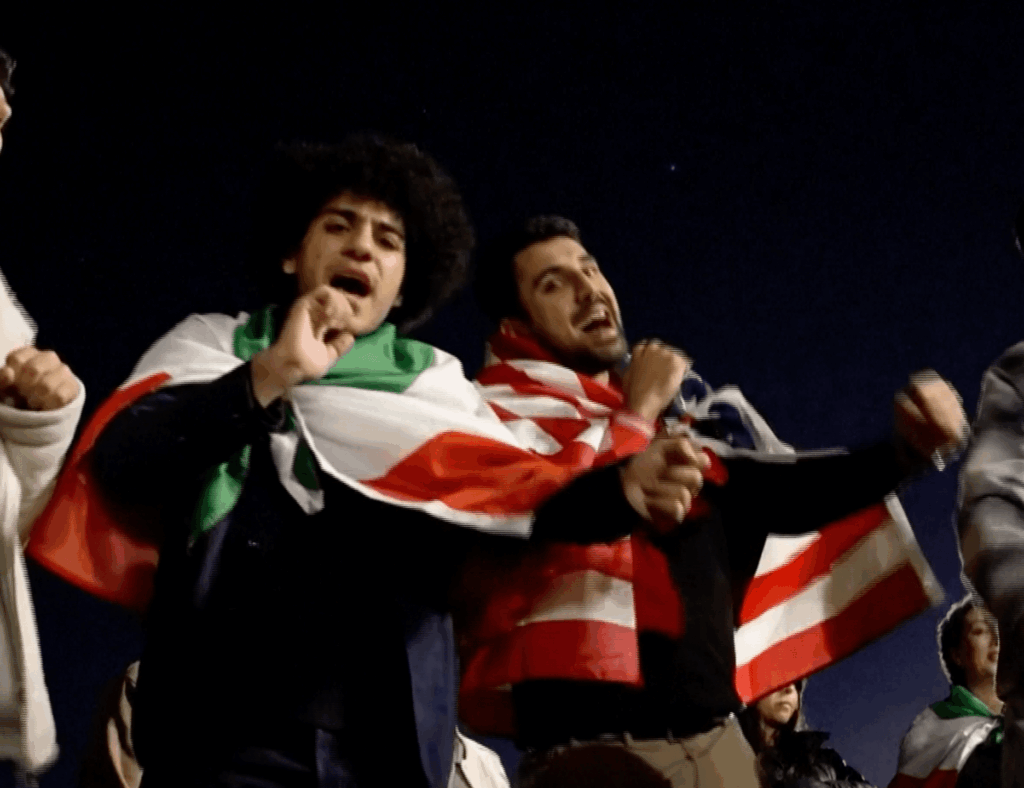
What made this celebration particularly noteworthy was the unique way participants expressed their identity and political sentiments. Many were seen wrapped in the flags of the United States and Israel, a striking sight that symbolized complex layers of allegiance, hope, and solidarity.
Chaharshanbe Suri, celebrated on the eve of the last Wednesday before Nowruz (the Persian New Year), is an ancient festival rooted in Zoroastrian traditions. It is traditionally observed by lighting bonfires, singing, dancing, and performing acts meant to ward off misfortune and invite health and happiness for the new year.
For the Iranian diaspora, especially those living in the West, this festival is more than a cultural event; it serves as a way to maintain connections to their heritage while expressing contemporary political identities. The presence of U.S. and Israeli flags at the festival underscores the complex relationship many diaspora members have with their homeland and host countries.
In recent years, Iran-U.S. and Iran-Israel relations have been tense and fraught with political challenges. By wrapping themselves in these flags during Chaharshanbe Suri, some Iranians in exile convey a message of hope for change and a desire for stronger democratic ties with these nations. It also reflects their opposition to the current Iranian regime and support for freedom and human rights.
The Barcelona event was marked by joyous dancing, music, and the vibrant colors of traditional Persian attire, interspersed with the blue, white, and red of the U.S. flag and the blue and white of the Israeli flag. This visual amalgamation created a powerful statement that intertwines cultural celebration with political expression.
Organizers of the event emphasized that their goal was to celebrate Persian culture openly and inclusively while also providing a platform for political dialogue and awareness. The festival attracted families, young activists, and elder community members, showcasing the wide spectrum of the Iranian diaspora.
Despite the festive atmosphere, the event also highlighted the ongoing struggles faced by many Iranians both inside and outside the country. The flags served as reminders of the diaspora’s hopes for global support and intervention to improve Iran’s domestic situation.
This celebration in Barcelona is part of a broader trend where diaspora communities use cultural festivals to reinforce identity while navigating their political realities. It demonstrates how traditional events can evolve to accommodate new expressions of collective memory and activism.
The Iranian diaspora, estimated to number in the millions worldwide, has increasingly become vocal about issues affecting Iran’s future. Their gatherings blend joy and protest, heritage and modernity, making festivals like Chaharshanbe Suri platforms for both cultural preservation and political advocacy.
The use of flags from countries often considered adversaries by the Iranian government emphasizes the diaspora’s complex identity and aspirations. It also reflects the geopolitical tensions that continue to influence individual and collective experiences.
As this community continues to celebrate and express itself abroad, events like the one in Barcelona offer a hopeful glimpse into how traditions endure and adapt. They provide a space where past and present, culture and politics meet in vibrant, dynamic ways, fostering resilience and solidarity among the Iranian diaspora worldwide.