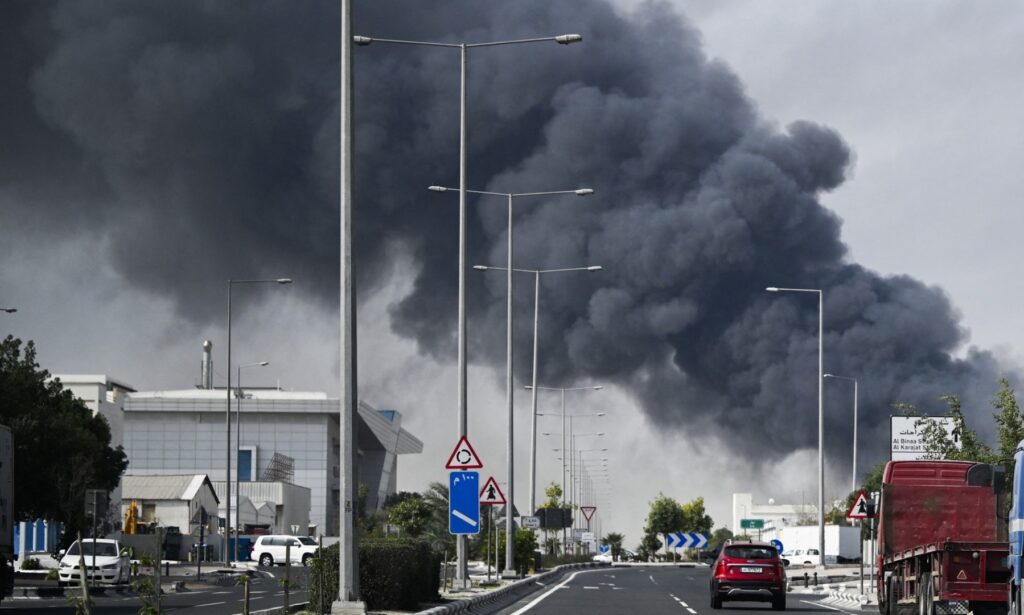
As the war in the Gulf region approaches the three-week mark, tensions have escalated sharply with Iran launching a series of missile and drone attacks across the Gulf. Countries including Qatar, UAE, Kuwait, and Saudi Arabia reported new blasts and successful interceptive actions amid growing instability. These recent developments underscore the heightened state of conflict in the region, posing significant risks to security and stability.
Beginning nearly three weeks ago, the Gulf area has witnessed a sustained escalation marked by multiple missile and drone strikes predominantly attributed to Iran. These aggressive maneuvers have targeted both military and strategic infrastructure, drawing condemnation from multiple countries and heightening fears of an expanded conflict.
Qatar, UAE, Kuwait, and Saudi Arabia—key players in the Gulf Cooperation Council—have all experienced direct impacts from these strikes. Authorities in these countries reported new blasts that disrupted normal life and led to heightened military readiness. In addition to the physical damages, these attacks have prompted an increase in civilian anxiety and uncertainty about the future security landscape.
Air defense systems in the affected countries have been on high alert and operational. They have managed to intercept several incoming missiles and drones, preventing potentially greater damage. The efficiency of these systems has been vital in mitigating the human and material toll of the attacks. However, the continued frequency and intensity of assaults underline the volatility of the situation.
The region remains under close observation by international actors who have expressed concern regarding the potential for a broader regional war. Diplomatic efforts to de-escalate the violence have so far yielded limited results as the conflict appears to be entrenched with no clear resolution in sight.
The sustained conflict raises critical questions about the future of Gulf security and international relations. The strategic importance of the Gulf, as a major hub for global energy supplies and commerce, makes the conflict’s ramifications far-reaching. Disruption in this region can affect global oil markets, increase geopolitical tensions, and impact worldwide stability.
Local governments are calling for heightened vigilance and enhanced security measures to protect civilians and critical infrastructure. They are also urging dialogue and diplomatic channels to prevent further escalation. However, given the current trajectory, the Gulf remains a flashpoint with continuing risk of further military engagements.
In summary, the missile and drone attacks by Iran across the Gulf to Qatar, UAE, Kuwait, and Saudi Arabia symbolize a troubling intensification of the existing conflict. With the war now nearing its third week, the Gulf region stands under significant threat, and the international community watches closely, hoping for de-escalation and peace.