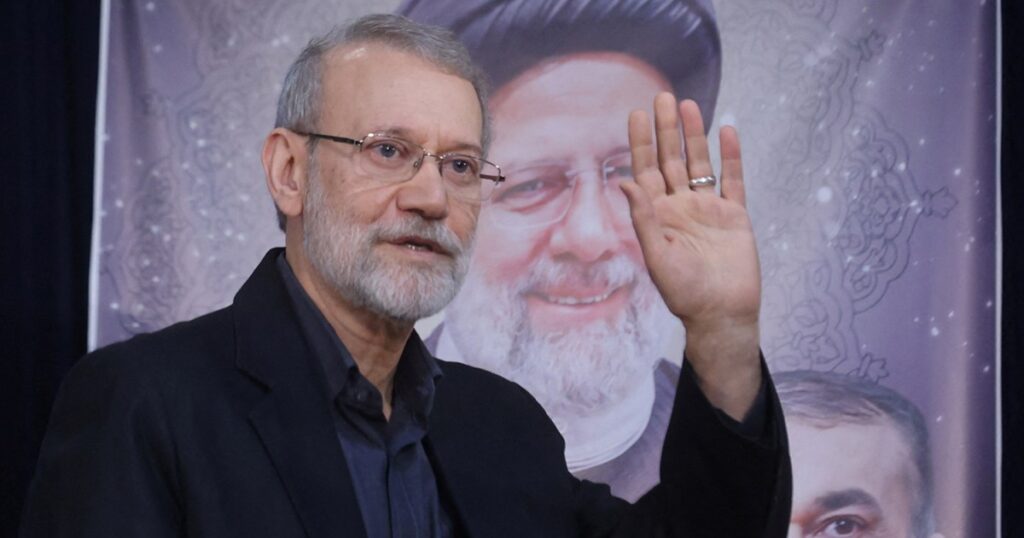
In a significant development amid escalating tensions in the Middle East, Israel’s Defence Minister, Yoav Katz, announced that Ali Larijani, Iran’s top security official, has been killed. This claim, if verified, marks a critical point in the ongoing covert and overt conflicts between the two regional powers.
Ali Larijani, known as a key figure within Iran’s security establishment, has played a pivotal role in shaping the country’s national security strategy. His death could have profound implications for Iran’s internal security dynamics as well as its foreign policy maneuvers.
The announcement by Minister Katz underscores the deep and ongoing hostilities between Israel and Iran, two nations frequently at odds over regional influence, nuclear ambitions, and military activities in contested areas such as Syria and Lebanon.
Israel has often accused Iran of orchestrating attacks against Israeli targets, sponsoring militant groups, and advancing nuclear weapons programs. Conversely, Iran views Israel as an illegitimate state and supports Palestinian groups resisting Israeli control.
The assassination claim adds a new layer to this complex security landscape. It highlights the use of targeted killings as a tactic employed by Israel to weaken Iranian leadership structures and curtail their operational capabilities.
International reactions are expected to follow swiftly, with concerns likely centered on the potential for retaliation by Iran and an escalation of violence that could destabilize the wider Middle East region.
Experts suggest that the killing of a top security official like Larijani could disrupt Iran’s command and control mechanisms, impacting its ability to coordinate responses to external threats and potentially affecting the strategic calculations of other countries involved in the region.
This development also raises questions about the methods and intelligence capabilities employed by Israel to carry out such a high-profile assassination. It showcases the ongoing intelligence warfare that underpins much of the conflict between these two nations.
Diplomatic channels may experience heightened activity as global powers seek to mitigate the risk of a broader conflict. The international community often urges restraint to avoid spiraling tensions into open warfare.
For Iran, the loss of Ali Larijani represents both a symbolic and practical blow. It may prompt internal power struggles or shifts within the country’s security apparatus.
For Israel, the announcement serves both as a message of deterrence and a demonstration of its commitment to preemptively neutralize threats from Iran.
The accuracy and details surrounding this claim await confirmation from independent sources and further intelligence disclosures. Meanwhile, affected parties remain on high alert, anticipating reactions within Iran and across its allied networks.
The situation continues to evolve rapidly, underscoring the fragile security environment in the Middle East and the high stakes involved in the ongoing confrontation between Israel and Iran.