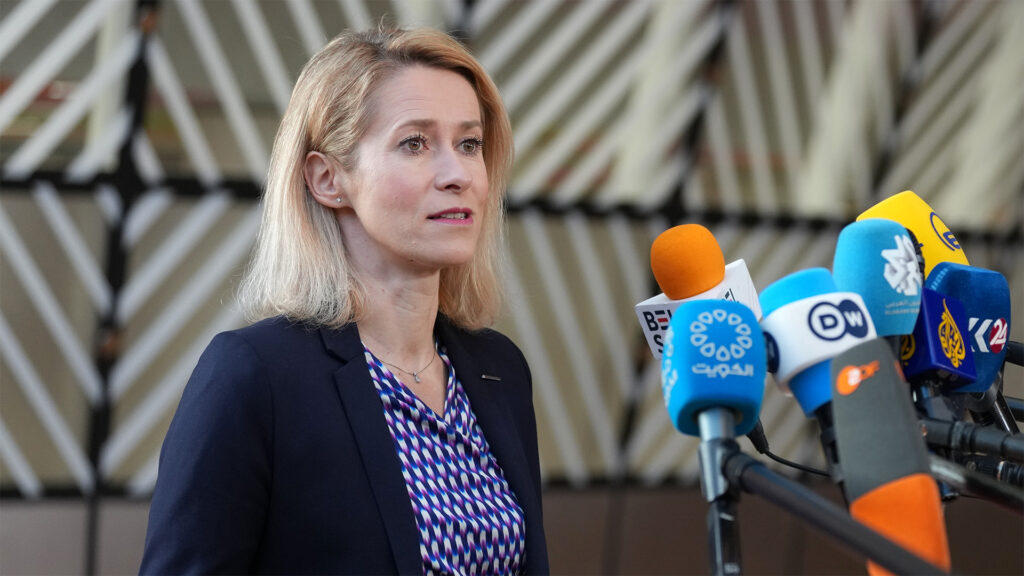
The European Union has made a clear statement that the conflict involving Iran does not constitute a European war. EU foreign policy chief Kaja Kallas emphasized that there is no appetite within Europe to expand its naval mission to the Strait of Hormuz, one of the world’s most crucial maritime chokepoints for oil transportation.
Kaja Kallas’ remarks come amid escalating tensions in the Persian Gulf region, where the Strait of Hormuz has been a hotspot for military and political conflict. The waterway is a strategic passage through which a significant portion of the world’s oil supply is shipped, making its security a matter of global concern.
Despite concerns about the safety and freedom of navigation in the Strait of Hormuz, EU officials have reiterated their intention to maintain a limited naval presence and avoid further entanglement in the regional conflict. The EU’s current mission focuses on maritime security and safe passage for commercial ships, but expanding this presence would signal deeper involvement in the broader geopolitical tensions involving Iran.
The decision reflects a cautious approach by the EU, balancing its economic interests and security concerns with the risks inherent in engaging militarily in a volatile region far from its borders. Many European countries are wary of becoming entangled in conflicts that could escalate and trigger wider confrontations.
Kallas stated that Europe’s priorities lie in diplomacy and dialogue rather than military escalation. “Europe should not be drawn into conflicts that do not directly threaten its security or interests,” she remarked.
The EU’s stance contrasts with that of other global powers, including the United States, which has taken a more assertive posture in the region, including the deployment of naval assets to protect shipping routes and deter Iranian military actions.
In addition to military concerns, the economic implications of potential disruptions in the Strait of Hormuz are significant for Europe. A blockade or instability in this route could lead to a surge in oil prices, affecting energy supplies and economic stability across the continent.
Nevertheless, the EU prefers to handle such challenges through coordinated diplomatic efforts with international partners. This includes engaging Iran in dialogue to reduce tensions and seeking peaceful resolutions to ongoing disputes.
The EU’s cautious stance highlights the complexity of the security environment in the Persian Gulf. While the EU remains committed to ensuring the safety of maritime navigation, it clearly distinguishes its role as supportive rather than combative.
European naval missions currently operate with a mandate to deter piracy and secure vital shipping lanes. Expanding their role to confront Iranian actions would mark a significant shift in policy and increase risks faced by European personnel.
The EU’s decision not to extend its naval mission signals a desire to avoid direct military confrontation and instead focus on strengthening diplomatic channels and international cooperation.
European nations continue to monitor the situation closely, cooperating with allies and partners to maintain regional stability. However, their public messaging underscores restraint and a preference for peaceful means.
In conclusion, the EU leadership’s position is clear: the Iran conflict is not Europe’s war. Europe’s strategy centers on safeguarding its interests through diplomacy, careful engagement, and limited military involvement, thereby avoiding escalation in one of the world’s most sensitive geopolitical hotspots.