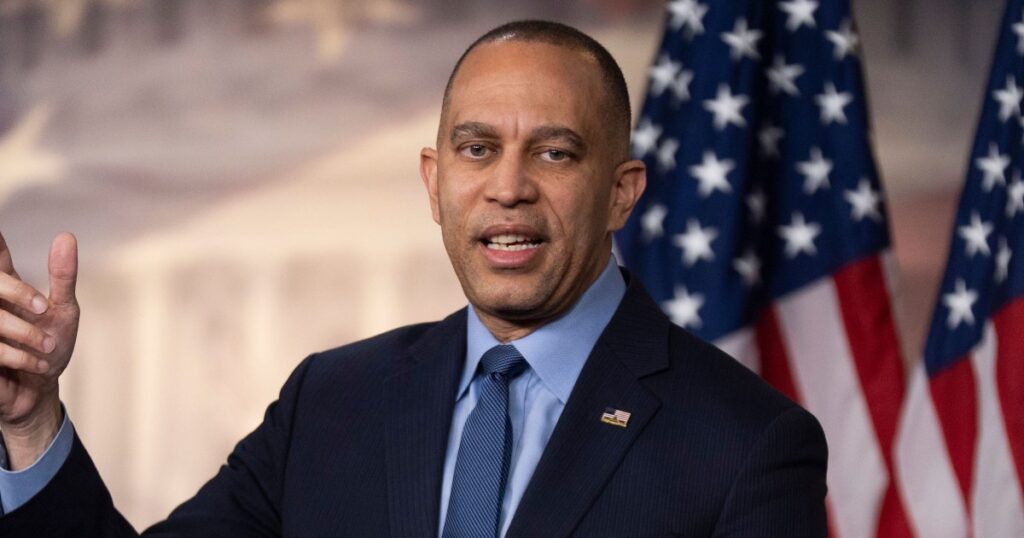
Democratic leader Hakeem Jeffries has publicly condemned former President Donald Trump’s approach to foreign policy regarding Iran, labeling it a “reckless war of choice.” Jeffries articulated his criticism amid ongoing tensions in the Middle East, highlighting concerns over the aggressive stance and decisions taken during Trump’s administration.
Jeffries emphasized the consequences of Trump’s actions, suggesting that the policies were not only dangerous but also avoidable, reflecting a reckless disposition towards international diplomacy and conflict management. The phrase “reckless war of choice” encapsulates Jeffries’ view that the military engagements and confrontations initiated or escalated by Trump were neither necessary nor justified, but rather choices that have led to instability and increased hostilities.
This condemnation follows a series of events where Trump’s policies towards Iran have been questioned for escalating violence and risking broader conflict in the region. Jeffries, as a prominent Democrat and leader in the US House of Representatives, voiced a need for more measured and responsible foreign policies going forward, advocating for diplomatic solutions over military actions.
The debate over US engagement with Iran remains a contentious issue in American politics. Trump’s tenure saw key decisions such as withdrawing from the Iran nuclear deal and increasing sanctions on Tehran, moves that critics argue undermined diplomatic progress and heightened tensions.
Jeffries’ comments underscore the divide between Democratic and Republican perspectives on how the US should navigate its relationship with Iran. Democrats generally favor multilateral diplomacy and caution in military involvement, while Trump’s approach represented a more unilateral and confrontational strategy.
The criticism from such a high-profile Democratic figure adds to the ongoing discourse about the impacts of Trump’s foreign policy legacy, especially in volatile regions like the Middle East. It also highlights the political stakes involved as lawmakers debate the best path forward to ensure US national security without risking unnecessary wars.
As the situation with Iran continues to evolve, the US government’s approach remains under scrutiny. Jeffries and other Democratic leaders call for engagement with allies and reliance on diplomatic tools to mitigate conflict risks. Their stance contrasts with the aggressive posture taken by the Trump administration, which they argue has led to untenable dangers.
This debate is not only about past actions but also shapes future policy directions. It serves as a reminder of the importance of cautious and calculated decisions in international relations to avoid repeating the mistakes of a “reckless war of choice.” Jeffries’ critique invites reflection on the costs of such policies, both in human lives and global stability.
Ultimately, this dialogue influences how the US perceives its role on the world stage and the governance of its foreign interactions. The clarity of voices like Jeffries seeks to steer the nation toward a more prudent and peace-oriented foreign policy framework, emphasizing restraint and diplomatic engagement over unilateral military conflict.