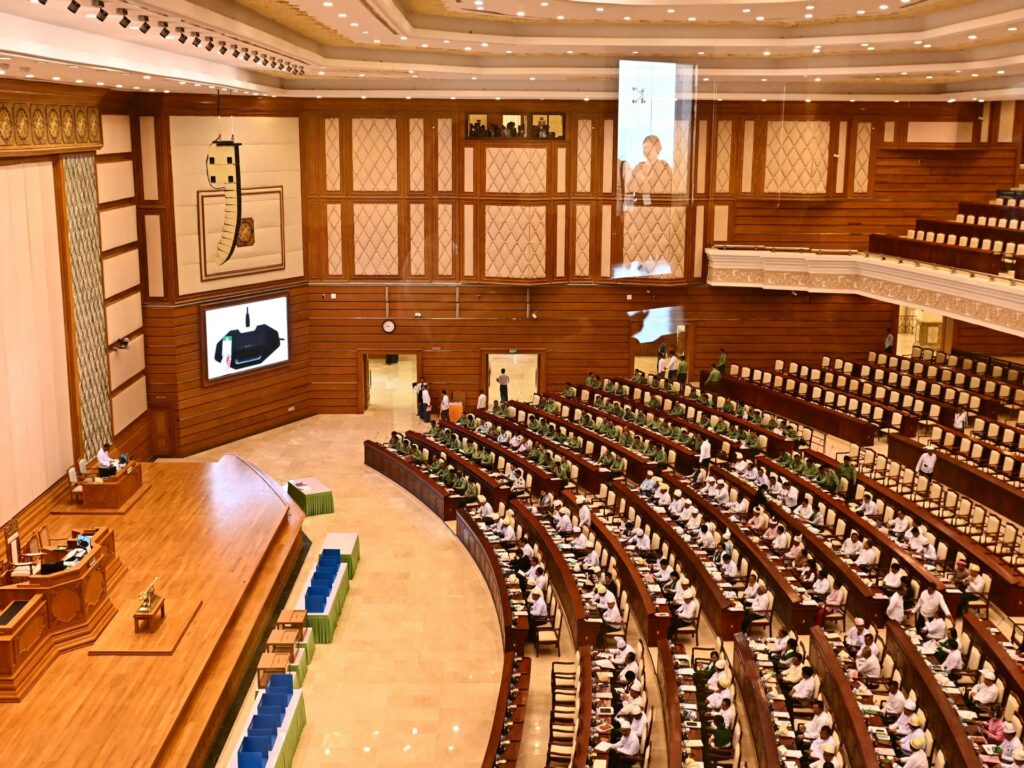
After a prolonged hiatus of five years, Myanmar’s parliament convened once again, marking the first session since the military coup in 2021. The reopening follows recent elections that were widely criticized for excluding major opposition parties, leading to a legislature now dominated by pro-military representatives.
The military coup in February 2021 had violently ended a decade of tentative democratic progress in Myanmar. Since then, the country plunged into political turmoil, civil unrest, and international condemnation. The coup ousted the popularly elected government of Aung San Suu Kyi and established military rule under the State Administration Council.
In an effort to legitimize its grip on power, the military government organized elections earlier this year. However, these elections were criticized domestically and internationally because they excluded key opposition groups, most notably the National League for Democracy (NLD), which had won a landslide victory in the 2020 general elections.
This election exclusion led to the pro-military Union Solidarity and Development Party (USDP) capturing the majority of parliamentary seats. The newly convened parliament reflects this shift, with members largely aligned with military interests and policies.
The return of the parliament marks an important moment in Myanmar’s political landscape but raises concerns among observers about the erosion of democratic norms and the marginalization of dissenting voices. The military’s dominance in the legislature likely means continued policies that suppress opposition, limit civil liberties, and restrict political freedoms.
International reactions have been mixed, with many governments and organizations condemning the elections as neither free nor fair. Sanctions and diplomatic pressures remain in place, aimed at encouraging a restoration of democratic governance.
Meanwhile, on the ground in Myanmar, civil society organizations and pro-democracy activists have expressed dismay at the parliament’s makeup. Many vow to continue their resistance efforts despite increased repression and legal restrictions.
The parliament’s sessions are expected to focus on legislation that consolidates military control and addresses economic challenges exacerbated by sanctions and internal conflict. Analysts also predict that political reforms will be minimal and primarily serve to legitimize the ongoing military rule.
Overall, the reopening of Myanmar’s parliament under pro-military control signifies a setback for democracy, highlighting the deep divisions within the country and the ongoing struggle between authoritarianism and democratic aspirations.