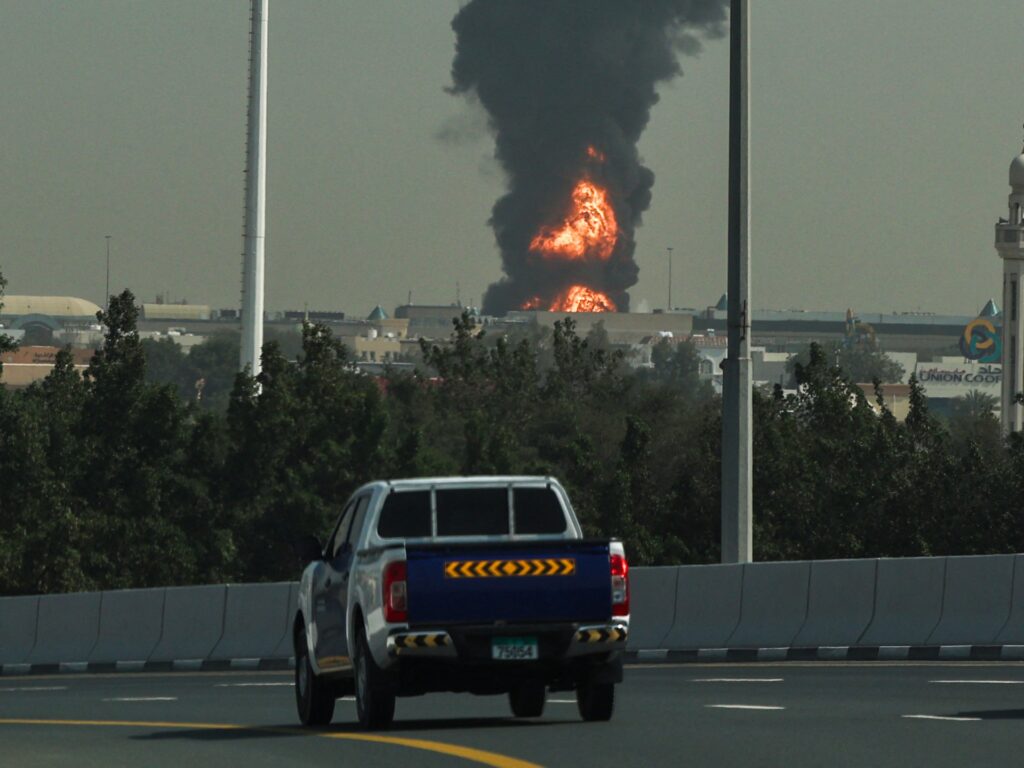
A sudden drone attack has caused significant disruption to flights in Dubai and resulted in at least one fatality in Abu Dhabi, marking a serious escalation in regional tensions as Iran continues its offensive operations in the Gulf. The incident has thrown air travel into chaos with multiple flights delayed or canceled due to safety concerns stemming from the attacks. Additionally, a fire has broken out in Fujairah, reportedly linked to the same series of Iranian drone strikes, further compounding the crisis across the United Arab Emirates.
The attacks are part of an ongoing string of aggressive moves by Iran in the strategically vital Gulf region, exacerbating already high diplomatic tensions. The use of drones in these operations reflects a modern approach to asymmetric warfare, allowing precision strikes without the need for conventional military deployment.
Dubai International Airport, one of the world’s busiest hubs, experienced immediate operational disruptions as airport authorities scrambled to secure the airspace and assess any damages. Emergency services were deployed rapidly to contain the situation and to ensure the safety of passengers and airport personnel.
In Abu Dhabi, the capital of the UAE, emergency responders confirmed at least one casualty, highlighting the human cost of the escalating conflict. Details about the victim remain sparse, but the incident underscores the risks civilians face amid the growing hostilities.
Meanwhile, the fire in Fujairah—an essential port city located on the Gulf of Oman—further illustrates the widespread impact of the Iranian strikes. The flames have been attributed to a hit on critical infrastructure, though reports are still coming in about the extent of the damage and its implications for maritime traffic and regional security.
International reactions to the attacks have been swift, with many countries condemning the violence and calling for restraint and dialogue. The Gulf Cooperation Council (GCC) has convened emergency meetings to address security concerns and develop collective strategies to respond to the Iranian aggression.
Security analysts warn that the continued drone attacks represent a concerning escalation in Gulf tensions and portend further instability if diplomatic efforts to de-escalate the situation fail. The use of drones targets not only physical infrastructure but also aims to create psychological pressure on regional governments and populations.
The UAE government has assured its citizens and the international community that all necessary measures are being taken to restore security and normalcy. Travel advisories and safety guidelines have been issued for residents and visitors, advising caution and vigilance.
The impact on the travel industry could be significant if flights remain disrupted for an extended period. The Dubai airport serves millions of international passengers annually and is a critical hub for tourism and business in the Middle East.
As the situation unfolds, the global community watches closely, concerned about the ramifications of the conflict expanding beyond the Gulf. Efforts to mediate peace talks are being discussed at international forums, but achieving a tangible resolution remains a formidable challenge.
This latest drone attack highlights the fragile security environment in the Gulf and the escalating stakes for all parties involved. It serves as a grim reminder of the ongoing volatility and the urgent need for concerted diplomatic engagement to prevent further loss of life and economic disruption in the region.