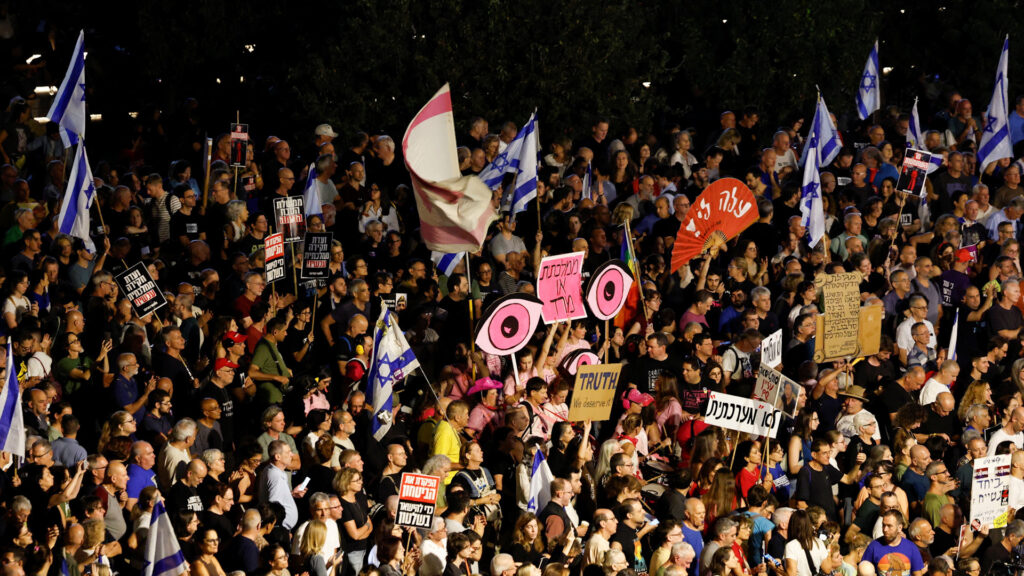
Israeli Prime Minister Benjamin Netanyahu, a dominant figure in the nation’s political landscape, is currently experiencing fluctuating popularity amid the rise of various factions within the anti-Netanyahu right. Political analyst Dahlia Scheindlin sheds light on the dynamic shifts reshaping the right-wing opposition in Israel.
Netanyahu’s political career has been marked by resilience and strong public support, but recent developments signal a more fragmented right-wing opposition. Scheindlin notes that multiple parties and leaders are gaining traction, each presenting unique platforms that challenge Netanyahu’s longstanding influence.
These anti-Netanyahu groups, though united in their opposition, differ in ideology and policy focus. Some emphasize security and economic reforms, while others push for social change and government transparency. This diversity reflects broader societal debates within Israel about the country’s direction under Netanyahu’s leadership.
Scheindlin highlights that Netanyahu’s fluctuating approval ratings are a response to both internal party challenges and external pressures, including legal issues and public dissatisfaction with his governance style. The emergence of these parties suggests a vibrant and competitive political environment where Netanyahu’s dominance is no longer assured.
The rise of these groups is reshaping alliances and electoral strategies ahead of upcoming elections. Each faction aims to consolidate support by appealing to specific voter segments, such as young voters or those disillusioned with traditional right-wing politics.
This political fragmentation could lead to coalition complexities, forcing Netanyahu to navigate a more diverse parliament if re-elected. It also enhances the role of negotiation and compromise in Israeli politics, potentially altering policy priorities and government stability.
Analysts like Scheindlin argue that this trend mirrors a global pattern of political realignment, where established leaders face challenges from emergent parties within their ideological spectrum. The Israeli right’s evolving landscape is a testament to the changing nature of political engagement and voter expectations.
In summary, the anti-Netanyahu right is not a monolith but a constellation of parties ‘on the rise,’ each contributing to an increasingly pluralistic and competitive political arena in Israel. This transformation underscores the dynamic nature of democracy, where leadership and popular support remain contestable and contingent on the shifting preferences of the electorate.