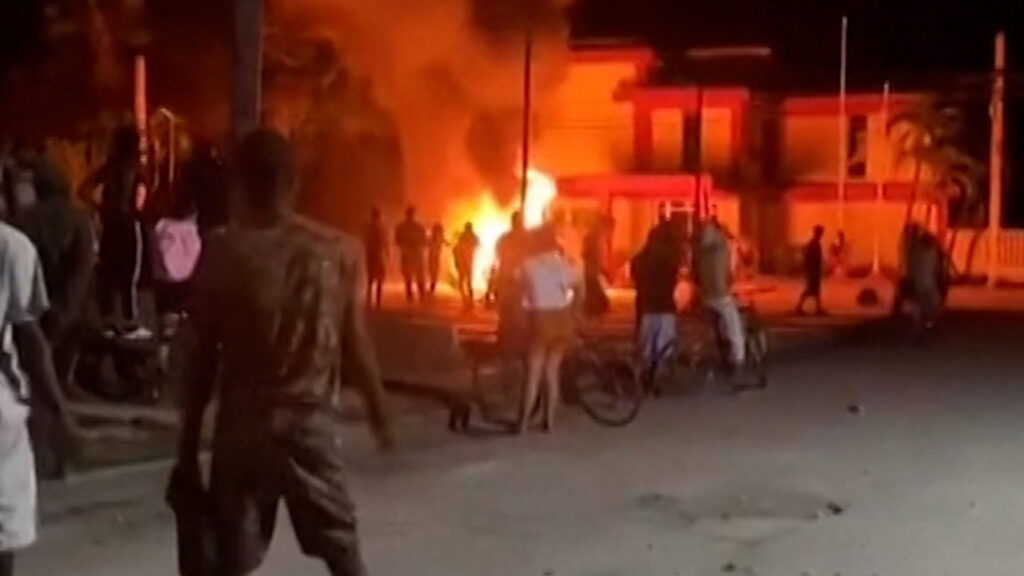
In a rare and significant display of dissent, anti-government protesters in Cuba attacked a Communist Party office, marking a notable escalation in public unrest on the island. The violence erupted amid worsening blackouts and severe food shortages that have been plaguing the nation for some time.
Cuba, known for its strict governmental control and limited tolerance for public protests, has faced increasing economic challenges, exacerbated by ongoing sanctions and the global economic situation. These difficulties have led to widespread dissatisfaction among citizens, particularly as essential resources become increasingly scarce.
The recent blackouts, which have disrupted daily life and crippled businesses, combined with persistent food shortages, have pushed the populace to the brink. The rare riot against a symbol of the ruling Communist Party demonstrates the intensity of public frustration.
Protesters expressed their anger by targeting government buildings, a move rarely witnessed in Cuba’s tightly controlled political environment. The attack on the party office marks a new chapter in Cuba’s public dissent, highlighting the population’s dire situation.
Authorities responded to the violence with a heavy security presence, attempting to restore order and prevent further escalation. However, the incident underscores the growing tensions within Cuban society as economic hardships mount.
Analysts view the unrest as a critical juncture for Cuba, where the government faces mounting pressure to address citizens’ demands for better living conditions and greater freedoms. The international community has also voiced concern over the recent developments, calling for peaceful dialogue and humanitarian aid.
This latest outbreak of violence is a stark reminder of the challenges Cuba faces as it navigates economic recovery and social stability. The government’s response and willingness to engage with the public will likely shape the island’s future trajectory in the months to come.