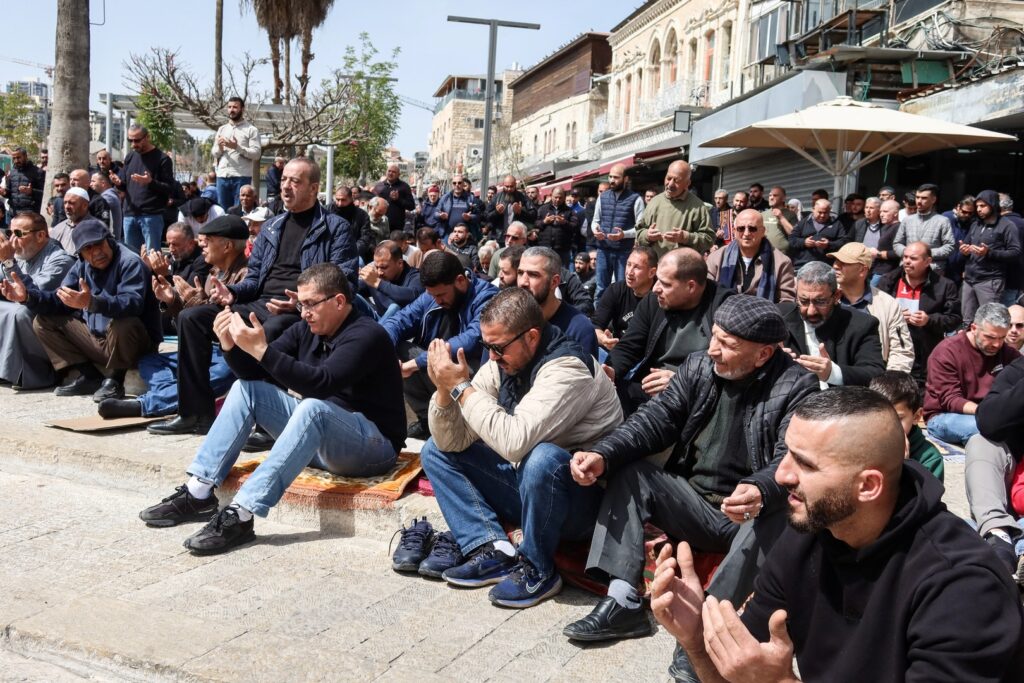
Palestinian Muslim worshippers attend a prayer by a road, as they are not permitted to attend the last Friday prayers at Al-Aqsa compound, also known to Jews as the Temple Mount, for the Muslim holy fasting month of Ramadan, following restrictions on gathering in large groups, amid the U.S.-Israeli conflict with Iran, by Damascus Gate in Jerusalem, March 13, 2026. REUTERS/Sinan Abu Mayzer
Muslim worshippers gathered to pray outside Jerusalem’s Al-Aqsa compound on Al-Quds Day, as Israeli authorities maintained a closure on the revered holy sites. The closure has disrupted regular access to Al-Aqsa Mosque, a site of profound religious significance to Muslims worldwide. Al-Quds Day, observed annually, is a day of solidarity and commemoration for Palestinians and Muslims, emphasizing the status of Jerusalem. Despite the closure, the worshippers’ commitment was evident as they performed their prayers in the open areas surrounding the compound, demonstrating resilience and devotion.
The decision by the Israeli authorities to close the holy sites reflects ongoing tensions in the region, often leading to heightened security measures during sensitive periods. Al-Aqsa Mosque, located in East Jerusalem, is the third holiest site in Islam, attracting worshippers from across the globe, especially during significant religious occasions.
The closure on Al-Quds Day signifies broader political and religious complexities in Jerusalem, a city deeply contested for its sacred and historical significance to Jews, Muslims, and Christians alike. The restrictions have sparked discussions and reactions from various sectors, highlighting the challenges in managing religious freedoms and security concerns in a volatile environment.
Worshippers’ act of praying outside the compound underscores a powerful message of peaceful determination to uphold their religious rights and traditions. It also raises awareness about the ongoing difficulties faced by Palestinian Muslims in accessing their holy sites amid political disputes.
The situation at Al-Aqsa and the surrounding areas remains sensitive, with international observers and organizations calling for restraint and respect for religious rights. The event on Al-Quds Day serves as a reminder of the enduring conflicts and the need for dialogue to ensure peaceful coexistence and mutual respect in Jerusalem.
As the day progressed, community leaders and religious figures emphasized the importance of unity, prayers, and peaceful expressions of faith. The worshippers’ presence outside the closed compound highlighted the deep spiritual connection to Al-Aqsa and the continued hope for a peaceful resolution to the long-standing tensions in the region.