In a striking development, US Defense Secretary Pete Hegseth has stated that Iran’s leadership is “desperate and hiding” following a series of US-Israeli military strikes. This claim introduces a contentious perspective on the current status of Iranian leadership amidst rising tensions in the region.
The backdrop of this assertion involves heightened military actions coordinated between the United States and Israel, aimed at strategic targets associated with Iran. These actions are part of a broader effort to limit Iran’s regional influence and capabilities, especially concerning its nuclear ambitions and support for proxy groups.
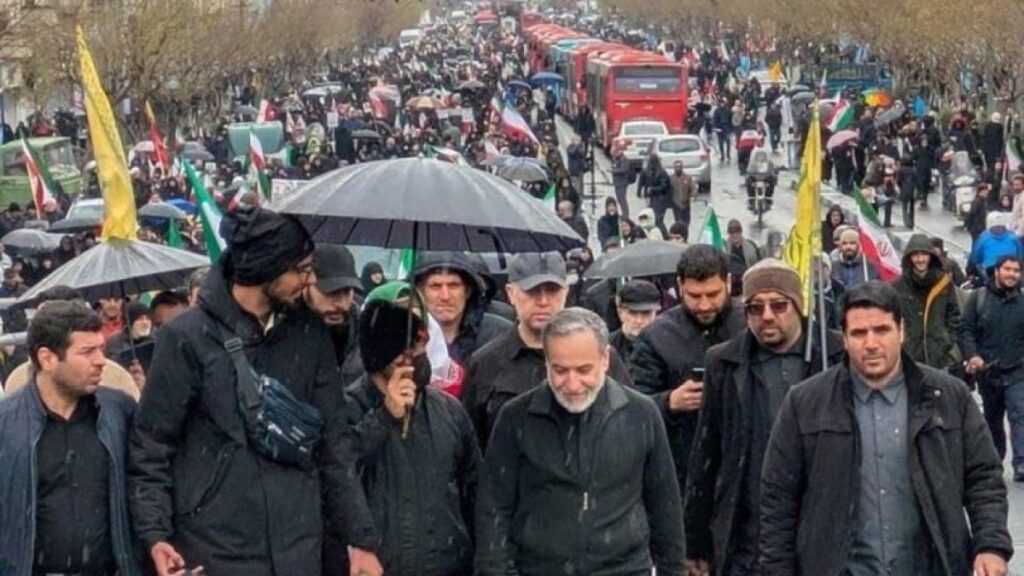
Despite the US Defense Secretary’s assertion about Iran’s leaders being in hiding, reports from Tehran suggest a different narrative. Iranian leaders have been seen appearing publicly in the capital city, potentially signaling resilience and defiance against international pressures.
The contrasting accounts highlight the complex nature of intelligence and perception in geopolitical conflicts. While the US suggests that Iranian leadership is in a state of defensive concealment, Iran’s visible leadership actions in Tehran could be interpreted as a statement of endurance and political stability internally.
This situation plays a central role in the ongoing narrative of Middle Eastern geopolitics, where appearances and messages from leadership are tightly controlled and often serve as strategic communications in their own right. The US-Israeli strikes, and the reactions they provoke, continue to escalate tensions and uncertainty around Iran’s internal dynamics and its external policies.
Analysts suggest that the visible appearances of Iranian leaders might be aimed at reassuring domestic audiences and allies, emphasizing that Iran remains in control and undeterred despite external military pressure. On the other hand, the US stance seeks to portray Iran as vulnerable and under threat, potentially to justify ongoing or future military and diplomatic actions.
The divergent statements from the US and Iran underscore the ongoing struggle for narrative control, which is a critical element in modern warfare and diplomacy. Both sides are engaging not just in physical confrontations but also in information warfare, attempting to shape perceptions around the legitimacy, strength, and resolve of their respective positions.
As the situation develops, the international community watches closely, aware that such tensions carry significant risks of wider conflict. Diplomacy, intelligence assessments, and military readiness all intersect in this high-stakes environment.
The future course of action by Iran, the US, and Israel will likely hinge on both tangible military developments and the shifting geopolitical narratives crafted through these public statements and appearances. The contradictory images of leadership presence and concealment reflect the multifaceted challenges of understanding and navigating contemporary international conflicts.