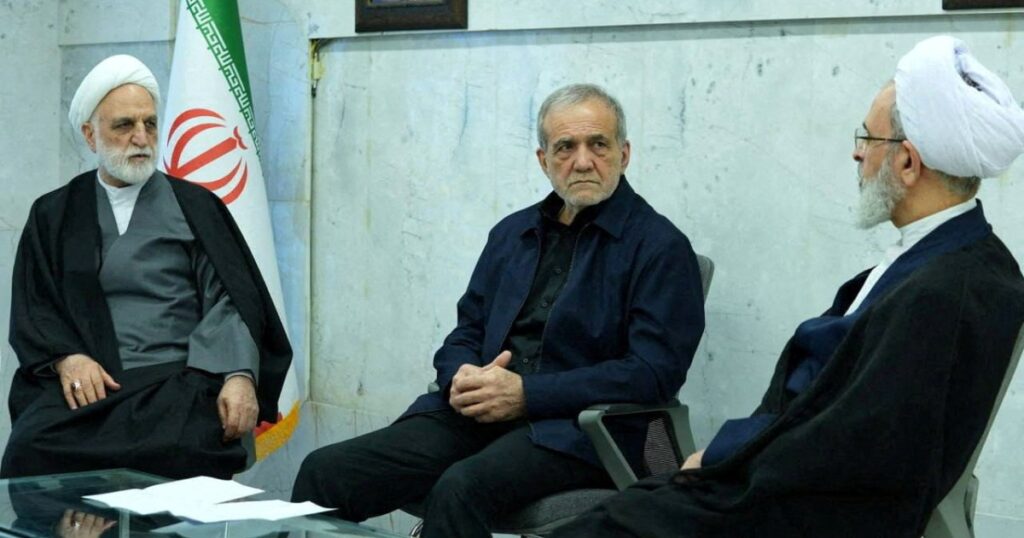
The ongoing conflict involving Iran has seen a significant development as Iran’s president recently outlined specific terms for ending the war. This marks a pivotal moment that could potentially open a pathway toward de-escalation in a conflict that has raised global concerns.
Iran’s leadership is demanding reparations as part of the peace process. Reparations typically refer to compensation for damages and losses experienced during the conflict, signaling that Iran is looking for both acknowledgment and tangible restitution as part of any settlement.
In addition to financial reparations, Iran is seeking guarantees from the United States and Israel, two key players in the region, that they will not carry out future attacks. Such guarantees are critical from Iran’s perspective to ensure long-term security and stability in the region.
These demands highlight Iran’s stance that for peace to be sustainable, it must address root causes and security concerns comprehensively. The insistence on reparations and formal assurances of non-aggression indicates Tehran’s desire not merely to pause hostilities but to lay a foundation for lasting peace.
The international community has been closely monitoring these developments. Iran’s move to set clear conditions is a diplomatic signal that it is ready for negotiations, but on its own specified terms.
The terms set by Iran may face challenges, as the US and Israel have their own security concerns and political considerations. Negotiations will likely involve complex discussions about how to address these concerns while meeting Iran’s conditions.
This situation thus opens the possibility of a diplomatic off-ramp, a way out of a deteriorating conflict. However, the road to peace will require careful diplomacy, mutual concessions, and a genuine commitment to resolving underlying disputes.
Experts warn that while Iran’s terms are a starting point, the international community must be prepared to engage in sustained dialogue. This includes addressing broader regional tensions, historical grievances, and mutual mistrust.
The potential for reparations discussions also raises questions about enforcement and verification mechanisms, ensuring that any agreement is respected by all parties involved.
If successful, these negotiations could not only end hostilities in the immediate conflict but also contribute to a more stable Middle East, reducing the risk of future confrontations.
In conclusion, Iran’s president setting terms for ending the war signals a critical juncture. While challenges remain, these demands suggest an off-ramp may be possible, provided there is diplomacy backed by political will on all sides. The coming weeks will be crucial in determining whether this opportunity leads to peace or further escalation.